Psychologists use phones to ease fears









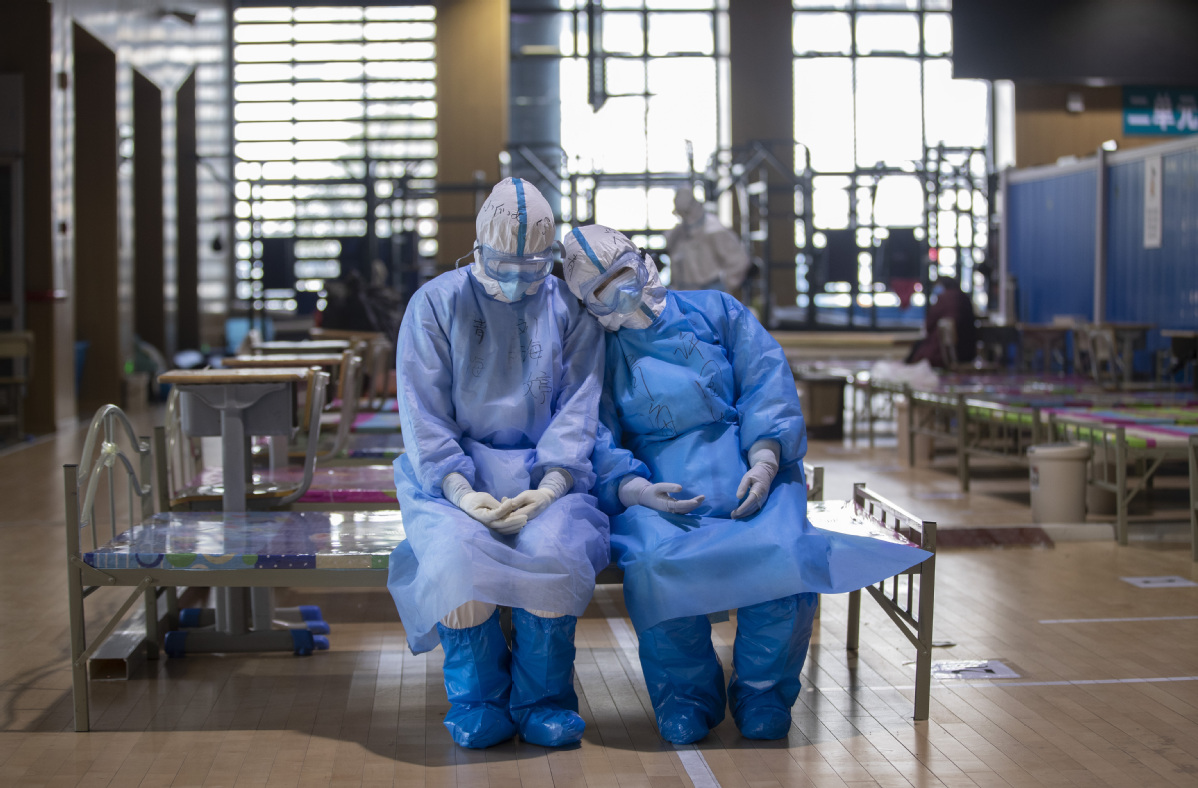
With the novel coronavirus largely under control in China, the public's anxiety has been eased. One reason for that is the effort made by psychological counselors.
A group of 89 psychologists organized by the Beijing Municipal Civil Affairs Bureau has provided free telephone counseling to the public since Feb 7, helping to boost the morale of residents in regions hit hard by the outbreak during their days of quarantine.
In the beginning, callers mainly wanted to know the details of the epidemic. Those outside the country also asked how to return to the capital in appropriate ways, said Bai Yan, a supervisor of the counseling group.
"But as locally transmitted infections were gradually contained, more people returning from overseas and going into quarantine sought help," she said. "We were receiving more than 20 phone calls a day."
By April 16, the counselors had received a total of 795 phone calls, 553 of which were related to the epidemic, according to the civil affairs bureau's Beijing Social Psychological Service Center, which is responsible for managing the group of psychologists.
In recent weeks, the phone calls have fallen to a handful per day, Bai said, adding that the 150 WeChat groups set up by the center have also gone quiet.
In addition to six free hotlines designated for psychological consultations, the bureau has also provided online consultations for about 20,000 residents in WeChat groups staffed by psychologists and social workers.
"We keep a close eye on what's happening in the WeChat groups, and when people have questions or show some signs of anxiety, we attempt to learn more about their situation and listen to their concerns," said Shi Haiyan, a senior psychologist who volunteered to handle calls during the epidemic on behalf of the team.
Shi has been on duty for about four hours a day since February, focusing her attention on the hotline. She said she has been affected personally by her callers-not only by the suffering brought by COVID-19 but also by the positive outlook of patients who had recovered.
"I remember one person who called in February from Hubei province saying that his neighbor, who was quarantined with him, had committed suicide. He felt helpless," Shi said.
"That case affected me a lot, and our counseling group, as a team, stayed in contact with him until he was discharged from quarantine."
Another call, from an elderly man in Beijing, made Shi realize how deeply the worries had penetrated people's daily lives.
The man called to report that he had been injured by a piece of steel on the roadside as he passed on his bicycle at night. Even though he sterilized his wound, he was afraid of being infected with tetanus.
"He was so afraid of being infected with the coronavirus that he didn't want to go to the hospital," Shi said.
"I told him that the community health center could also help with a tetanus vaccine, and there was less possibility of exposure to any risk. The man immediately hung up and went to the health center."
A young mother in Wuhan, the hardest-hit city in China, passed the time at home by recording short videos. She also inspired Shi.
"The woman exercised at home every day, made videos to post online and conducted video calls with her children regularly," Shi said. "Her mild COVID-19 symptoms disappeared."
The woman now wants to donate her blood plasma, which contains coronavirus antibodies, to other infected people, Shi said.
"Every person who called had taken the initiative to seek help when they were upset," she said. "Most of the time, they just needed someone to listen."
Shi has fielded more than 50 phone calls since her first day on the counseling hotline.
"In each consultation, I could feel the panic, helplessness and loneliness that those people faced. I hope I was able to help them get through their trials more quickly," she said.
Ye Qing felt the same way. The 32-year-old office worker in Beijing volunteered to answer calls in her spare time. She works from 8:30 am to 5:30 pm every day at her company, and then answers hotline calls from 6pm to 10 pm.
"My major in graduate school was social work, and I always wanted to do more in this field," Ye said. "When the novel coronavirus epidemic worsened, I knew it was time for me to do something."
"It never occurred to me that I could possibly save a life through the hotline," she added, relating a story about saving a suicidal man.
By counseling people on the hotlines, Ye said, she began to see that the greatest problem was not the virus itself but how people think about the situation.
"We did much more than just ease a little psychological pressure caused by the epidemic," she said.



- Zhangjiajie National Forest Park welcomes its first snow
- Revelers celebrate New Year's Eve in Beijing
- Communist Party expels former senior Dalian official
- Yunnan rose named after uncle 'who looks like a flower'
- Changsha becomes fourth city to host Chinese-built C919 jet
- Xi delivers 2026 New Year message