Young consumers to spend more after epidemic









Well-educated young Chinese consumers are expected to increase spending in the aftermath of the novel coronavirus epidemic.
Such consumers believe consumption could create a much-needed sense of certainty, according to recent surveys.
A survey report from Fenqile, China's first installment e-commerce platform owned by Lexin Fintech, said around 60 percent of the 3,327 respondents plan to increase spending by over 10 percent in May, June and July compared with the mid-April level.
The anticipated rise in spending will likely come on the back of expectations of stable income.
The survey was conducted across more than 20 provinces, municipalities and autonomous regions. It sought to understand if COVID-19 had changed the behavior and mindset of young Chinese consumers.
Over 75 percent of the respondents were under the age of 30, and nearly 80 percent have completed or are in the midst of completing their college education.
The group has grown more pragmatic in its consumption, focusing on items viewed as daily necessities and healthcare-related. Topping the shopping list are 5G smartphones, clothing, in-hall dining, preventive healthcare and health insurance, whereas luxury goods are hit the most.
Meanwhile, the younger generation have also learnt to save for a rainy day, with over half of the surveyed saying they plan to increase their monthly savings after the epidemic.
The use of consumer credit is on the rise as it is increasingly seen as an effective solution to cushion the impact of the contagion on their personal finances.
"People are trying to re-orient themselves with a sense of certainty, regain control, and establish a new order," said Jin Liyin, a marketing professor at the School of Management at Fudan University in Shanghai.
The survey largely echoed an earlier study co-conducted by the university, Chinese business outlet Yicai Magazine and Japanese apparel brand Uniqlo, which found that more than three quarters of young Chinese consumers prioritized health and well-being of themselves, family and friends. And 70 percent favor the quality and reliability of a brand over other features.
Respondents of the second survey, with a demographic distribution akin to that of Fenqile's, said they will be increasingly drawn to products that are designed with an emotional attachment. Co-branded items with artistic elements are expected to be valued by customers.
Over 85 percent hold a neutral to very positive view on China's post-COVID-19 economy, as they aim to seek financial autonomy, a sense of belonging and a degree of certainty in life, the report said.
To beef up consumption, local governments across China have been dishing out various shopping vouchers to citizens, a lot of which are in association with commercial enterprises.
But Fenqile's survey suggested that online shopping and food delivery were the preferred choices for redeeming such coupons. Almost 66 percent of respondents voted for online shopping and more than 53 percent preferred to redeem coupons for home-delivered food.
One way to stimulate offline purchases is to use livestreaming and influencer marketing. For instance, Xiaohongshu, a social commerce site that allows users to share favorite goods in virtual communities, has just unveiled a series of online-to-offline marketing campaigns in collaboration with over 100 physical stores in Shanghai, Beijing, Guangzhou, Shenzhen and Wuhan.
Influencers and key opinion leaders shop in brick-and-mortar stores, and share their experience and insights online. By influencing other users, they could help boost consumption and consequently drive economic growth, said Qu Fang, Xiaohongshu's founder.



Today's Top News
- US?arms sale only a?'bomb' to Taiwan
- China-Cambodia-Thailand foreign ministers' meeting reaches three-point consensus
- Drills demonstrate China's resolve to defend sovereignty against external interference
- Trump says 'a lot closer' to Ukraine peace deal
- China pilots L3 vehicles on roads
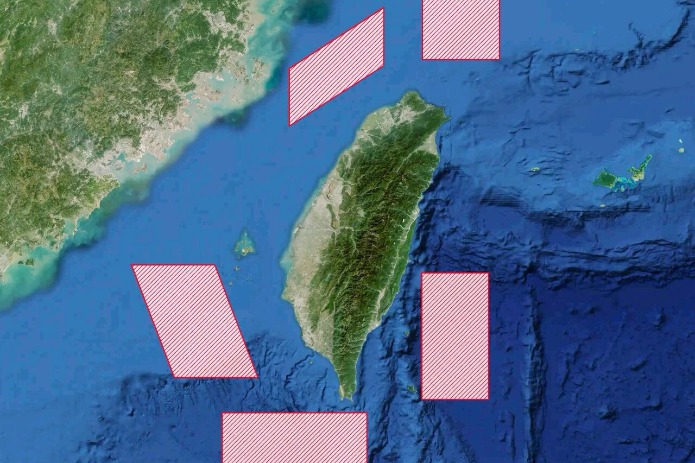
- PLA conducts 'Justice Mission 2025' drills around Taiwan