Innovative financing bolsters small enterprises









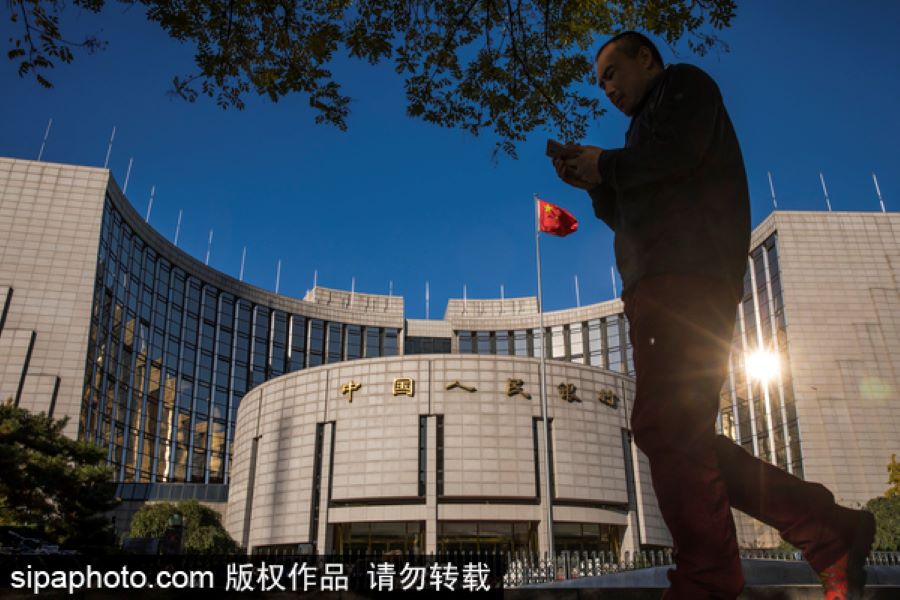
In the wake of the pandemic fallout, risks will intensify increasingly at banks amid the economic downturn. Banking crises, once they occur, may lead to systemic financial risks, and the cost of bailouts will be inestimable. So, banks need even more protection compared to enterprises.
The government should lead the design of special supply chain finance whose risks it can cover along with banks and enterprises. But, the government, not banks, ought to shoulder the responsibility of implementing bailouts.
Supply chain finance refers to systematic financing arrangements for the benefit of all members of a supply chain. Backed by government guarantees, special supply chain finance is carried out by key enterprises in supply chains that boast key resources, information or data.
On the one hand, key enterprises will offer financial support to their suppliers by settling accounts payable in advance or making payments in advance.
On the other hand, their customers will receive services from key enterprises with the help of consumer loans or buyer's credit, a short-term loan facility extended to an importer by an overseas lender to finance the purchase of goods and services, or by using contracts as collateral.
Key enterprises, banks and the government could jointly form project teams. The enterprises will provide authentic information about their suppliers and clients, while banks will design and offer financial services after conducting risk assessments, and the government will provide guarantees for possible losses.
In this way, banks will find the will to pump money into enterprises in upstream and downstream supply chains, especially MSMEs, without worrying about hidden risks.
In times of crisis, if key enterprises receive sufficient liquidity support from the government and banks, which will allow them to obtain financing more easily, they should share the benefit with the upstream and downstream enterprises by taking measures such as settling their accounts payable as soon as possible. Suppliers can also apply for advance payments through the mechanism of special supply chain finance, if they need help.
Based on available tax, business and customs records, as well as transaction data provided by key enterprises, banks could grant liquidity loans to qualified suppliers by allowing them to use orders as collateral and step up financing for distributors by allowing them to use warehouse receipts as collateral.
China has about 80 million individual-owned businesses that employ 160 million people, accounting for nearly 20 percent of the employed population in the country.
Most of such businesses are family-run, and each of them employs very few employees. They are the weakest economic entities amid the pandemic.
As some preferential policies, including tax cuts and temporary reduction and exemption of social insurance contributions, are not very helpful for them, I hope the government will issue vouchers to boost consumption at individual-owned businesses by taking advantage of supply chain finance. For instance, the issuance of vouchers with the aim of helping individual-owned businesses could be combined with sales promotions at large supermarkets.
It is also worth noting that internet-based platforms have collected a vast amount of data while providing supply chain services. Using these platforms to provide more convenient payment options to the downstream enterprises is another effective way to help small businesses navigate through pandemic-related challenges.
The writer is director of research with the Saiyi Enterprise Institute and a visiting research fellow at Wuhan University's Center of Finance and Law.