On the bumpy road to economic recovery









The current economic situation in China is akin to a patient's recovery after surgery. Economic activity continues to rebound, but has not yet returned to the pre-pandemic "normal". The foundation is still fragile, and the risk of further sluggishness cannot be ruled out.
The impact of the deteriorated external environment on exports will be further revealed. Also, the balance sheet constraints of affected enterprises will see these companies continue to curb reinvestment. Expansionary public financial expenditures will have limited impact on promoting economic growth.
Economic recovery cannot be isolated from the loose policy environment, which should focus on maintaining relatively lower and stable interbank market interest rates and guiding down the overall level of financing costs. Various reform measures in pilot areas are needed to explore new forces to drive economic growth.
However, major economic indicators are improving. The recovery of industrial production is the fastest among all categories. Meanwhile, investment and consumption are relatively slower. Infrastructure construction investment recovery is the strongest followed by real estate investment, while manufacturing investment recovery is weak. Home sales have continued to improve, indicated by the rising year-on-year growth rate.
But there are some economic indicators that have yet to return to anything approaching normal levels. The surveyed unemployment rate in urban areas is still high. And the year-on-year overall growth rates of investment and consumption have not yet returned to positive growth.
It is difficult for the economy to fully return to levels seen before the novel coronavirus pandemic. In addition to measures to contain the virus and psychological expectations related to economic activity, there are also constraints on external and domestic demand.
The COVID-19 impact on the global economy is much stronger than that seen during the global economic crisis in 2008. In the past few months, the COVID-19 pandemic overseas has not been effectively controlled. The decline in external demand and restrictions on the flow of human capital and assets continue to impact China's exports, and the overall effect has yet to be fully tallied. The export situation may worsen even further in the coming months.
In addition, the deterioration of enterprises' balance sheets may continue to curtail investment demand in the corporate sector.
According to changes in external demand and internal departments' balance sheets, consumption is likely to only pick up slowly in the next stage. For exports, the pressure is still considerable, and corporate investment may remain sluggish. Current infrastructure and real estate investment remains moderate, but the policy environment going forward will determine whether any recovery will be sustainable.
It may take longer for China to see its unemployment rate return to about 5 percent, and inflation to around 2 to 3 percent. Policymakers also need to consider the possibility of a second wave of the epidemic and the further impact that would have on demand.
An accommodative policy environment will be an indispensable factor in any economic recovery. After this year's two sessions, the basic tone of public fiscal policy has been settled. The next key element to maintain a favorable policy environment for economic recovery is focusing on monetary policy and reform measures.
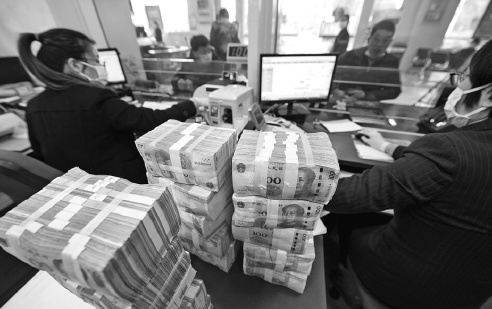
Reasonable monetary policy needs to be maintained and interbank interest rates kept stable to guide down overall financing cost levels. In the early stages of the epidemic, the central bank responded in a timely manner and injected more than 1 trillion yuan ($140 billion) of liquidity into the market through various monetary policy tools. The DR007, the seven-day reserve repo rate for depositary financial institutions in the interbank market, fell from 2.5 percent to 1.5 percent. The central bank lowered the loan prime rate twice, which guided down yield curves.
These measures have not only stabilized financial market expectations, but also reduced financing costs and eased constraints for enterprises, thus helping fill the liquidity gap caused by the sudden drops of income and keeping businesses afloat.
Although interest rate levels have been significantly lower than pre-contagion levels, it is still far from time to exit. Since mid May, monetary policy moves have made the market suspect that policy is ripe for tightening. DR007 volatility increased significantly, and the rate gradually increased to around 2 percent, 0.5 percentage point higher than that in April.
The changes left the market searching for an interest rate anchor. Worsened market sentiment led to redemptions and sell-offs in the bond market, raising long-term interest rates.
In early June, bond yields nearly all returned to early March levels-the starting point of the current monetary policy easing round. If the DR007 stays at current levels and volatility, bond interest rates will likely continue to rise, which is likely to offset some of the loan prime rate cuts.
Rising bond interest rates have also restrained the issuance of corporate bonds to some extent. For instance, the daily issuance of medium-term notes in May was significantly lower than that in April and March. As inflation is now at a low level and the foundation of the economic recovery is not stable, it is too early to tighten monetary policy. Maintaining low and stable interbank market interest rates is still key to reducing total social financing costs.
China still has huge economic growth potential stimulated by reform, and new driving forces can be explored through pilot programs in some special areas. Promoting political, economic and social governance reforms in pilot areas is important. Further development in China is facing many uncertainties, and there are differing opinions of proper development strategies. Promoting reforms in pilot areas is still an effective way to avoid making costly errors.
The construction of the Hainan Free Trade Port is a significant step in China's reform and opening-up process, given its specific positioning and experimental functions. Moreover, different cities can set up reform pilot areas with different functions. Each pilot area can focus on one aspect of reform at the initial stage.
In cities with high housing prices, the authorities can pilot the reform of land policy, especially for residential plots and public transportation construction, to effectively improve the supply of new homes and the efficient use of existing residential units.
In cities with large population inflows, the authorities can focus on reform measures that help settle these people, especially low-income groups represented by migrant workers. This includes reforms in housing, public services, unemployment insurance and a series of policy guarantees.
The authorities can also pilot the reform of education, healthcare, sports, entertainment and other areas in some cities. These sectors have great development potential and will contribute more to consumption down the road. The current situation is not satisfactory, so the authorities must explore future development paths.
The writers are researchers with China Finance 40 Forum.



Today's Top News
- Confidence, resolve mark China's New Year outlook
- Xi urges solid work for more progress
- Confidence, resolve mark China's New Year outlook: China Daily editorial
- Key quotes from President Xi's 2026 New Year Address
- Full text: Chinese President Xi Jinping's 2026 New Year message
- Poll findings indicate Taiwan people's 'strong dissatisfaction' with DPP authorities