India should deal with border row rationally









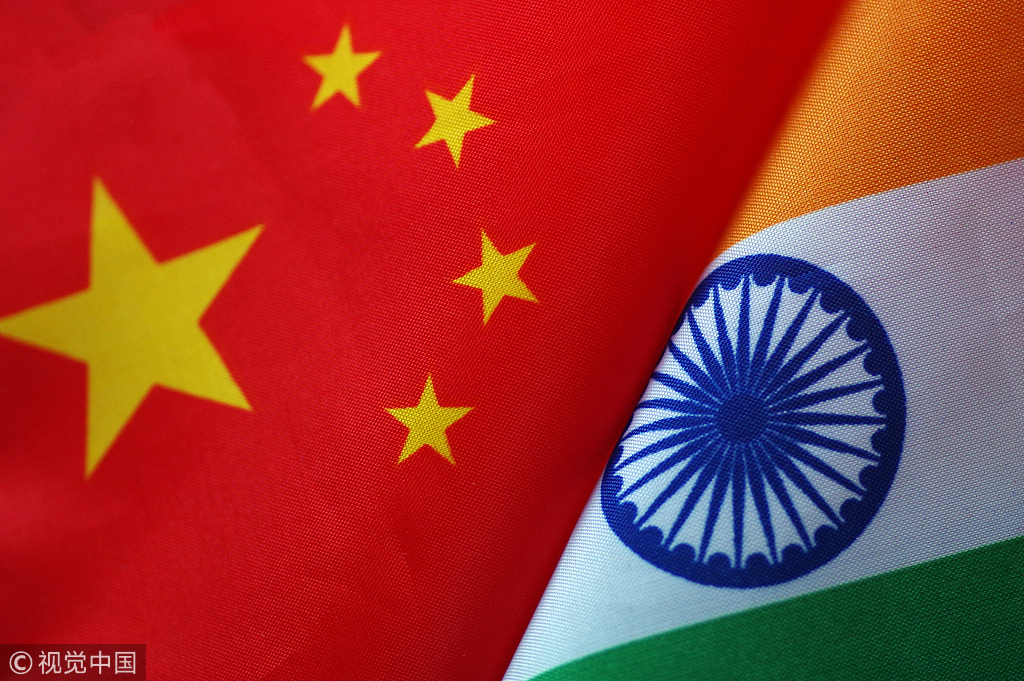
Since the clash on the Sino-Indian border in Galwan Valley in the Aksai Chin area on June 15, instead of making amends for provoking the clash by intruding into the Chinese territory, New Delhi has been stirring up nationalist sentiments at home and has banned 59 Chinese apps including TikTok and WeChat and is erecting trade barriers, further straining bilateral tensions.
India alone is to blame for the clash, for two days later Indian Prime Minister Narendra Modi publicly acknowledged that "neither has anyone intruded into our territory nor has any post been captured", confirming the injuries and deaths of Indian soldiers were the result of India's incursion into the Chinese territory.
The Chinese Foreign Ministry protested against India's adventurism, saying it is a flagrant breach of the agreement reached between Beijing and New Delhi on border disputes as well as the norms of international relations.
Yet India seems hell-bent on worsening the situation instead of understanding that the United States and other Western countries, not Beijing or New Delhi, stand to gain from escalating hostilities between the two neighbors.
The ruling party-fueled nationalism in India threatens to neutralize the achievements the two sides have made after years of efforts. So India should think twice before proceeding with its radical policies against China.
First, India should abandon its colonial mentality and stop trying to make China's Tibet autonomous region a buffer zone to safeguard its national security. The fact that it considers itself the heir to the colonial power in the Indian subcontinent and sees the building of any infrastructure on the Chinese side as hostility is the root cause of India's aggressive behavior.
Given its increasing national power, China has no reason to leave its frontiers underdeveloped. China has never crossed the Line of Actual Control to prevent India from rapidly building infrastructure on its side. As such, despite having disagreements with China, India should hold dialogue to resolve the border disputes.
Second, India will be committing a mistake by using the current volatile international situation to take advantage of the United States' belligerent behavior against China in order to expand its territory along the border. With the US identifying China as its top strategic rival, China faces rising challenges in the global arena. And to make India a pawn in its geopolitical game against China, Washington has been encouraging New Delhi to encroach upon the Chinese land on the false assumption that Beijing would compromise its territorial integrity. But China will respond to even the smallest border intrusion.
India suffered defeat in the 1962 border war because it assumed China would not fight to reclaim its land. And since China will never compromise its sovereignty and territorial integrity, India should avoid making the same miscalculation again.
Third, the Indian government should refrain from manipulating nationalism to advance its political agenda. Since the clash in Galwan Valley, almost all sections of Indian society seem to be caught in a nationalist frenzy, which is unbecoming of an ancient civilization with thousands of years of history.
A major part of the Indian media, too, has played a role in fueling nationalist sentiments by hyping up the border clash and calling for the boycott of Chinese products and investments. Citing the excuse of national security concerns, the Indian government has banned almost all Chinese mobile apps ignoring the interests of about 200 million Indian users. It has also deployed more troops-more than 36,000 in total-on the frontier while placing emergency orders for more military equipment and ammunition. These aggressive Indian actions have worsened the border situation.
Deterioration of bilateral ties could lead to severe consequences, and India's hostile actions will significantly affect economic exchanges and strategic trust which the two sides have painstakingly built over the years. And as China-India cooperation is vital to the revival of Asia, a conflict will undermine peace and the prospects of prosperity in the region.
As the world's two largest developing countries, China and India have pledged to boost their economies and improve their people's livelihoods, for which they need a stable and peaceful environment both at home and abroad. But a conflict would derail their attempts and create loopholes which the US could exploit. So India should not fall into the US' trap.
Differences and disagreements can never be resolved through a war. China would like to hold talks with India to settle the bilateral disputes, but it will never tolerate Indian troops intruding into its territory. India, too, should agree to settle the border dispute through talks.
It is in both countries' interests to resolve the disputes and strengthen their otherwise mutually beneficial partnership in other areas. China cherishes its friendship with India, and China-India cooperation will play a big role in improving regional and global governance. In particular, keeping in mind the border clash and the novel coronavirus pandemic, the two neighbors should keep a cool head and resolve their differences through peaceful means.
The author is a researcher in South Asian Studies at the China Institutes of Contemporary International Relations.
The views don't necessarily represent those of China Daily.