Violin-manufacturing reverberates improved livelihood









ZHENGZHOU -- Zhang Tingting, a 32-year-old music teacher in Queshan county, central China's Henan province, has been imparting violin lessons to children for free on weekends for three years. The classes take place in a local violin-manufacturing industrial park which provides all the instruments free of cost.
"Don't hold the strings too tightly with your fingers. Gently drive your wrist with your forearm," Zhang explained to the beginners while beating time with her hands.
Born in a farmer family in Queshan, Zhang envisaged a musical dream since childhood, when the only musical instrument in the local primary school was a pedal piano. Now, Queshan hosts a cluster of subcontract manufacturers for almost all world-renowned violin brands.
With an annual output of about 400,000 violins, Queshan produces more than 80 percent of made-in-China medium and high-quality violins, violas, cellos, bass and violin accessories. About 90 percent of violin-related products from Queshan are made for exports to Italy, the United States, Germany and Hungary, generating an annual revenue of more than $10 million.
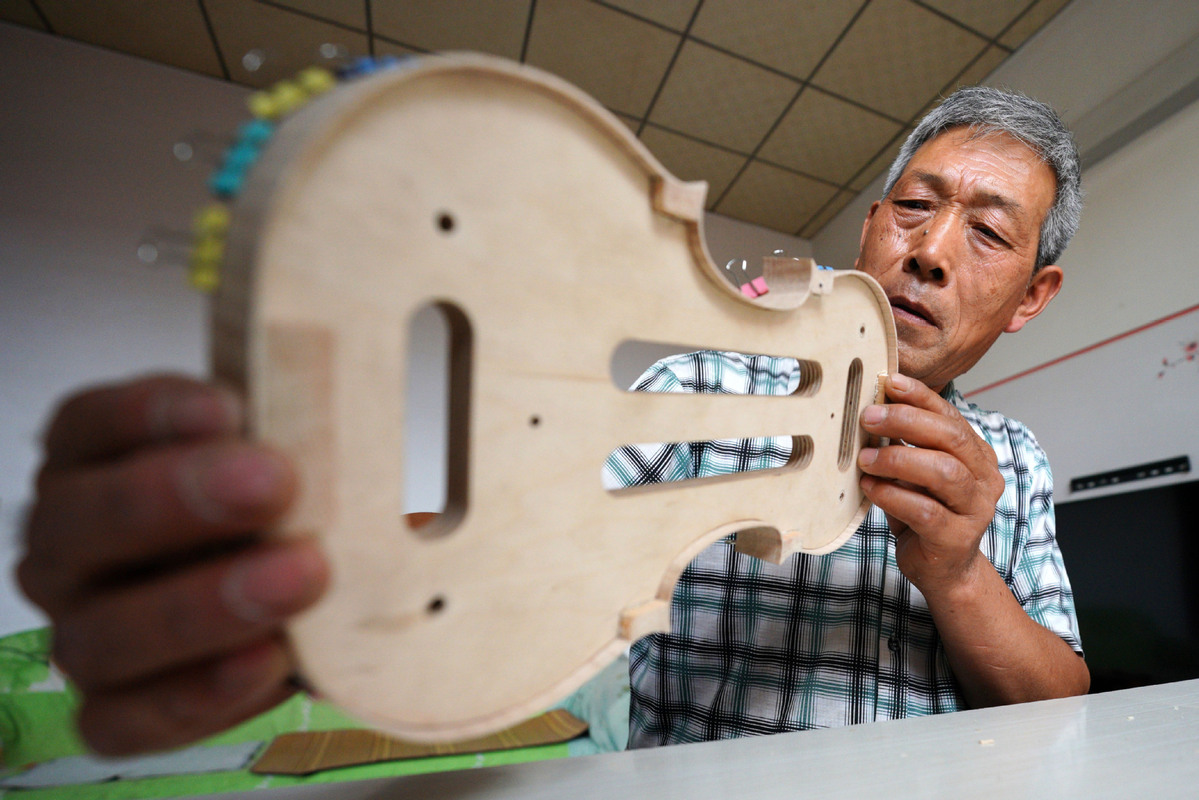
Queshan's violin manufacturing business began in 2015, when the Queshan Violin Industrial Park was set up with the help of several skilled violin artisans who had returned home after their employer in Beijing closed business.
Wang Jintang, one of the founders, said he joined a violin factory in the Tongzhou District of Beijing as an apprentice after working as a young migrant worker in the Chinese capital.
As he honed the instrument making craft, he introduced many of his fellow villagers to the factory. With the rapid urbanization in Beijing, factories were forced away. Queshan county timely encouraged the craftsmen to return and set up violin manufacturing workshops in 2015, assimilating redundant local laborers.
"The production of the musical instrument has strict requirements. An error of 0.1 mm would scrap expensive woods dried for several years before they are used for making violins. It takes years of training for an apprentice to become an instrument maker," said Wang.
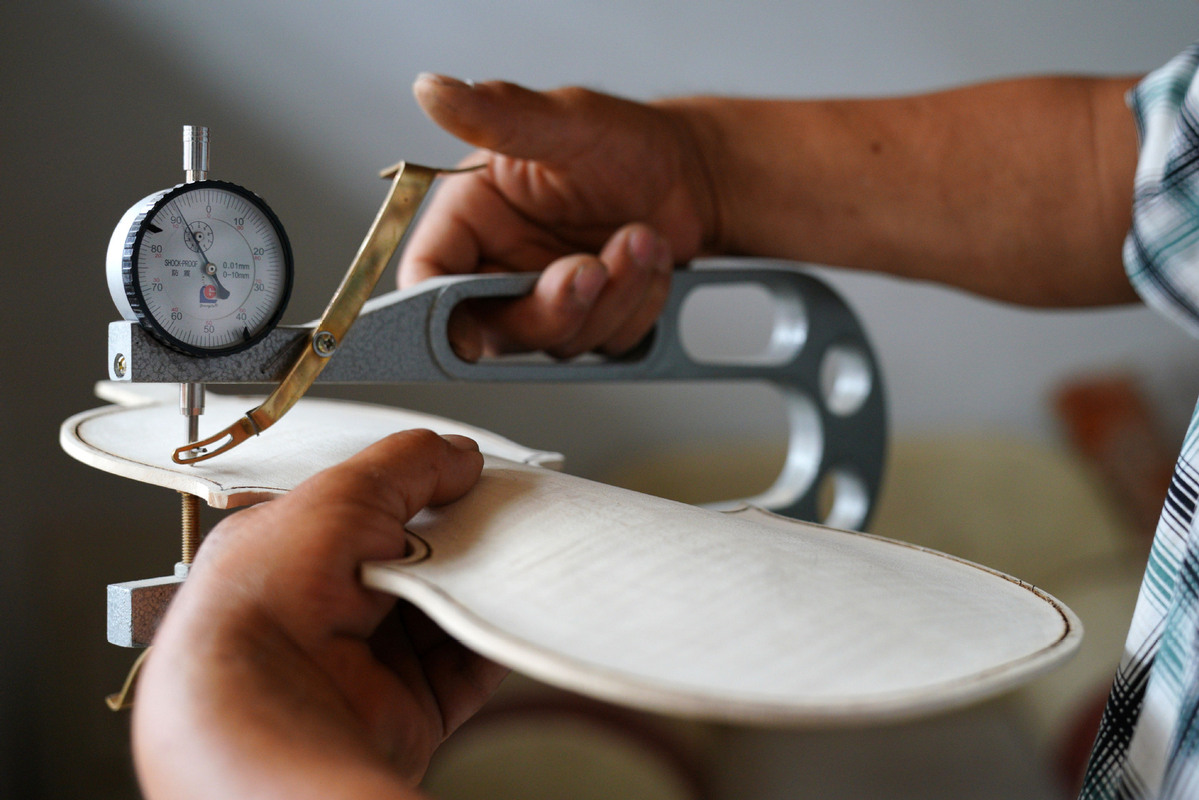
Wang's violin workshop has trained 50 skilled craftsmen over the years.
Violin making involves 40 processes! The industrial park has created jobs for more than 2,600 locals. It realized an output value of 600 million yuan ($85.4 million) in 2019.
Sun Yongqing, a 48-year-old farmer, shelved his hoe and found a job in the park in 2019. He is tasked with analyzing the quality of wooden materials and selecting suitable ones for making different kinds of violins.
"I am not in sound health, and it pushed my family toward poverty. This job does not take much effort and is close to my home," said Sun while sorting out spruce materials in order.
The job earns him a monthly salary of 3,500 yuan, which helped his family shake off poverty by the end of 2019.
None of the founding generations of the violin-manufacturing business in Queshan is familiar with western music. But they love to see their children learn the music. The violin makers offer the instruments for free to anyone willing to come to play.
Wang is proud that his son is studying in China's top music institution, the Central Conservatory of Music.
"Unlike the old guys, my son can make a violin and play it well. That is how our lives are getting better and better, " he said.