Will GDP rebound make bulls sprint?









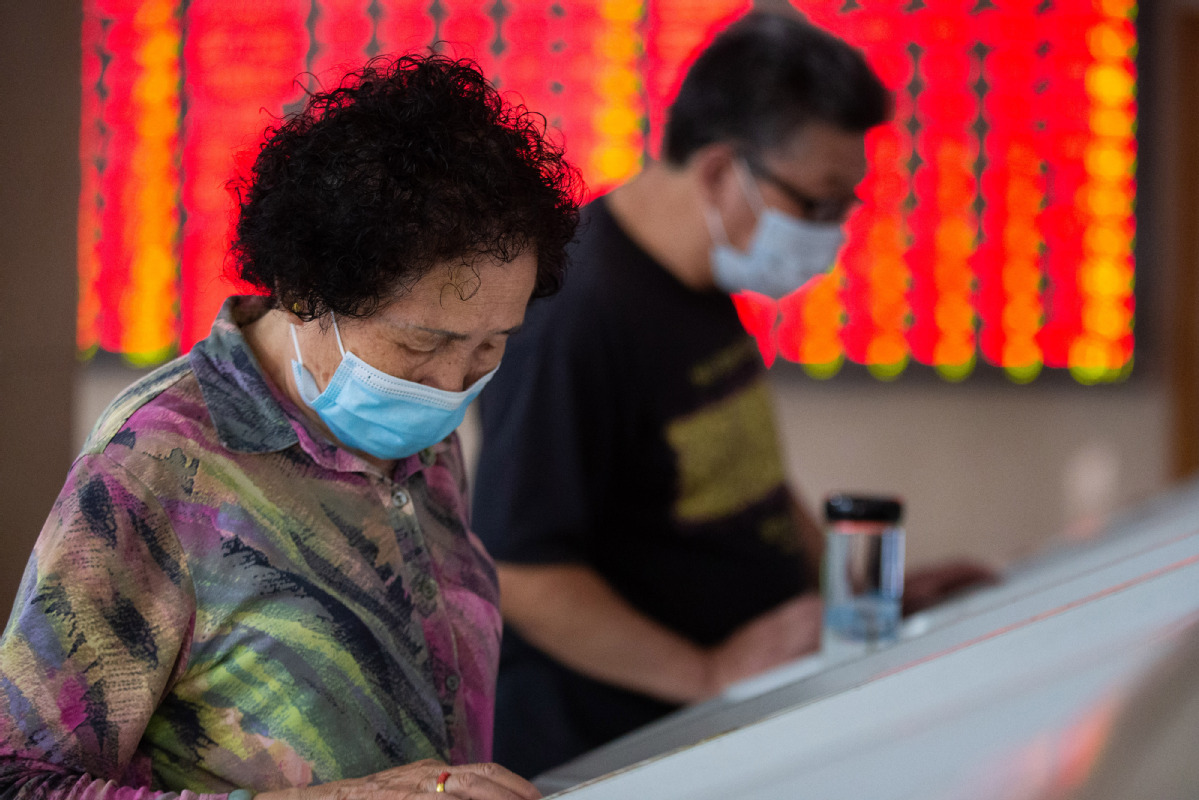
Investors may have mixed feelings about the robust rally in China's A shares since the end of June. Some may feel complacent or elated about ballooning profits of blue chips, but a large number of them appear to be fidgety, wondering whether the recent bull run would extend to all boards of the A-share market.
Such market behavior is understandable because no one knows for sure what exactly has caused the stocks to surge, given that the signs of an economic revival are only just beginning to brighten, now that the second-quarter GDP growth has come in at a better-than-expected 3.2 percent year-on-year.
First-half divergence between the A-share market's main board and the technology-heavy ChiNext in Shenzhen may partly explain the recent surge in trading volumes and the attendant spike in key indexes.
The ChiNext Index spiked 36 percent in the first half, while the benchmark Shanghai Composite Index dropped 2 percent during the same period.
Although capital has poured into the main board since June 30, the SCI climbed only 12.5 percent by July 15, which is still incomparable to what ChiNext had reaped in the first half.
In this sense, the recent A-share market glee does not necessarily indicate an overall bull market. A delayed replenishment in the main board may be a more reasonable explanation.
Then comes the question of what else may have caused the recent bull run. Adequate liquidity is one important driver. The M2, a broad measure of money supply that covers cash in circulation and all deposits, rose 11.1 percent year-on-year to 213.49 trillion yuan ($30.54 trillion) at the end of June, said China's central bank on July 13.
By the end of June, the People's Bank of China had injected more than 1 trillion yuan of liquidity into the market through various monetary policies.
It can be said that companies were provided with abundant liquidity to resume production after the COVID-19 epidemic. While most of the money will be used for production, it is well within the realm of possibility that part of it could have found its way into the stock market somehow, boosting the A-share market.
Look at foreign capital inflows. To respond to the market turmoil caused by the COVID-19 epidemic, the US Federal Reserve introduced a number of liquidity measures. While the valuation of the US stock market is approaching historic highs, the generally undervalued A-share market could become the next right target for US dollar investment. The continued northbound investment since July 2-the trading volume from overseas investors using the stock connect program between Shanghai, Shenzhen and Hong Kong-is solid proof.
The constantly reported defaults of trust products and the bankruptcies of peer-to-peer lending platforms have affected investor sentiment and preferences. Combined with the decreasing risk-free interest rate, the long-term investment value of undervalued companies has thus been magnified.
Another important driver of the recent rally is the low risk-free interest rate. The yield on China's two-year or five-year treasury bond has been lingering between 2.2 percent and 2.7 percent, while the 10-year treasury bond yield is around 3 percent.
The expected return of commercial banks' wealth management products, which has been widely adopted as an indicator to gauge risk-free interest rate since 2012, has been plummeting since the beginning of this year.
According to third-party wealth management service provider PYStandard, the average expected return on close-ended wealth management products came in around 3.79 percent by the end of June, which was the lowest in 43 months.
The seven-day annualized rate of return of Yu'ebao, China's largest money market fund, was merely 1.41 percent.
According to the asset management regulations announced by China's top financial regulators in April 2018, financial institutions should not promise to secure principal and return when issuing wealth management products.
The policy will officially take effect at the beginning of 2021. Therefore, wealth management products are more net value-based. Some net-value products even started to report losses in June.
In this sense, stocks may be the best investment target. In an ideal case scenario, an investor may see the stock he has invested in at the beginning of the day touch the 10-percent daily price increase at market close. Only, he has to worry about which companies he has to invest in.