MNCs bullish on Chinese lab automation sector









Multinational corporations are accelerating their pace of bringing advanced laboratory automation to China to tap into the country's surging testing demand and enjoy the country's favorable policies in stabilizing foreign investment.
By shifting from manual to automated operations, laboratory automation reduces preanalysis faults, improves the level of biological safety protection, increases test efficiency, reduces labor costs and improves laboratory management competence.
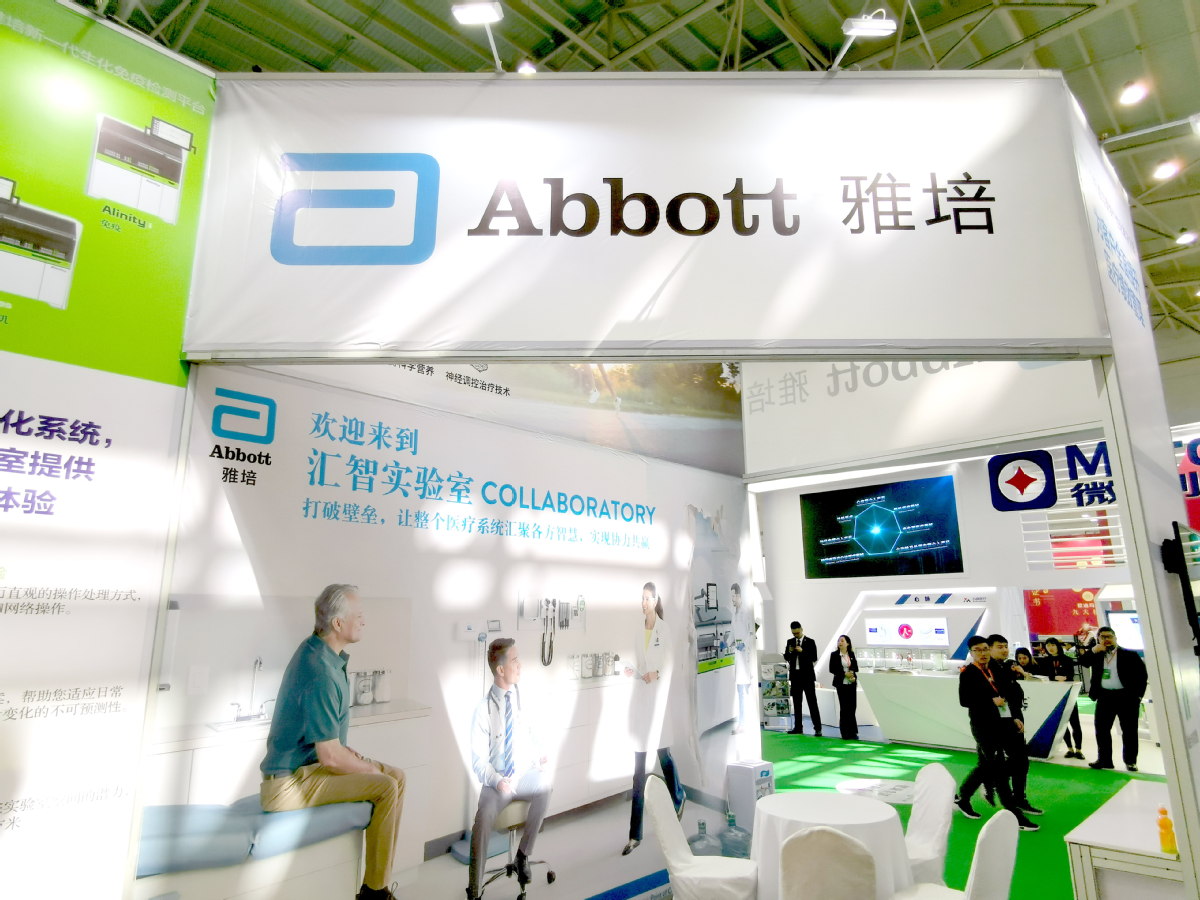
United States-based healthcare company Abbott announced that its laboratory automation solution-the GLP system-will be launched in China by the end of this month.
Tony Chan, vice-president of Abbott Diagnostics China, said that many hospitals in China have a long history, however, clinical labs face various problems due to limited space and lack of personnel. Therefore, Abbott is bringing its fully automated clinical laboratory to China to offer more efficiency and convenience.
Chan said Abbott's GLP system is a new innovation for laboratory automation. The modulation concept of the system has enabled more flexibility and adaptation, allowing laboratories to have diversified operational models and programs to cope with challenges posed by new technologies and new procedures.
"At the same time, the system has optimized user experiences to make training and daily use simpler. This is a laboratory solution that can meet demand from both current and future needs," he added.
Swiss medical enterprise Roche Diagnostics has also launched its laboratory automation solution in China. With an intelligent information management system, automated laboratories increase testing efficiency and optimize test process.
The company said its laboratory automation solution is expected to open up the 2.0 era of laboratory automation, meet clinical, laboratory and patient needs for higher quality and more efficient medical services, and help promote China's healthcare system development.
The State Administration for Market Regulation estimated that 440 million copies of testing reports will come out this year, and the number will continue to grow robustly.
Pan Boshen, head of the clinical laboratory at Zhongshan Hospital, said that in recent years, with the continuous deepening of the country's medical reform, patients are showing growing demand for better healthcare services, which brings about a need for higher requirements for test quality and efficiency of clinical laboratories.
Xu Yingchun, head of the clinical laboratory at Peking Union Medical College Hospital, said: "Currently, there are 100,000 clinical laboratories and 300,000 laboratory technicians in China. However, the uneven development of inspection disciplines at all levels of medical institutions is becoming prominent. The test workload will continue to grow, but personnel and testing areas will not be able to maintain continuous growth. Laboratory automation will become a trend."
He said that with advances in hierarchical diagnosis and treatment, the volume of outpatient clinics will continue to be diverted to grassroots-level hospitals, and the workload of inspections will be greatly increased.
The National Health Commission said that last year total visits to China's primary medical institutions reached 4.5 billion, taking up 52 percent of the total. The visits increased by 120 million compared to 2018.
The surging inspection needs in primary medical institutions call for laboratory automation, Xu said.
Industry experts said that with the deep integration of emerging technologies-including big data and artificial intelligence-with clinical laboratories, traditional testing laboratories are evolving toward automation, information and intelligence. With the government's favorable policies to stabilize foreign investment, multinational corporations are expanding their layouts in the sector.
Wang Bingnan, vice-minister of commerce, said earlier during the China International Fair for Trade in Services that China will further lower market access for its services trade industry, continue to reduce the negative list of foreign investment access and accelerate the opening-up process of sectors including healthcare.
Chan from Abbott said: "We attach great importance to the Chinese market. We have noticed the country's growing population, surging chronic disease patients as well as the aging society. We are constantly paying attention to China's healthcare needs and the dynamic market. In the future, Abbott will bring about better automation solutions for China's clinical laboratories to help hospitals operate more smoothly and benefit more patients."