Assessing risk of military conflict between China, US









Editor's note: Li Yun is a researcher at the Institute of Foreign Military Research of the Department of War Research, China's People's Liberation Army (PLA) Academy of Military Sciences. The article reflects the author's opinions, and not necessarily the views of CGTN.
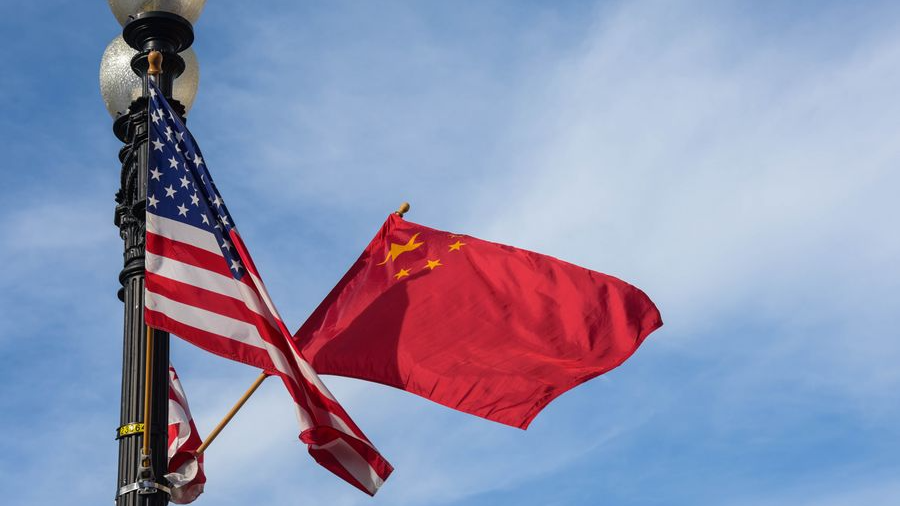
Since the Trump administration issued a new version of the National Security Strategy at the end of 2017, in which China is regarded as a strategic competitor for the first time, China-US relations have shown a trend of accelerated deterioration. As the US election day approaches, many experts are worried: Will the risk of military conflict increase between the two states?
Looking at history since China and the US resumed normal relations in the 1970s, the development of relations has roughly gone through three stages.
The first phase was from the restoration of normal relations to the end of the 1980s. This is the honeymoon period of the relationship, the main purpose being to join forces against the Soviet Union.
The second was from the late 1980s to the end of the Obama administration. At this stage, China continuously developed its economy and actively participated in globalization. The United States implemented a policy toward China that involved both containment and engagement, with a focus on the former.
The third is from the end of Obama's administration till now. Containment has become predominant. An increasingly powerful China makes the United States feel threatened, therefore the American political elites think that China's development should be restrained by means of containment and confrontation. In this context, no matter who becomes president, it is obvious that the United States will continue its intervention in China-related issues.
On that note, what is the risk of military confrontation between China and the US before and after the election?
The first thing that needs to be made clear is that China will not actively provoke a military conflict. Only the US can fire the first shot. Second, in the period leading up to the election, the main purpose of American provocation is to help Trump's campaign.
There may be four ways of military conflict between the two nations.
The first is a large-scale military conflict. There is, however, almost no possibility of a large-scale military conflict between the two nuclear powers. Even if large-scale military conflicts are limited to the use of conventional weapons, the chances of the US winning are very small. After the Cold War, all the war experience accumulated by the US is only the experience of fighting against opponents that were not its match. Since the Korean War in the 1950s, the US has never directly confronted any world power on the battlefield.
Moreover, the current domestic situation in the United States is turbulent and the society is divided. Under these circumstances, provoking a large-scale military conflict with China is counterproductive for the United States as it faces domestic and foreign challenges.
The second method is military conflicts of low and medium intensity, which are also unlikely. In today's world, it is basically impossible to rely on international mechanisms to mediate military conflicts of medium and low intensity between two major powers. Only one side's concession can prevent the conflict from escalating into a large-scale conflict. In the case of China and the US, any concession from either side will trigger a domino effect that will harm both their national interests.
The third is a proxy war. The possibility of the United States finding an agent to fight against China is very small, too. Although border frictions broke out between China and India recently, India, which is well versed in the checks and balances of great powers, obviously will not clash with China for the benefit of the United States. Countries around the South China Sea may rely on the United States to counterbalance China, but they do not want to be cannon fodder for the US
The fourth way is minor military friction, which can occur but is relatively controllable. Military friction is generally caused by misoperation. Whether intentional or unintentional, it provides a reasonable excuse for one side to make concessions.
Since the purpose of using military means is only to aggravate the tension between China and the United States in order to help the Trump campaign, chances are there will be controllable military friction at most so that both sides can effectively manage and control the crisis.