Number, capacity of ICUs growing steadily









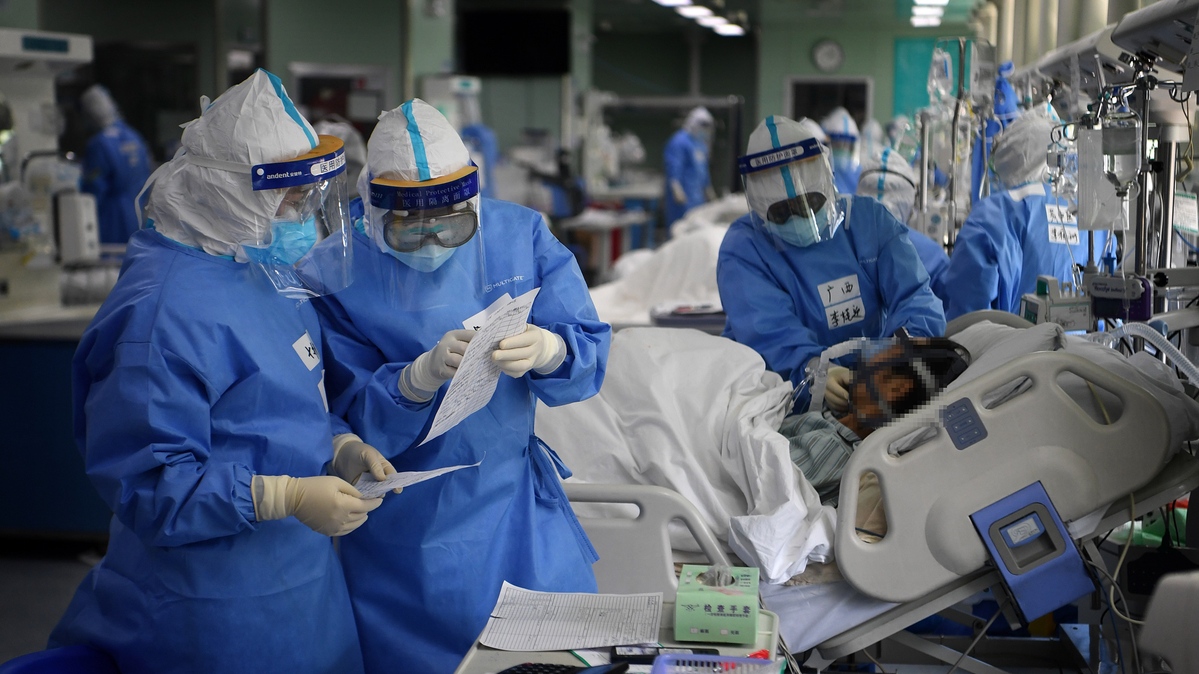
The capacity of intensive care in China has been climbing steadily in recent years, but more efforts are needed to strengthen critical care services in grassroots hospitals through sharpening their early warning systems and deploying remote technologies, a senior medical expert said on Friday.
The number of hospitals with intensive care units in China has quadrupled in the past decade to reach over 4,000, and there are now over 60,000 intensive care professionals and 100,000 nurses specializing in critical care, said Qiu Haibo, head of the Clinical Quality Control Center for Critical Care Medicine in China.
According to a report that examined about 3,000 hospitals with intensive care departments across the country, a total of 2.1 million intensive care patients had received treatment last year, with a death rate of 8.3 percent.
"The death rate has dropped steadily compared to previous years, and the incidence of infections common at ICUs, such as respirator-induced pneumonia, is also registering a steady decrease, signaling gradual improvements in quality control," Qiu said.
Intensive care also plays a leading role in combating public health emergencies, according to Qiu.
"About 19,000 of the 42,600 medical workers sent to Hubei province during the COVID-19 epidemic specialize in critical care. And one-tenth of all intensive care staff in China had participated in fighting against the disease in Hubei, the hardest-hit area in China," he added.
During the process, new treatment protocols, such as prompt intubation and respiratory support, have emerged to be shared with domestic and global medical experts, resulting in lower mortality rates for severe COVID-19 patients, Qiu said.
However, Qiu also noted that the distribution of intensive care resources in China remains uneven.
"Intensive care patients usually demand urgent treatment because their conditions are prone to deteriorate rapidly. Therefore, it is very difficult to transfer them and it is significant to step up intensive care capabilities at county-level and smaller hospitals," he said.
The strategy entails promoting the establishment of an early warning system in these healthcare institutions, which can monitor the condition of patients and facilitate detection of signs of them worsening, Qiu said.
"Meanwhile, we also stressed the use of remote diagnosis to allow senior experts to guide treatment in less developed and faraway areas online," he added.