Solutions set to shore up digital divide









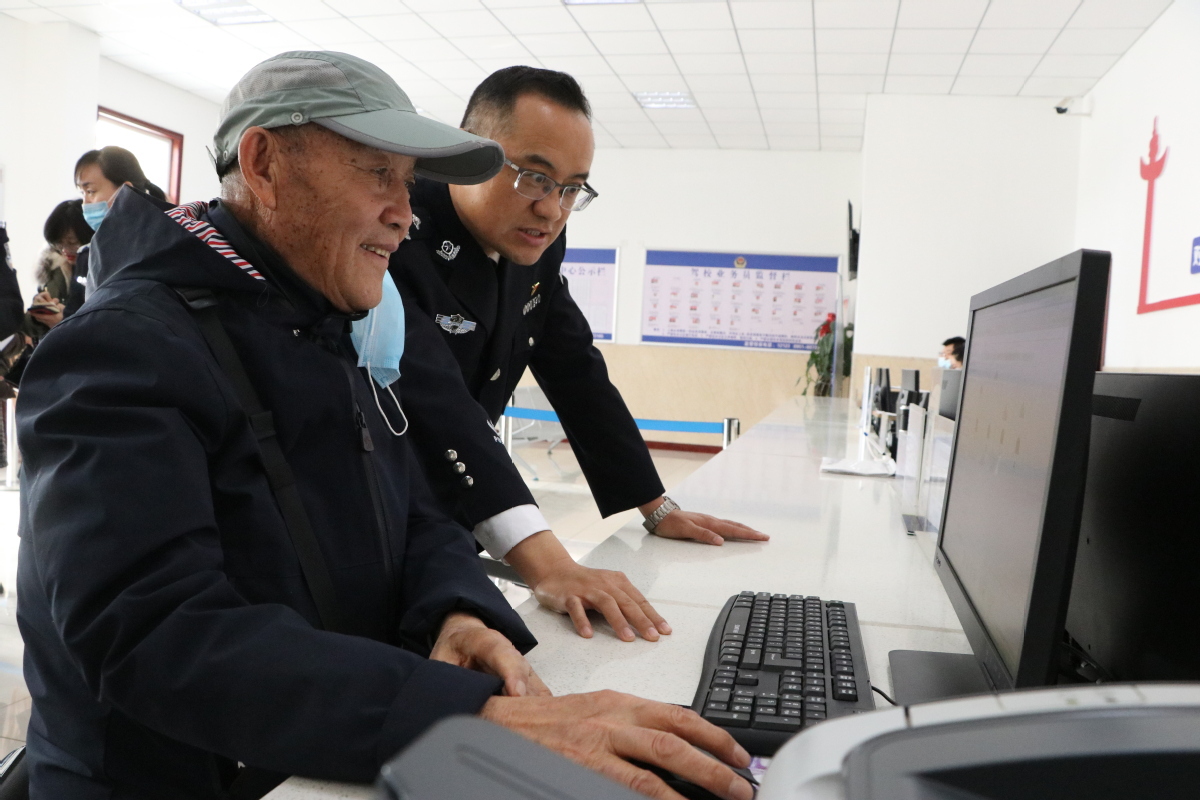
With digital services becoming an ever-increasing element of people's daily lives, policymakers in China said on Thursday that older, more traditional services should be retained for those who still want to use them, including the elderly.
Digital solutions have been widely applied to make things like running errands easier for most, however, traditional ways of getting things done should be preserved to help cushion the shift's dramatic impact on seniors and other groups who are scrambling to adapt, said Zhao Chenxin of the National Development and Reform Commission, China's top economic planner.
The principle will be upheld in a wide range of scenarios, such as when seeking health services, using public transport and passing checkpoints set up to control the spread of COVID-19, Zhao, the commission's secretary-general, said at a news conference in Beijing.
The principle, he added, will also be extended to sectors that have the potential to embrace large-scale digitalization in the future. "The emerging smart products and services have profoundly changed the way of life and production, and exerted huge influence on people's everyday lives.
"The changes have also meant higher requirements are needed for digital literacy, thus creating hardships for certain groups to adapt, especially for seniors," he said at the conference held by the State Council Information Office.
The event briefed on a recent guideline on bridging the digital divide facing seniors, defined in China as aged 60 and above, whose number is projected by the civil affairs authorities to reach more than 300 million in the next five years. The event attendees included officials overseeing some of the public sectors crucial to older adults, such as public transportation, medical services and banking.
Speaking at the event, Lu Xiangdong, head of the e-governance division of the General Office of the State Council, China's Cabinet, said the guideline was formulated based on a thorough analysis of seniors' everyday needs, and has created a timetable for closing the digital divide in stages in the three-year period ending 2022.
The goal scheduled for the end of this year is to tackle some of the most pressing issues over digital access, he said, in scenarios including how seniors can pay on public transport, pass through health checkpoints and use banking services.
Cases of the poor treatment of not so tech-savvy seniors have caused public debate in the past few months. The latest is from a video circulating online showing a short, elderly woman in her 90s being lifted to complete a facial recognition process at a bank in Hubei province. The bank in question later apologized for "lack of service consciousness".
"The hardship in navigating through digital technologies seems to be trivial, but in fact it is relevant to the interests of tens of millions of older citizens," said Lu.
The resolve to tackle tech-based exclusion comes as China is ramping up deepening reforms to address issues concerning the general public's livelihood, employment and public services.
In a landmark move last year, the central authorities unveiled a medium-and long-term plan to address issues around the country's aging population. It detailed moves to be taken up to 2049, including bolstering disease prevention and vocational education for older adults. In the plan, China will be able to support its senior citizens providing sufficient income, human capital, innovative technologies, healthcare and other services.
"Everyone has parents, and most families have older members," said Zhao of the National Development and Reform Commission.
"The guideline aims to let the older family members share the fruits of development."