Plan in place to foster international RMB use









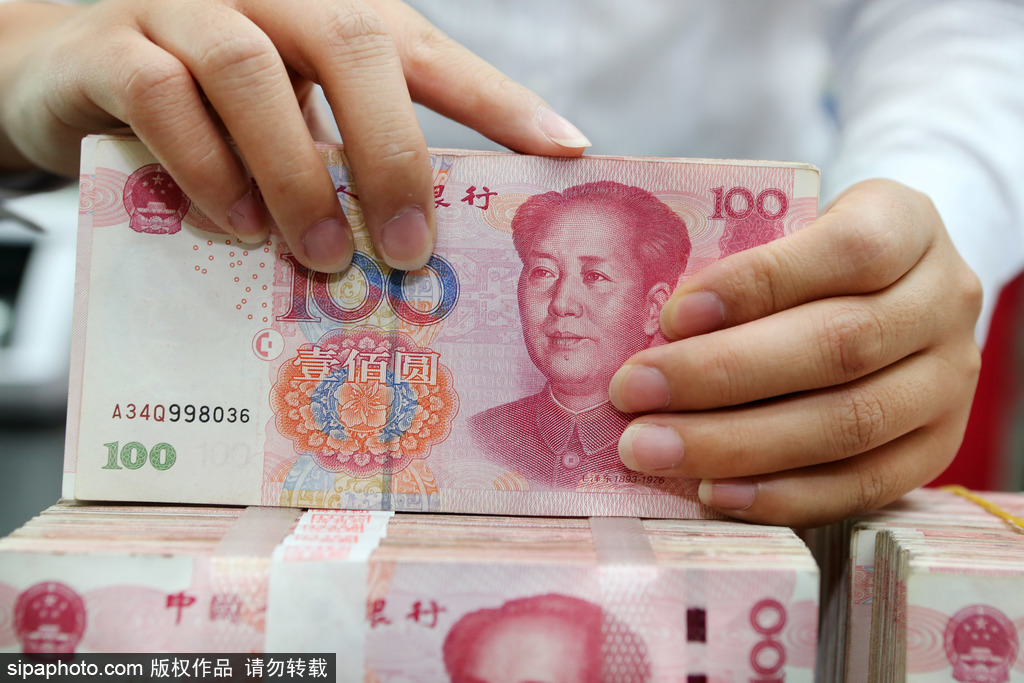
China's foreign exchange regulator has stressed the goal of generally freeing up in-and outbound cross-border capital flows in the mid-term to long term, and of building a capital management foundation for personal investment in foreign markets, according to a senior official.
Two-way free floating of cross-border capital should prevent violation of national security rules and limit high-risk trading. It should comply with requirements against money laundering, terrorist financing and tax evasion, Zheng Wei, deputy director of the State Administration of Foreign Exchange, said at the 2020 China Financial Forum on Saturday.
"We will also establish a system to manage personal cross-border capital transactions, which will satisfy reasonable requirements on individuals' outbound investments and their use of foreign exchanges," Zheng said as she specified the SAFE's key tasks in keeping with China's 14th Five-Year Plan (2021-25).
During that period, China will cancel or ease limits on cross-border investment and financing, expand foreign debt registration pilot programs and launch a unified capital pool for multinational companies to use renminbi and foreign currencies for investment, she said.
Experts say that will be a significant move toward fulfilling Chinese authorities' vow to gradually ease control on cross-border capital investment, which is the foundation of achieving a free-floating, market-oriented exchange rate for the renminbi.
Specifically, China will launch a policy framework for cross-border investment of private equity funds, using a negative list to manage the funds' overseas financing, Zheng said.
Meanwhile, the regulator will regularly issue quotas to domestic investors to encourage their purchases of financial instruments in foreign markets, under the Qualified Domestic Institutional Investor procedure, as well as launch pilot programs for cross-border wealth management products, Zheng said.
Policymakers and advisers have proposed adopting "high-level opening to the outside world", involving trade and investment liberalization, in the development plan for the next five years. The idea is that opening the financial system to overseas firms will usher in competition that could promote more efficient distribution of foreign and domestic capital within the Chinese economy.
Wu Xiaoqiu, a senior economist and vice-president of Renmin University of China, said that during the next five years, opening-up of the financial sector will increase global use of the renminbi, and the currency's "internationalization" process will accelerate.
The opening-up of China's foreign exchange market will also be improved in the coming years, based on a market-oriented process, Liu Guiping, vice-governor of People's Bank of China, the central bank, said on Saturday.
'Fostering real demand'
Liu promised to support free use of the renminbi in global trade and investment and to encourage overseas investors buying onshore bonds and stocks to use the renminbi through more sophisticated connecting programs between onshore and offshore markets.
"The renminbi's internationalization in the future will base on fostering the real demand for the currency overseas, and the government will encourage its use, especially in East Asia and countries related to the Belt and Road Initiative," said Zhang Ming, deputy head of the Chinese Academy of Social Sciences' Financial Research Institute.
The signing of the Regional Comprehensive Economic Partnership, the world's biggest trade pact, will provide a new driving force to renminbi internationalization, especially in neighboring countries, Zhang said.
In October, the RMB ranked as the sixth most active currency for global payments by value, with a 1.66 percent share, according to the Society for Worldwide Interbank Financial Telecommunication.
In terms of international payments, excluding those within the eurozone, the RMB ranked as eighth with a share of 1.09 percent in October, it said.
- Digital currency gaining acceptance in more sectors
- Chinese banks phase out use of 'counter-cyclical' factor in yuan pricing
- Onshore bond market access widened for foreign investors
- PBOC to promote further cross-border use of RMB
- China to resolutely deepen opening-up of financial sector: central bank governor