Private sector's role in health cover to grow









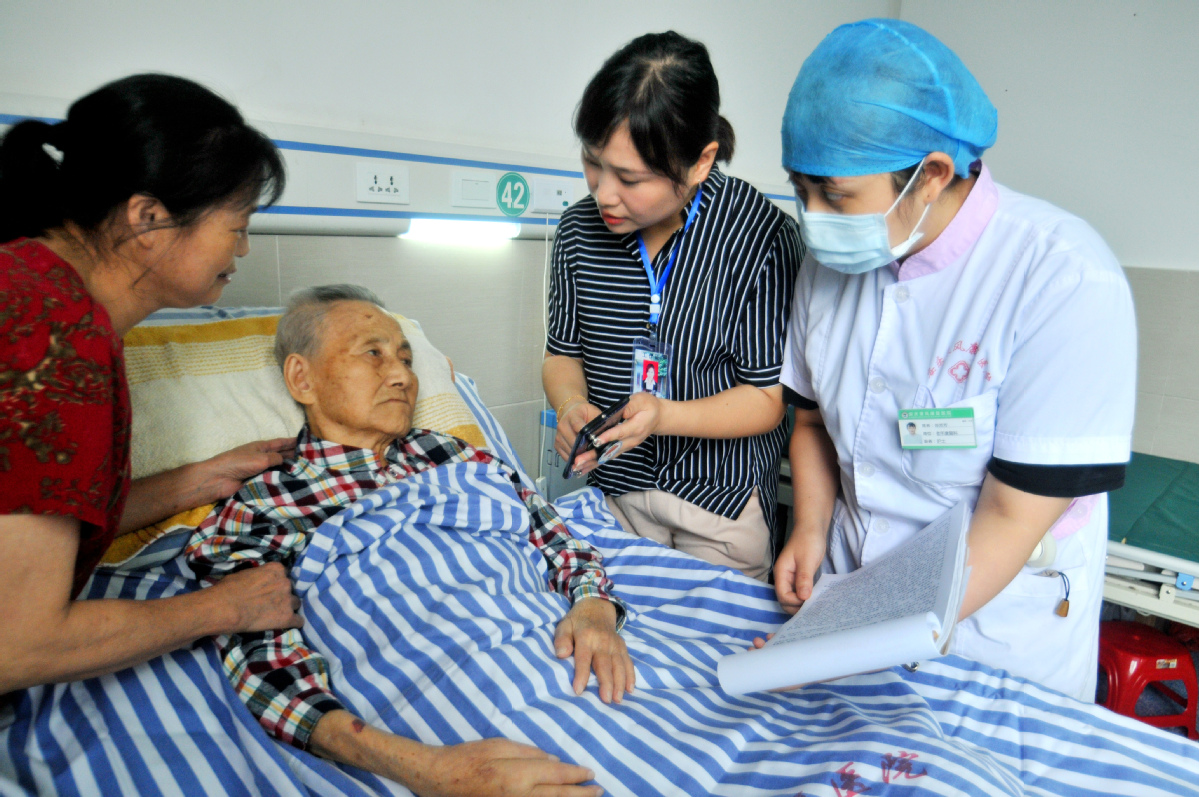
New reform aims at public-private partnerships and better corporate governance
Chinese authorities are facilitating a bigger role for the private sector in the nation's basic health insurance system, according to senior officials and experts.
In the future, once the new reform is implemented, the business model of health insurance could take the form of public-private partnerships, or PPPs.
PPPs would mark a departure from the current ecosystem and structure of the insurance sector, according to a blue book published by the National Institution for Finance and Development, a think tank under the Chinese Academy of Social Sciences.
"The reform has been listed on the government's policy agenda with relevant measures, including promoting corporate governance in medical security agencies and introducing private capital in insurance services," said Yan Jianjun, a researcher at the institution.
China is facing a challenge in caring for the aging population. Chronic diseases are expected to rise in the next five years, said experts. They expect a sharp increase in consumer spending on long-term healthcare. For its part, the government will likely bear a heavier burden of paying more social security fees.
The COVID-19 pandemic also accelerated the reform and commercialization of China's healthcare market and increased consumer acceptance of new models in health services, experts said.
Meanwhile, rising personal incomes will raise demand for higher-quality healthcare services, which will attract more private-sector investment and expand the role of commercial insurers, they said.
"In fact, several government policies have been rolled out to encourage private investment in healthcare-related business segments. Greater commercialization of healthcare services will open up more opportunities for investors and create scope for commercial insurance," said Frank Yuen, a senior analyst with Moody's Investors Service.
The PPP model is generally seen as less burdensome in terms of capital and cost commitments, but it requires strong cooperation and realignment of business models with partners, according to Yuen. "Potential mismanagement of these partnerships could result in risks to reputation and even compliance."
Huang Hong, vice-chairman of the China Banking and Insurance Regulatory Commission, said at a forum recently that regulators will support commercial insurance firms to develop long-term care products and to diversify insurance services, which will allow insurers to partly share potential financial risks.
"To actually reduce consumers' burden of medical expenses is the true value of the insurance industry," said Huang.
In the first three quarters of this year, health insurance premiums increased to 666.6 billion yuan ($101.19 billion), up 17.42 percent from a year earlier, compared with the growth pace of 16.42 percent total premium income in the insurance industry, the blue book indicated.
Policymakers set a goal last year that the health insurance industry, in terms of market size, should reach 2 trillion yuan by 2025.
Li Yang, chairman of the NIFD, said that as the government's expenditures for basic medical insurance are increasing amid the economic growth slowdown, commercial health insurance services will assume a more significant role in the sector in the future.
A recent research report authored by Yi Gang, governor of the People's Bank of China, the central bank, said that market demand for health insurance is huge in China.
Yi also issued a call for the deepening of the opening-up policy in the domestic financial sector, to invite more foreign insurance firms to participate in the domestic market. This, he said, will facilitate the health insurance industry's development in China, just as it had developed maturely in many other countries.
In recent years, health insurance has been key to the growth of premiums in the overall insurance industry in China. A major contribution came from critical-illness products, according to experts.
The CBIRC issued new guidelines for health insurance products in December 2019, which aimed to encourage the development of new products, such as long-term care products.
According to a study from Moody's Investors Service, as of the end of June 2019, the share of China's health insurance premiums expanded to 17.8 percent of the total insurance premiums, up from 9.6 percent at the end of 2015.