
男女羞羞视频在线观看,国产精品黄色免费,麻豆91在线视频,美女被羞羞免费软件下载,国产的一级片,亚洲熟色妇,天天操夜夜摸,一区二区三区在线电影
Global EditionASIA 中文雙語Fran?ais
Culture
Home / Culture / Art

Pictorial history of Chinese textiles

HK EDITION | Updated: 2020-12-23 09:36
Share
Share - WeChat
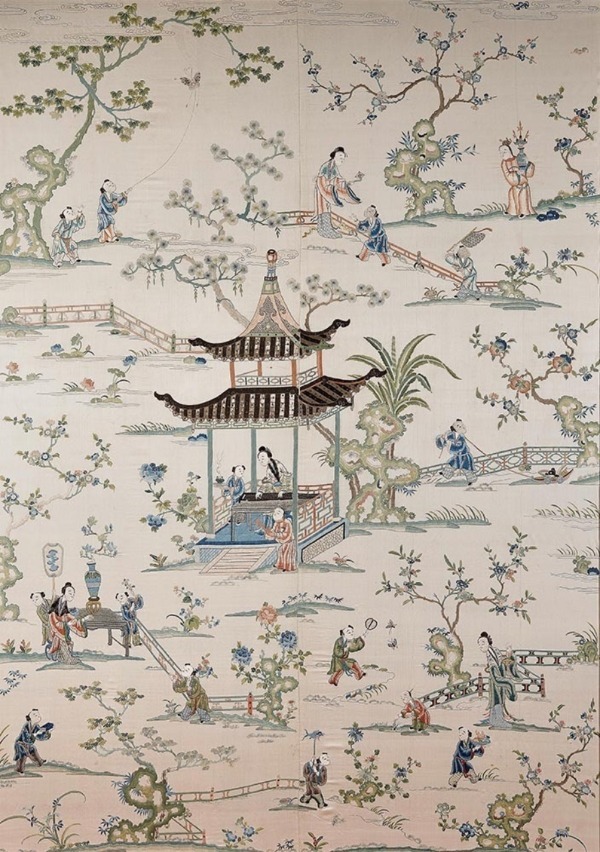
Ladies and Children, China, Qing Dynasty (1644–1911), 19th century, silk panel, 179cm x 126.7cm, gift of Mr and Mrs Wellington Yee, HKU.T.2005.1595 [Photo/Courtesy of the University Museum and Art Gallery, HKU]

When Italian Jesuit Matteo Ricci set foot in Nanjing in 1582, he was struck by the aesthetic splendour he encountered. "There are 200,000 weavers here and they weave a cloth made entirely of silk," he wrote. To Ricci, the long, loose sleeves worn by the Chinese were redolent of Venetian fashion and style. Yet silk wore multiple silhouettes in China that surpassed the physical appearance of dress.
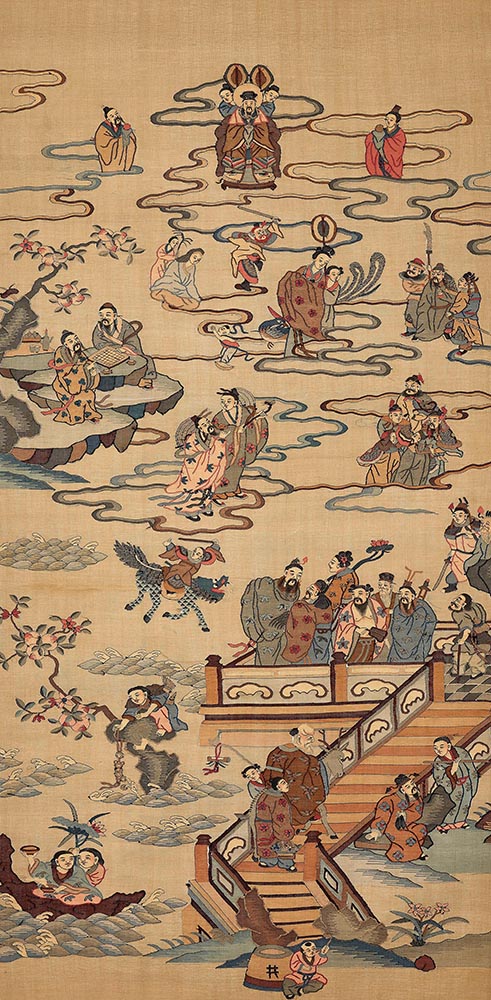
Gathering of Immortals, China, Qing Dynasty (1644–1911), 18th century, kesi (silk tapestry) with metallic threads, hanging scroll, 124.8cm x 61.5cm, gift of Dr Lam Kwok-pun, HKU.T.2008.1671 [Photo/Courtesy of the University Museum and Art Gallery, HKU]

Prized by Chinese and foreign merchants as an essential commodity on a vast trade network, silk had numerous purposes: as fabric for garments, as a form of currency (until the introduction of silver in its place), as a method of tax payment, and as a medium and subject matter for professional artists and the literati. What Ricci couldn't appreciate was just how rich and pervasive silk's influence would become.
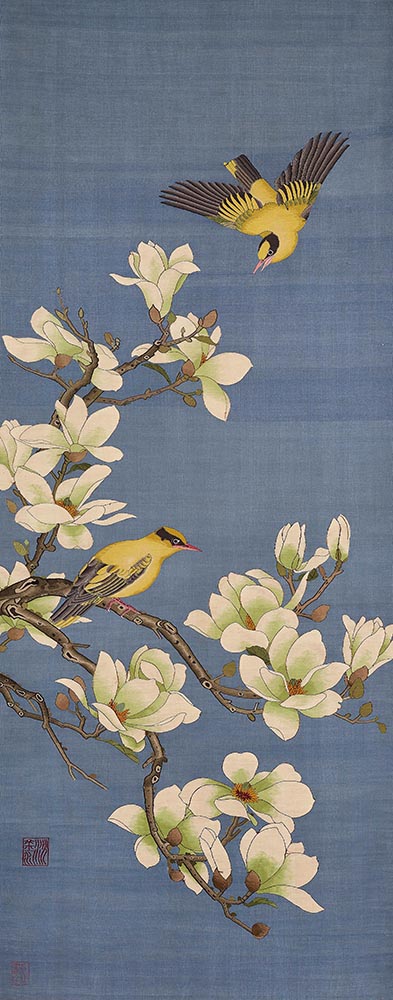
Orioles and Magnolias, China, late 19th or mid-20th century, kesi (silk tapestry), hanging scroll, 120cm x 47.5cm, gift of Dr Lam Kwok-pun, HKU.T.2008.1675 [Photo/Courtesy of the University Museum and Art Gallery, HKU]

Originating in the Song Dynasty (960–1279) – though a Chinese legend credits Leizu, the wife of the mythological Yellow Emperor, Huangdi, who taught the Chinese the art and invented the silk loom in the 27th century BCE – and flourishing into the Qing Dynasty (1644–1911), China's craftspeople used shuttles and needles as their brushes and silk threads as their pigments, creating meticulous, exquisitely woven and embroidered works.
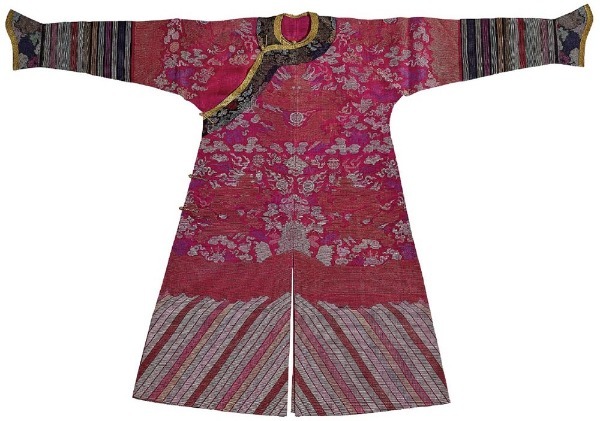
Dragon robe, China, Qing Dynasty (1644–1911), 19th century, silk with metallic threads, 130.5cm x 198cm, gift of Dr T T Tsui, Tsui Art Foundation Ltd, HKU.T.1996.1096 [Photo/Courtesy of the University Museum and Art Gallery, HKU]

Kesi (weft-woven silk tapestry) and cixiu (embroidery) became elevated into an interdisciplinary art form – a fusion of painting, calligraphy, and hand-weaving or embroidering. During the Yuan Dynasty (1271–1368), kesi panels were even being exported to Europe, where they were being incorporated into cathedral vestments.

Spanning the Qing Dynasty to the mid-20th century, the exhibition Pictorial Silks: Chinese Textiles from the UMAG Collection, showing at the University Museum and Art Gallery (UMAG) of the University of Hong Kong (HKU), encompasses a diverse range of subjects and formats that include 18th-, 19th- and early 20th-century hanging scrolls, framed panels and banners, along with 19th-century dragon robes. Each work exemplifies the sophisticated craftsmanship of the artisans and the collective stories of the Qing Dynasty's textile industry. It's on until March 14, 2021 – and it's not to be missed.
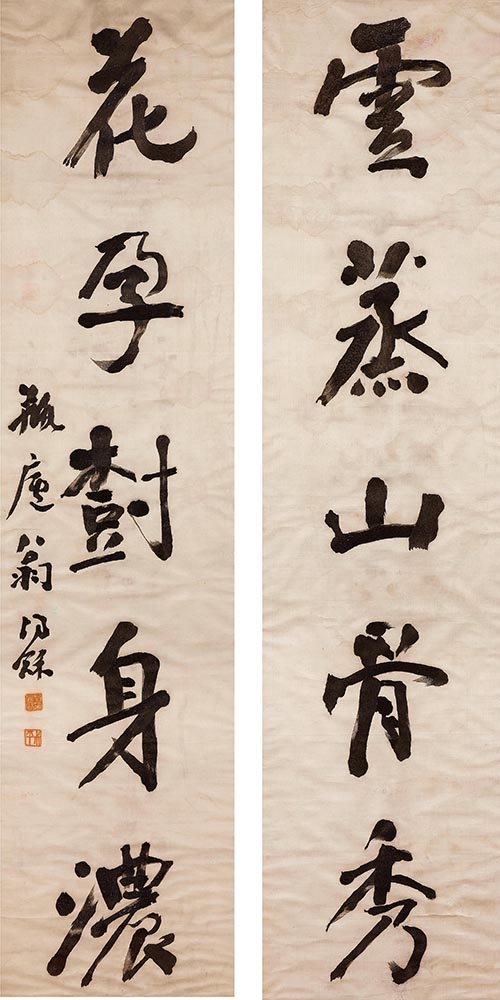

 

Embroidered calligraphic panels, China, Qing dynasty (1644–1911), late 19th or early 20th century, silk, upper scroll: 169cm x 41cm, lower scroll: 169.5cm x 40.8cm, gift of James W. C. Hong, HKU.T.2008.1787 [Photo/Courtesy of the University Museum and Art Gallery, HKU]
Most Popular
Top
BACK TO THE TOP
English
Copyright 1995 - . All rights reserved. The content (including but not limited to text, photo, multimedia information, etc) published in this site belongs to China Daily Information Co (CDIC). Without written authorization from CDIC, such content shall not be republished or used in any form. Note: Browsers with 1024*768 or higher resolution are suggested for this site.
License for publishing multimedia online 0108263

Registration Number: 130349
FOLLOW US
主站蜘蛛池模板: 宜春市| 尉氏县| 修武县| 吉安县| 永和县| 东丰县| 鸡泽县| 孙吴县| 乐平市| 柞水县| 当涂县| 明星| 新营市| 盐津县| 专栏| 德令哈市| 互助| 盖州市| 同江市| 舟山市| 菏泽市| 松潘县| 贡觉县| 建宁县| 隆回县| 福州市| 开阳县| 稷山县| 康马县| 出国| 岳普湖县| 浪卡子县| 龙岩市| 天全县| 晋江市| 闵行区| 石狮市| 宣城市| 漾濞| 通江县| 景德镇市| 新竹市| 明溪县| 安西县| 漯河市| 禄劝| 青川县| 石楼县| 芦山县| 扶风县| 安龙县| 晋宁县| 雅安市| 吉隆县| 牟定县| 十堰市| 大英县| 来凤县| 岐山县| 渝北区| 麻城市| 朔州市| 曲周县| 汶上县| 沙洋县| 琼结县| 河曲县| 云和县| 云安县| 正定县| 莱州市| 亚东县| 云阳县| 万荣县| 克什克腾旗| 道真| 义马市| 涟源市| 托里县| 许昌市| 巴塘县| 德兴市|