The coming boom in western China









In China's eastern provinces, global companies in labor-intensive industries like electronic assembly and processing tend to invest relatively more, especially in land and labor.
Glad tidings await such companies, however, in China's vast western region with more than 400 million population.
The western region is expected to become competitive in attracting more foreign direct investment in the manufacturing sector, and is foreseen vying with India and Southeast Asian economies for the next wave of FDI inflows.
In recent years, Southeast Asian countries, in particular Vietnam, have emulated many of China's development paths, including establishing bonded areas, industrial parks and zones, to attract FDI from the US, the European Union, Japan and South Korea.
But the FDI scales may tilt in China's favor again as the country has already put in massive efforts to cut costs for global investors.
It is commonly believed that as long as the cost gap continues to widen with foreign rivals, it is impossible for any external force to defy economic laws and let manufacturing businesses flow out.
Typically, costs are categorized under raw materials, wages, utilities, manufacturing facilities and taxes.
They hold no terror for investors eying provinces and autonomous regions in China's western parts. A number of big-ticket hydropower and photovoltaic power stations are coming up in the region.
Companies such as China Energy Engineering Group Co Ltd, SDIC Power Holdings Co Ltd, Huaneng Lancang River Hydropower Inc and State Power Investment Corp are helping build such projects in the western region.
For instance, the first batch of power plants of the Baihetan hydropower station in Southwest China are scheduled to start operations in July.
Upon completion, the mega power station is expected to generate more than 62 billion kilowatt-hours of electricity per year on average. It will play a vital role in reducing emissions and preventing floods, according to information provided by the State-owned Assets Supervision and Administration Commission of the State Council.
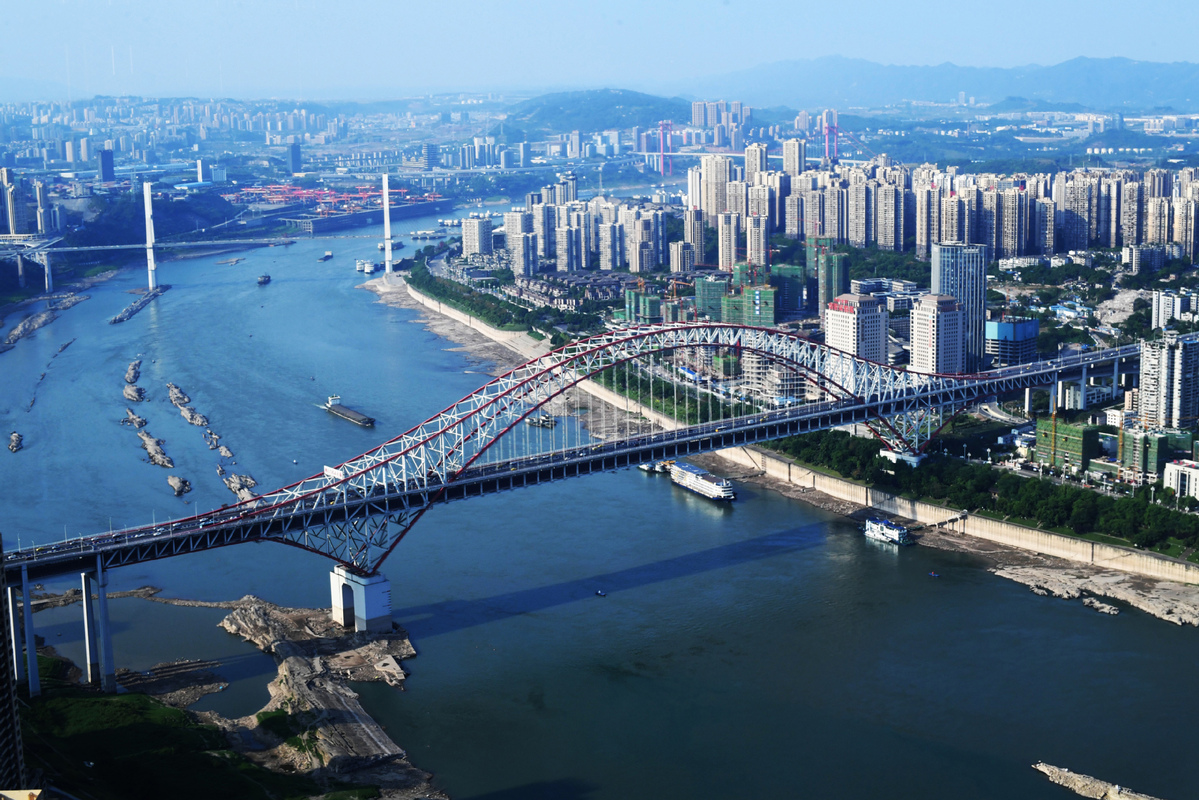
Apart from cutting the price of electricity generated by photovoltaic power, China has been enriching transportation networks and lowering the transportation cost of raw materials in its western parts.
Specifically, it has used high-speed roads and railways, and the China-Europe freight train service routes, to integrate the country's west into the national transportation network stretching all the way to the east and other regions.
Industrial parts and raw materials from the coastal provinces can be smoothly shipped to various production bases in western China at a lower cost now.
As at the end of 2020, Southwest China's Guizhou province transformed itself into a regional land transportation hub. The total mileage of expressways exceeded 7,600 kilometers, longer than 4,924 kilometers built by eastern China's Jiangsu province, according to the Ministry of Transport.
Amid such developments, China's western provinces and autonomous regions will have more cards to play while competing for FDI with their rivals in Southeast Asia. For example, the drop in electricity prices will increase the attractiveness of the power-intensive semiconductor industry.
Southeast Asian countries would do well to remember the hidden dangers in bundled development of the kind seen after the Asian financial crisis in 1997 and after the global financial crisis in 2008-09. Once economic growth of developed countries shrinks, they start to protect themselves, cut orders, and scale down financial support to manufacturing bases.
Instead of laying emphasis on industrial transfer of developed economies, China, backed by well-developed industrial and supply chains, has already widened its presence in key fields like scientific and technological innovation, and intensified the connection with strategic emerging industries led by 5G networks, artificial intelligence, data centers and industrial internet.
China has also helped minimize global companies' operational costs in the country via strong infrastructure capabilities, policy facilitation and modern services.