Revived rail travel may be one answer to climate issue









A German-funded report this month recommended reviving the Trans Europe Express, a rail network that provided direct passenger connections among the continent's capitals for almost four decades until being suspended in 1995.
The first-class service lost out to short-haul air routes that became the preferred option for linking the countries of the European Union, particularly for business travelers and people on holiday.
However, the environmental groups that prepared the latest report argued that reactivating the network is key to meeting carbon neutrality in Europe by 2050.
The German initiative-the Berlin government first floated the idea last year-is a further sign of the back-to-the-future moment for rail, a 19th century transportation innovation that was eclipsed by the internal combustion engine and the airplane in the 20th century.
Around the world, strategic planners are waking up to the idea that when it comes to transporting goods and providing mass mobility in a climate-challenged world, you cannot beat the train.
Rail development certainly did not stand still in the 20th century. But many governments, particularly in developed countries, switched to fostering the construction of freeways and airport infrastructure as they planned their transportation futures.
The United States, a country arguably built on railroads, still has the world's largest rail network, with more than 240,000 kilometers of track. But much of that is dedicated to often slow-moving freight, while only about 32,000 km is dedicated to passenger links.
The US has been a late adopter of the kind of high-speed rail pioneered by the Japanese and the Europeans. Since 2003, when the Qinhuangdao-Shenyang route was inaugurated, China has led the field in fast rail connections based on its own domestic train-building industry.
The spur for subsequent Chinese rail expansion was the need to provide economic stimulus to meet the challenges of the 2008 global financial crisis, an example of how passive developments can sometimes spearhead positive innovation.
In light of the existential threat of climate change, fueled to a large extent by the explosion of air and road travel in the 20th century, railways updated for the new century may provide at least part of the solution.
In face of the more immediate COVID-19 pandemic crisis, all forms of travel have suffered from the impact of lockdowns and other health restrictions. Passenger numbers have tumbled and services have been slashed.
This has created a short-term hit for the railways as much as for the airline operators. Automobile use has remained relatively high and may even receive a brief post-pandemic boost after a period in which people have become wary of public transportation.
In the longer term, however, a further expansion of automobile use, even electric ones, would likely create more problems than it would solve as a replacement for mass public transportation.
For most countries, their sometimes overlooked and undervalued rail networks are a vital strategic necessity. And that is why, despite the challenges of the pandemic, governments are likely to intervene to prop them up in these challenging times.
France has stepped in to support Eurostar, the operator that runs channel tunnel services between Britain and Europe, which have fallen to just four journeys a day because of the pandemic. It is urging the British government to do the same.
Less than three decades after the first passenger services under the Channel Tunnel, it is unimaginable they would now cease. The same could be said for a plethora of modern train services that have been added around the world during the high-speed revolution.
The cross-channel service is a shop window for the superiority of train travel even in the 21st century, an era in which past futurologists once predicted we would be traveling by personal submarines, jet packs or propeller-driven private cars.
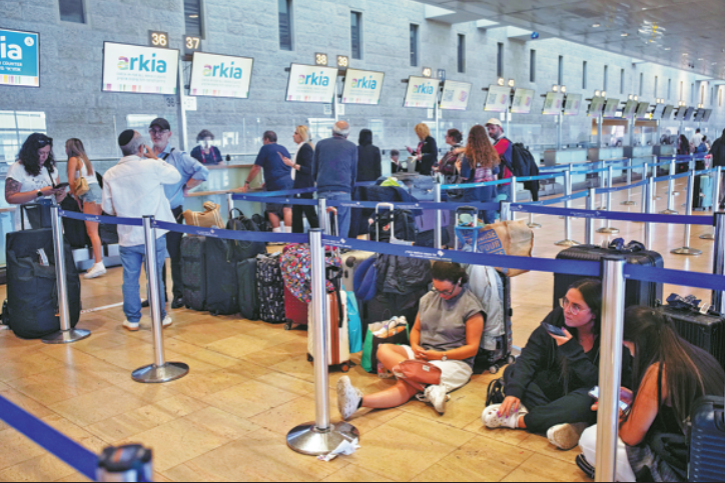
In happier days, you can check in at the last minute in London and be in Paris or Brussels around two hours later. There is little waiting time, security checks are limited, and there is no long trek from a distant airport once you arrive. Passengers can walk around, grab a snack and generally avoid the indignities of crowded modern air travel.
As the world emerges from the pandemic crisis and focuses on the No 1 challenge of confronting climate change, how we travel will be a crucial element in planning for a greener future.
Today's futurologists might ponder that the early rail pioneers, who first put steam-powered trains on the tracks at the start of the 19th century, had already provided the best answer for their descendants in the 21st century.
The author is a senior media consultant for China Daily UK. The views do not necessarily reflect those of China Daily.