Unified trading key to emission cuts









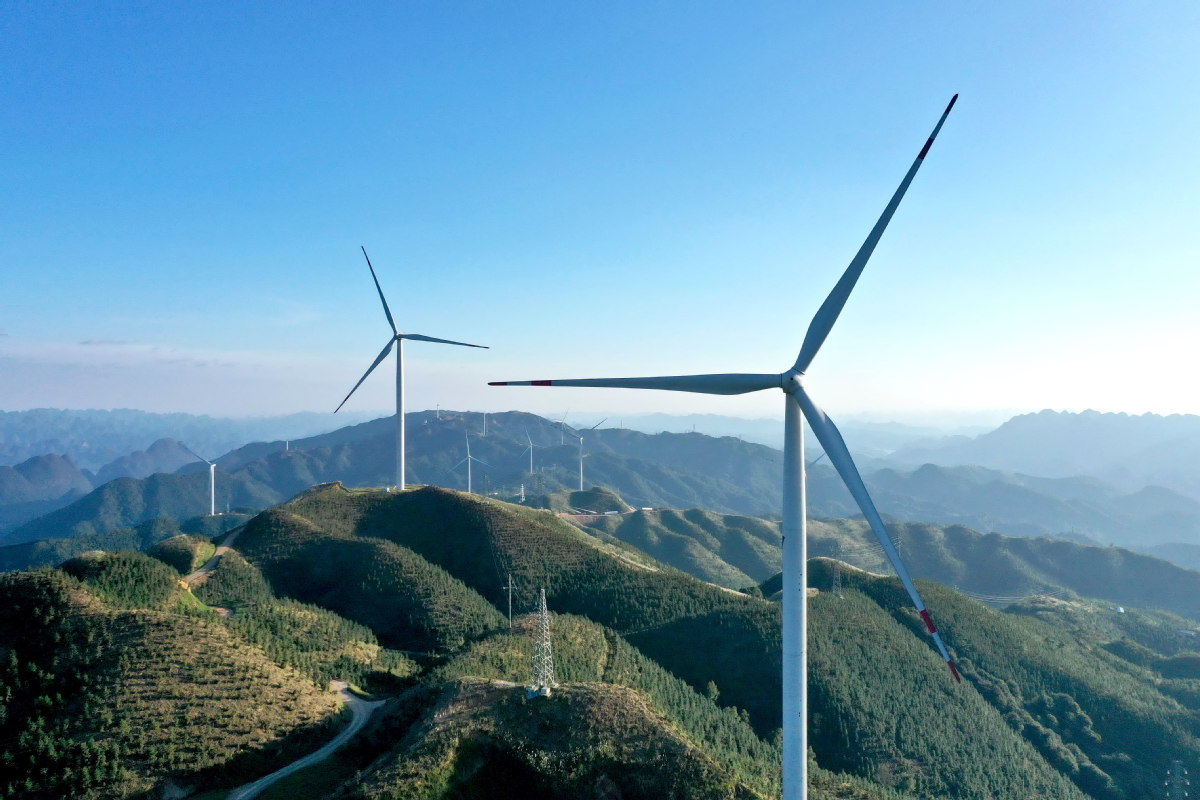
Building a national emission trading program could be the next move in China to transit to a low-carbon economy, analysts said.
Starting from Feb 1, the country's first unified management rule of emission trading began a trial run. And from the beginning of this year, more than 2,000 companies in the power generation industry received the first set of quotas for annual carbon emissions.
The power generation sector has been identified as the first sector to be included in the first compliance cycle of China's emission trading program, starting from Jan 1, and has until Dec 31 to meet compliance obligations for 2019 and 2020 emissions, according to the Ministry of Ecology and Environment.
Analysts saw the moves as fulfilling promises made by the Chinese authorities, which began planning a national emission trading program in 2017 with the aim of a full launch by end-2020.
This would be the world's largest national emission trading program, said the World Bank Group.
The national emission trading program is expected to first cover coal and gas-fired power plants, with emission allowances allocated depending on a plant's output and technological mix, said Andrew Steel, an analyst with Fitch Ratings, an international ratings agency.
The program will be expanded to seven other sectors covering around 30 percent of China's emissions in the next stage, including petrochemicals, chemicals and building materials, and will become the world's largest emission trading system, Steel added.
"As a price-based tool, carbon emission trading has a series of advantages, which can help achieve the original intention of policy setting," said Zhu Jun, a senior official from the People's Bank of China, the central bank.
For example, the government can set the upper limit of the total annual carbon emissions so as to make emission reduction results more intuitive and clear. The interconnection between different emission trading programs can promote the coordination of cross-border emission reductions and promote carbon market liquidity as well, Zhu said.
There are 21 emission trading programs in the world so far covering carbon emissions of about 4.3 billion metric tons annually, which account for 9 percent of the world's total emissions, the PBOC said.
At present, 64 carbon pricing initiatives have been implemented, or are scheduled for implementation, covering 46 national jurisdictions worldwide, according to the World Bank Group.
Based on domestic and global practices, the carbon market naturally has "financial attributes". The achievement of emission reductions and net zero needs long-term and cross-cyclical investment in the face of high uncertainty. It requires the market to have risk management tools and functions, and the market needs to develop related financial derivatives, a PBOC official said.
Analysts believe that a comprehensive national emission trading program will increase carbon prices in China, and spur investment in low-carbon technologies.
As interest from international investors in China's green finance market is growing, it will spur information disclosure related to environment, social and governance. Meanwhile, interest in ESG investment among domestic investors in China, although it is low compared to other regions now, is expected to grow, Fitch said.
EY, an international professional services firm, announced recently it would support clients' sustainable development strategies to reduce total emissions by 40 percent and achieve net zero by 2025.
Specific plans include reducing business travel emissions, cutting overall office electricity usage, procuring renewable energy for remaining needs, structuring electricity supply contracts and investing in services and solutions that help clients decarbonize their businesses.
Goldman Sachs also listed four key interconnected technologies for China on the path to net zero emissions-renewable power, clean hydrogen, battery energy storage and carbon capture technologies.