Seeds placed in food security spotlight









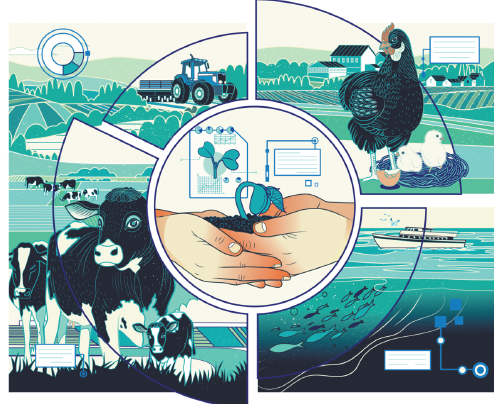
Nation is self-sustaining but lags others in production of superior varieties
China will further protect seed resources, make scientific breakthroughs in seed cultivation and regulate the seed market to boost the industry and consolidate food security, a senior agricultural official said recently while introducing the No 1 central document for this year.
"We have no problem supplying enough seeds to survive, but we are really lagging behind regarding the quality of some varieties," said Tang Renjian, minister of agriculture and rural affairs.
China has achieved self-sufficiency in grain seeds as more than 95 percent of planting areas in the country are using domestically cultivated crop varieties, providing stable supply for grain and agricultural products.
Zhang Taolin, vice-minister of agriculture and rural affairs, said China still needs to solve the shortfalls in the seed industry to reach world-class levels.
The yields of soybean and corn in China are less than 60 percent of the scale in the United States, and foreign crop varieties account for 13 percent of the total area of vegetable planting.
More than 50 percent of special varieties such as tomatoes and bell peppers and most of the ancestral breeders of white-feather broiler chickens are imported.
"The development of these varieties directly affects the quality, speed and benefits of China's agricultural development," Zhang said.
China still lags behind in terms of breeding theory and core technology, and seed industry companies need to increase their competitiveness to realize innovation, he said.
"We need to accurately identify seed resources, improve seed banks and build up a protection system," he added.
Liu Chunming, dean of the School of Advanced Agricultural Sciences under Peking University, said evaluation and utilization of germ plasm resources are also key to innovation in the seed industry.
"China has preserved more than 520,000 pieces of germ plasm resources in seed banks, but only if we find out which one of them carries the head blight (a disease affecting wheat and barley) resistance genes can we transfer the genetic trait to a modern variety," Liu said.
The seed industry needs superior varieties that have high yields and quality, optimal nutrition, high resistance to disease and can be flourish in different places.
Accurate seed identification from germ plasm resources in seed banks is helpful in the cultivation of new genetic resources of seeds to make superior varieties, and a project to boost such evaluation has been included in the 14th Five-Year Plan (2021-25), Liu said.
However, the process of making a superior variety requires at least 10 years, and it takes two to three years to evaluate one genetic trait.
"So related ministries and academic institutions are expected to support long-term efforts to create new genetic resources," Liu said.
The No 1 central document for this year, released last month by the Ministry of Agriculture and Rural Affairs, stated that the country will conduct its third germ plasm resource survey on crops, poultry and marine organisms and continue establishing seed banks.
"Long-term and stable support will be given to basic research and major projects related to breeding," it said.
Wan Jianmin, vice-president of the Chinese Academy of Agricultural Sciences, said enterprises should play a dominant role in technical innovation by building commercialized R&D platforms and cooperating with institutions.
But some enterprises have refused to invest in innovation because they worry that their continued achievements might be stolen, Liu said.
"The country should create genetic resources patents and set up strict laws for new varieties to protect the innovation enthusiasm of researchers and companies, in order to have an edge on the world seed industry," Liu said.
The No 1 document said the country will do research on policies regarding subsidies for R&D and promotions of major and superior varieties.
"Strengthening the protection of intellectual property is vital to regulating the seed market and ensuring innovation in the industry," said Zhang, the vice-minister.
As the document showed, the country will advance the development of the national seed breeding base in the coastal city of Sanya, Hainan province.
The facility, called the Nanfan Scientific and Research Breeding Base, is also China's global transfer base for the introduction of animal and plant germ plasm resources. The first batch of imported plant seeds were introduced for research in May.
Less than a quarter of the crops that China is growing are domestic, so it has fewer crop germ plasm resources than those that came from abroad, Liu said.
"Apart from protecting and utilizing germ plasm resources in our seed banks, it's also necessary to share excellent seed resources with other countries," he said.
The world is embracing the technological revolution of modern biological breeding, which features gene editing, synthetic biology and artificial intelligence.
Since genetically modified agricultural organisms were granted for commercial planting in 1996, the genetically modified crops area worldwide have covered 2.7 billion hectares in 29 countries while more than 40 countries and regions have imported genetically modified organism products, Zhang said.
China will keep promoting the industrial application of GMOs under stringent regulations and safety standards to improve people's lives via modern bio-breeding technology, he added.
Wang Xiaoyu contributed to this story.




- First cross-border event debuts at the National Games
- China Focus: National Games enhances coordination under 'one country, two systems'
- China's Fujian aircraft carrier to make regular appearances on high seas: spokesperson
- A decade of dialogues
- HK: a stage for art and cultural dialogue
- Tapping truly unknown wonders