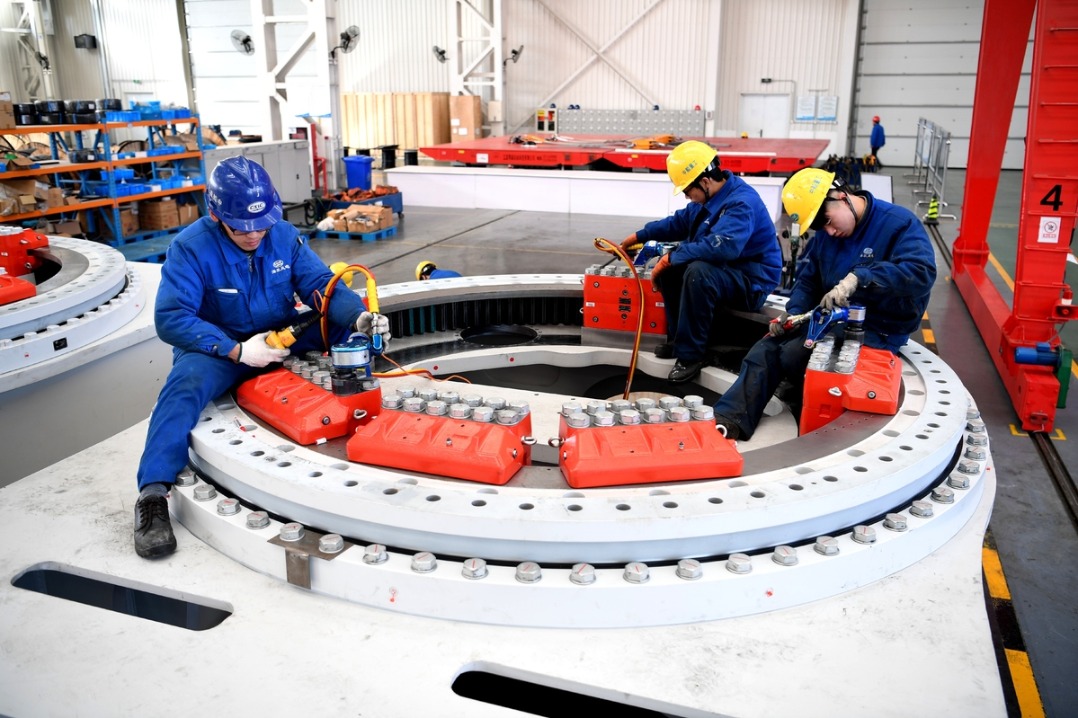
Global shortage sparks run on vintage chipmaking machines










Massive demand for semiconductors drives resellers in the United States to hunt for and buy old tools
San Francisco-Minnesota-based Polar Semiconductor makes chips for automakers but is booked beyond capacity. Expanding production lines to help solve a chip shortage that is shutting down car factories around the world is not feasible-in part due to the scarcity of older-style chipmaking machinery.
Chip factories like Polar use these tools to make chips on 200-millimeter silicon wafers, which were state-of-the-art two decades ago. Now, advanced chips are made using much larger wafers, but there is still much demand for simpler, older chips.
The demand has been supercharged by a combination of the COVID-19-driven boom in computer gear and unexpected strength in auto sales.
General Motors on Wednesday extended production cuts at three North American plants and added a fourth to the list of factories hit. Fiat Chrysler owner Stellantis warned the pain could linger far into the year. Shortages forced Ford Motor to slash shifts for production of its F-150 pickup truck, a longtime profit driver.
Automakers use a range of chips in cars. Some, such as those in infotainment systems, are made in the same cutting-edge chip factories that make smartphone chips. But chips in braking and engine systems are made using older, proven technologies that meet automakers' durability and reliability requirements.
The machines to make those older chips can take six to nine months to find, said Surya Iyer, vice-president of operations and quality at Polar.
"There's no way I can expand capacity beyond just stretching my limits," Iyer said. "A real capacity increase would take nine to 12 months, minimum."
Resellers of chipmaking gear say they cannot find used equipment, leading some buyers to stalk old factories in the United States, Japan and Europe, waiting for them to close in hopes of snapping up the gear inside.
"Demand is hot for used equipment, but we don't have enough of them to cope with demand," said Bruce Kim, chief executive of South Korea's SurplusGLOBAL, one of the largest dealers of used chipmaking gear.
He said used equipment prices have gone up by as much as 20 percent over the past six months. Meanwhile, the number of refurbished 200 mm tools fell to 1,000, down from between 7,000-8,000 a decade ago.
Ohio-based Rite Track, in normal times, would buy up old chipmaking equipment, upgrade it and sell it to chip factories.
But Chief Executive Tim Hayden said the recent squeeze has spurred the company to spend more time sending technicians out to upgrade tools that are installed on factory floors in order to squeeze more chips out of them.
"You just can't go out on the open market and buy a used 200 mm tool. They're just not readily available," Hayden said. "So people are getting a little bit more creative."
Demand for old tools is so robust that buyers are looking at every kind of factory. One example is Spin Memory in Fremont, California, which is designing a new kind of memory chip.
It maintains a small "pilot production line", mostly to provide samples to potential customers, said Chief Executive Tom Sparkman. Even though Spin Memory's tools use 20-year-old technology, Sparkman gets offers to buy them almost every day.
"We haven't taken the plunge to get rid of it yet, but some days it's tempting," he said.
Toolmakers such as Applied Materials and Lam Research, meanwhile, are enjoying a boom in business by refurbishing or recreating some of their greatest hits from the 1990s and earlier.
"It's really exploding," said Mike Rosa, head of strategic and technical marketing for a group at Applied Materials, the world's biggest chip-equipment vendor.
David Haynes, a managing director at Lam Research, said demand for 200 mm tools was once mostly from China as it worked to build up its domestic chipmaking industry.
Now, he said, customers from around the world are looking to buy or upgrade older tools.
Still, investment in older technology lags relative to the spending on more advanced production lines, or "nodes" as they are known in the industry.
"Most of the capital expenditure has been going into advanced nodes," said Tyson Tuttle, chief executive of Silicon Laboratories, which designs automotive chips to be made on older technology.
Chipmakers "have always relied on the fact that the digital guys move out of the older nodes and that frees up capacity for all the support chips. The problem is, the digital guys aren't moving out as fast. The mainstream nodes are all just jammed", Tuttle said.
Reuters