Development blueprint heralds nation's opening-up at higher level









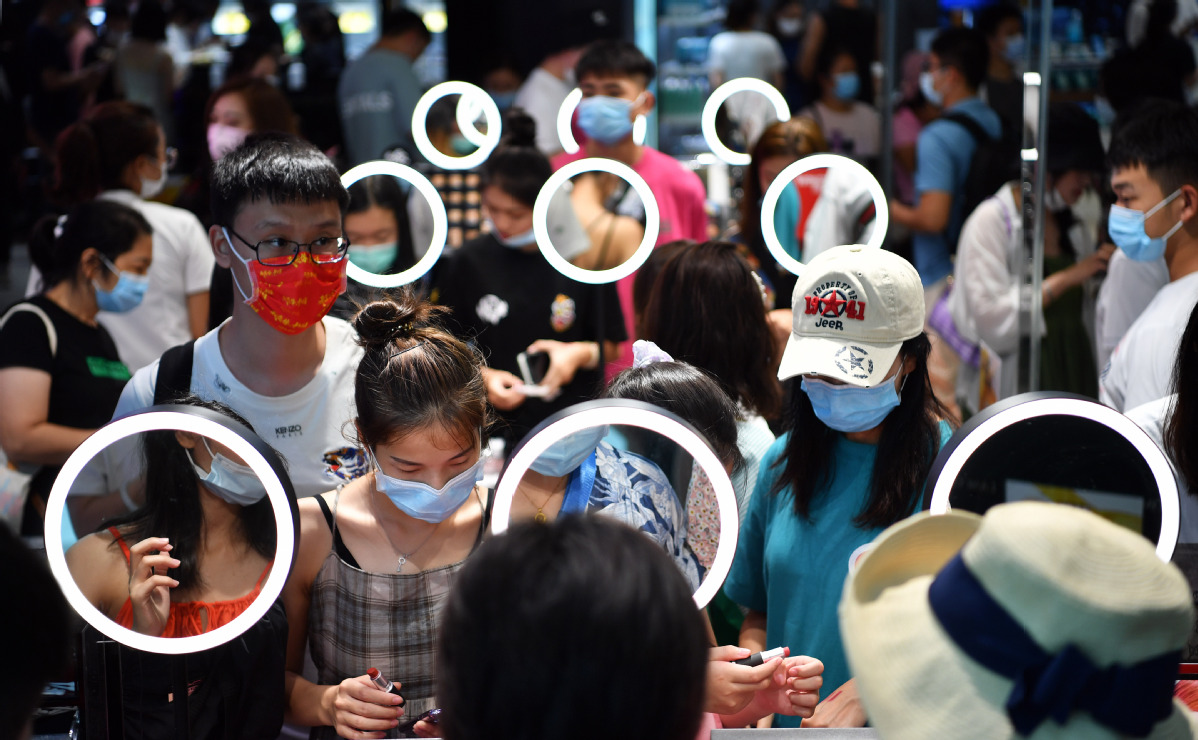
BEIJING-As the COVID-19 pandemic continues to wreak havoc around the world, China has pledged to further open its market over the next five years to tide over the virus-induced slowdown and promote international cooperation.
China has sent a clear message of pushing forward "a higher-level open economy" in its recently released Outline of the 14th Five-Year Plan (2021-25) for National Economic and Social Development and the Long-Range Objectives Through the Year 2035-a master plan that sets the main goals and tasks for the country over the next five years and beyond.
Four decades after its introduction, the policy of opening-up has remained a crucial objective in the country's new road map. Yet the latest outline highlighted the importance of "institutional openness", which stresses rules-based, transparent regulatory models and a business environment better aligned with international norms.
First put forward during China's Central Economic Work Conference in 2018 and reiterated in the new five-year plan, institutional openness is widely regarded as a big leap forward, prioritizing internationally accepted rules and standards on top of freer flows of goods and economic factors such as capital, land and labor.
"Such a shift signals that China's opening-up efforts have become more comprehensive and systematic," said Steven Zhang, chief economist at Morgan Stanley Huaxin Securities.
Institutional openness not only strengthens interconnectivity between China and other countries, but also helps the country foster institutional advantages to participate in international cooperation and competition, Zhang said.
This year is set to be another fruitful year for China in establishing new heights of institutional openness.
The country will further shorten its list of sectors that are off-limits to foreign investment, launch more comprehensive pilot programs to open up the services sector and formulate a negative list for cross-border services trade, according to the Government Work Report.
China will also push for the development of the Hainan Free Trade Port and strengthen innovations in reform and opening-up in pilot free trade zones, the report said.
In another way of promoting institutional openness, China aims to engage more deeply in global trade and economic cooperation.
After signing the Regional Comprehensive Economic Partnership and completing investment agreement negotiations with the European Union in late 2020, China now plans to accelerate negotiations for the proposed China-Japan-Republic of Korea free trade agreement, and is actively considering joining the Comprehensive and Progressive Agreement for Trans-Pacific Partnership.
These moves will provide institutional guarantees for foreign enterprises' legitimate rights and interests and significantly enhance foreign investor confidence in the Chinese market, said Tu Xinquan, a professor at the University of International Business and Economics.
China has remained a top foreign investment recipient despite the COVID-19 pandemic. Foreign capital flowing into the country logged a 4 percent increase in 2020 on an annualized basis, while global flows plunged by over 40 percent, said the United Nations Conference on Trade and Development.
A recent report from the American Chamber of Commerce in China showed that 75 percent of enterprises surveyed are optimistic about market prospects in China for the next two years, and 81 percent said they expect their businesses to grow in China in 2021.
As the world recovers from the COVID-19 shock, China's active engagement in free trade pacts is expected to achieve win-win results for the country and the rest of the world, Zhang said.
By reducing tariffs, removing barriers and promoting investment, trade pacts can leverage regional economic advantages such as shorter distances and lower transport costs, he said, adding that the spillover effects of China's economic growth will also boost the recovery of other economies.
Experts predict that the expanding Chinese market will offer new opportunities for foreign investors in areas such as carbon neutrality and the digital economy, as China now attaches more importance to green, smart and innovation-driven development.
The outline reaffirmed China's promise of achieving carbon neutrality by 2060. It also set boosting digital industries as a major task for the next five years, aiming to raise the GDP proportion of the added value of core digital industries from 7.8 percent in 2020 to 10 percent in 2025.
China's pursuit of carbon neutrality and its development of the digital economy will lead to higher productivity, which will hopefully accelerate the transition between old and new growth drivers worldwide, Zhang said.