China's tech firms explore building zero-carbon internet









BEIJING - China's internet industry has seen robust growth in recent decades, but its data centers, large-scale servers and cellular base stations are consuming energy at a faster pace. Hence, China's tech firms have started to work on green solutions.
According to a report by China's State Grid Energy Research Institute, the electricity consumption by data centers alone in 2020 is estimated to exceed 200 billion kWh, accounting for 2.7 percent of the country's electricity consumption.
By 2030, the data center electricity consumption in China will exceed 400 billion kWh, accounting for 3.7 percent of the country's total electricity consumption, the report added.
"The electricity consumption of China's internet industry is growing at an annual rate of about ten percent. It will double in seven or eight years, and become a major source of energy consumption in the future," Prof Wang Yuanfeng of Beijing Jiaotong University told Xinhua.
Wang, a carbon emission reduction expert and an advocate of green development, said enterprises in the sector should act quickly to build greener internet infrastructure.
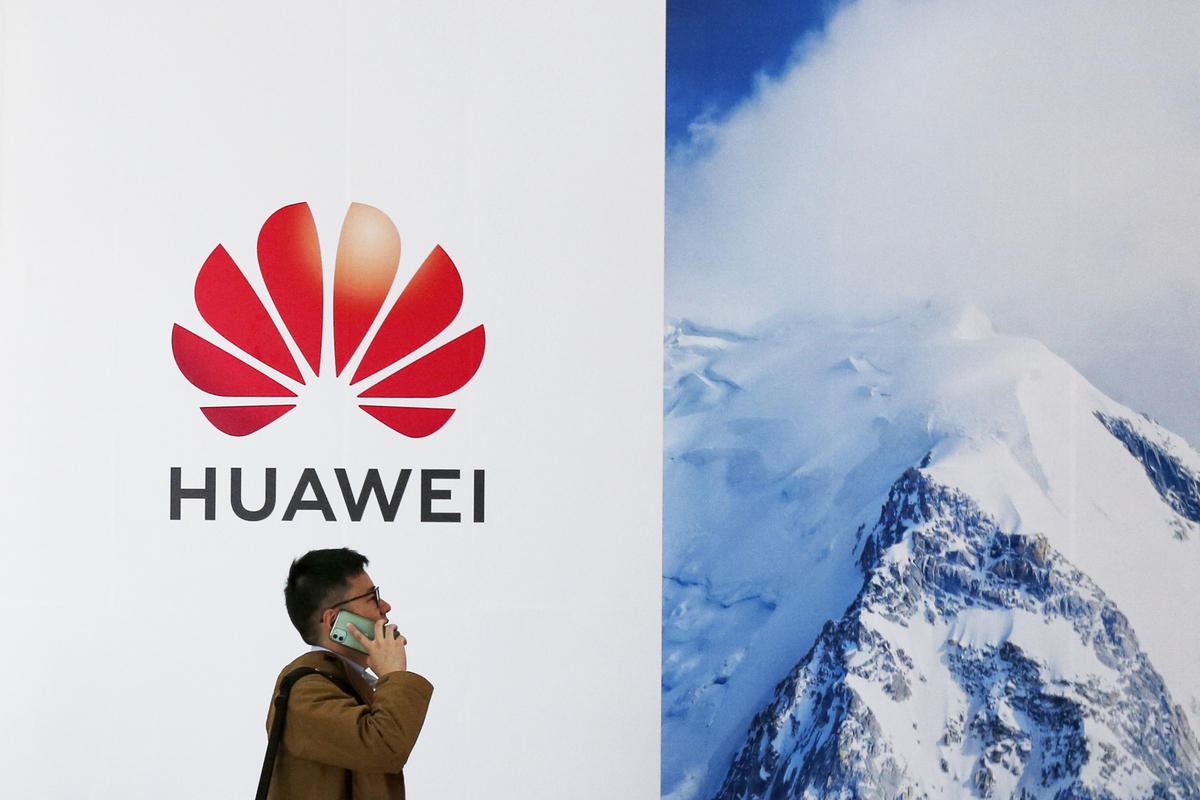
China's tech giants, such as Huawei and Tencent, have been trying to build a zero-carbon internet industry.
In Mobile World Congress Shanghai 2021 held in February, Huawei unveiled its solution for zero-carbon network, including minimalized base stations, server rooms, data centers and wide use of green electricity.
Vice-President of Huawei and President of its Digital Power Product Line Zhou Taoyuan said Huawei can reduce energy consumption by using high-performance, low power-demand and highly-integrated servers, and minimizing the room occupation of base stations.
Its data centers can use indirect evaporative cooling technology to save 17 percent energy compared to traditional chilled water solution, Zhou added.
Senior Vice-President of Sugon Energy Yao Yong believes that the improvement of liquid cooling technology is the best way to break the bottleneck of data center energy efficiency.
"It can improve servers' stability, efficiency and service life, and improve the deployment density of servers. The data centers can be more environment-friendly with less noise and more recycled spare heat."
Tencent has chosen regions with sufficient green energy to build its data centers, such as Huailai in north China's Hebei Province that has abundant wind electricity, or Qingyuan in south China's Guangdong Province that has abundant hydro power.
In Qingyuan, besides consuming hydroelectricity, data centers have used high-efficiency power module, and free cooling technology which uses natural cold sources, to cut the Power Usage Effectiveness (PUE) value down to 1.25.
PUE is a measure of how efficiently a computer data center uses its power. The lower the PUE, the greener the data center.
In 2019, China's Ministry of Industry and Information Technology, National Government Offices Administration and National Energy Administration jointly issued a guideline to promote green data centers, proposing that by 2022, the PUE value of the country's newly-built large and super-large data centers should be below 1.4.
All these measures are a part of the country's efforts to achieve green and high-quality development.
According to this year's government work report, China will draw up an action plan to peak carbon emissions by 2030 and improve its industrial structure and energy mix.
Tencent has adopted "tri-supply" technology to combine the supply of power, heating and cooling in its data centers to improve the comprehensive efficiency of energy use.
It also uses clean energy generated by roof photovoltaic systems. In Qingyuan data center, the total installed capacity of roof photovoltaic system reaches 13.3 megawatt peak (mWp).
Tencent said just the use of "tri-supply" in its data centers can save 3,500 tonnes of standard coal and cut 23,300 tonnes of carbon dioxide emissions every year, which is equivalent to planting 36,000 trees every year.
Even a small improvement in energy usage efficiency of internet infrastructure will make a big difference after long-time service of equipment, Wang Yuanfeng said.
Wang called on Chinese internet firms to spread their carbon neutrality technologies to wider fields and empower traditional industries to cut more carbon emissions.
Huawei's smart photovoltaic projects combine artificial intelligence (AI), cloud computing and traditional photovoltaic station. By directing solar panels to actively follow sunlight, a smart photovoltaic station can generate up to 18.7 percent more electricity than a traditional one.
According to Huawei, its green power generation and efficient electricity consumption sectors have generated 325 billion kWh of green electricity so far and saved 10 billion kWh of power, equivalent to planting 220 million trees.
Pony Ma, chairman of Tencent and a deputy to the 13th National People's Congress (NPC), put forward a proposal on the peaking of carbon emissions and carbon neutrality during the fourth session of the 13th NPC.
The proposal said that tech firms can provide green solutions for sectors like traditional energy industry to cut carbon emission, such as using AI technology to optimize boiler combustion rate in thermal power plants and flexibly allocate electricity.