


Suzhou makes best use of ancient and modern









Ideas benefit natives
In revitalizing old neighborhoods, Suzhou faces a problem common to many cities. As unfashionable industries are moved out of the ancient area to protect cultural heritage, and old homes fall victim to rapid urban development, how can local people be encouraged to remain?
Shan Jixiang, an urban planner and former director of the Palace Museum in Beijing, said: "It's like an ecosystem. If local people cannot enjoy the benefits of living comfortably through the renovation of the old cities, governments will feel that the cost of protecting cultural heritage is a burden and that the ecosystem is not sustainable.
"Tourism is important, but only when it is combined with improved facilities in local people's everyday lives."
Some recent renovation efforts in Suzhou have set an example though.
In 2019, the television reality show Dream Home inspired designers to renovate a market near Pingjiang Road, which used to mainly sell vegetables. Within a few months, the show had become an online hit.
After the renovation, Shuangta Market features exquisite and fashionable decorations, shops selling creative souvenirs, together with a bookstore and cafes. The market is equipped with a big data analysis system to accurately trace the origins of every vegetable sold and to ensure the venue runs like a factory.
Liu Yunlong, a manager at the site, said some people doubted whether a vegetable market should undergo such an elaborate transformation. However, by redefining a market in the ancient city, he said more possibilities have been created and the venue has proved popular.
About 8,000 people visit the market on a weekday, and the number rises as high as 12,000 on weekends. All the 60 or so original shopkeepers and vendors remained at the venue after the renovation.
"Shuangta Market attracts customers from a much wider community. It is now more dynamic and also serves as a reference point for running a market in a more scientific way," Liu said.
Similar improvement projects have been carried out at five other markets in the ancient city area.
Bian Xuefang, 49, who has run a tailor's shop at Shuangta Market since 1998, said many new customers have started to visit the venue.
"Thanks to the renovation, many tourists order qipao (the traditional Chinese women's dress) in my shop," she said. "When they go back to their home cities, they recommend the shop to many more customers. I'm getting much busier, and being busy is great."
Despite the booming e-commerce sector, Bian has no plans to open an online store.
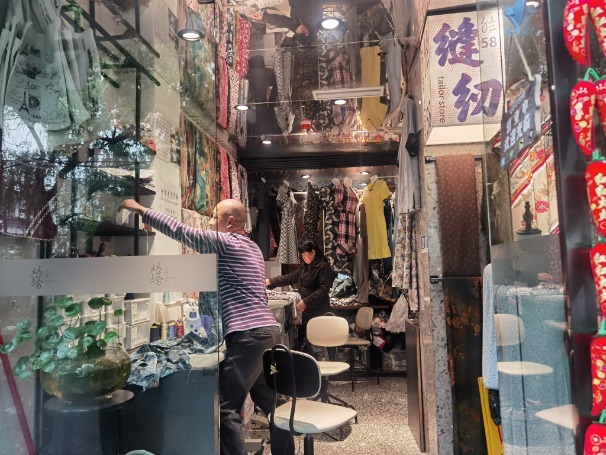
"I like to treat whoever comes to my store in the way I did my old neighbors. No matter how times change, I prefer face-to-face communication. It's also essential that my products are of good quality," he said.
Life is slower in the ancient city area, where an area for locals to sit and read quietly is vital, rather than them staring at digital devices.
Zhaoqing Temple, near Pingjiang Road, was built during the Yuan Dynasty (1271-1368), but later abandoned. It was used as a primary school from the 1950s to the 1980s, but saving the fading architecture became a problem after the school moved.
Shi Zheng, director of the Gusu district cultural gallery, explained the idea to renovate the site and turn it into a community cultural center.
"People today may find it difficult to search for some old but precious files on local culture in public libraries, but the center is a perfect place for them," Shi said.
A large collection of books on the Wu dialect, history and culture are housed in the cultural center library, which loaned more than 30,000 books to local residents last year, Shi said.
Exhibitions and lectures on intangible cultural heritage and other folk art in Gusu are also held regularly at the center to help people remember the past and better know their hometown.
"For retired senior citizens, this institution is essential. It's also great to see other local residents spending some time in the library after they finish work," Shi said.
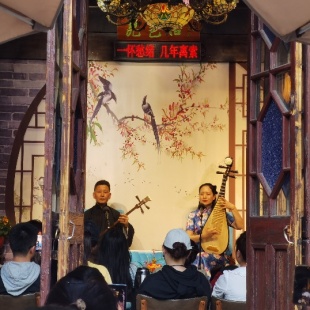
To attract more young people, performances of xiangsheng, the comic dialogue also known as crosstalk, are organized every Saturday night, offering a new tourist attraction for the community.
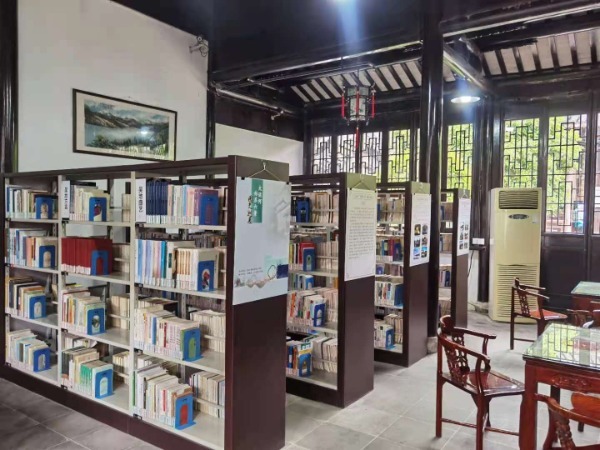
The cultural center needs to be well-connected to the rest of the city, as Shi said it functions as one of 96 branches of the Suzhou Library. Readers can borrow books from the center and return them to any other library, and vice versa.
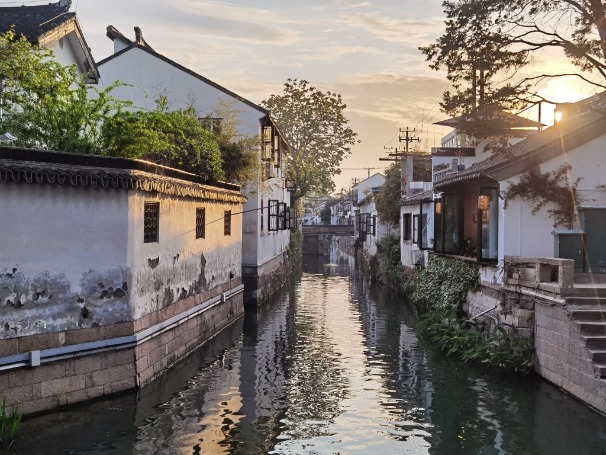
Wang Yong, a professor of urban planning at Suzhou University of Science and Technology and deputy director of the Suzhou Institute for the Conservation of National Historic Cities, said: "A successfully restored historical neighborhood should be residential, and this has been achieved in Pingjiang. Despite numerous visitors, you'll feel a sense of nature rather than noise."
The Architectural Society of China and Suzhou city government have organized two conference sessions to showcase designers' plans to refurbish ancient architecture, using sites in Suzhou as examples. A third session is due to be held later this year.
However, Wang said it is more important that these examples are used to inspire the public to contribute solutions to the dilemmas facing old communities.
"We still need further exploration to create more working opportunities within ancient cities, including Suzhou, to maintain their vitality and boost the economy," she said.
"Improving transportation without affecting historical heritage is another problem that urgently needs to be overcome."
Zhou Furong and Lu Yujun contributed to this story.