Liver surgery pioneer passes away at 99










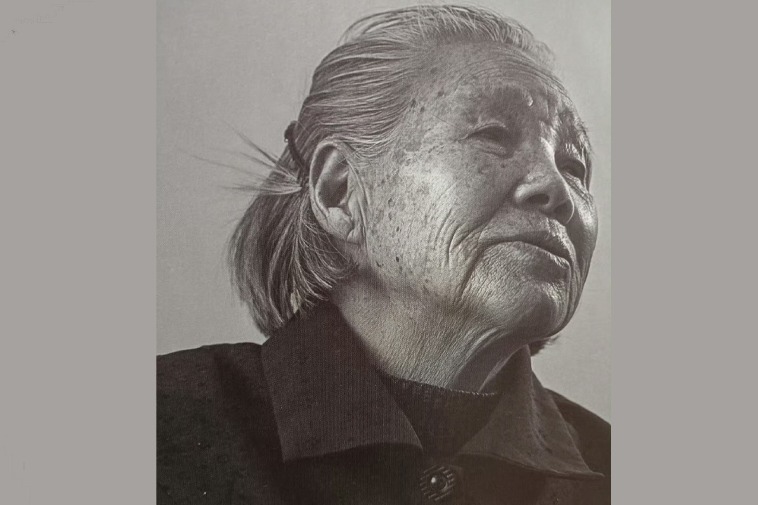
The death of the revered surgeon Wu Mengchao, who pioneered liver and gallbladder operations in China, has triggered an outpouring of mourning as well as fond recollections of his achievements.
Known as China's "father of liver and gallbladder surgeries", he drastically improved the country's surgical success rate for liver cancer. Wu passed away in Shanghai on Saturday at the age of 99 due to a long-term illness.
In 1991, Wu was elected an academician of the Chinese Academy of Sciences. In 2005, he became the first physician to receive the State Preeminent Science and Technology Award, China's highest academic accolade, for raising the completion rate of successful hepatic surgery for liver cancer patients in China from 16 percent to over 98 percent.
Wu was born in 1922 into a poor family in Minqing county, Fujian province. In 1949, he graduated from the Tongji University School of Medicine in Shanghai.
Over several decades, Wu developed liver surgery in China from scratch by translating foreign medical literature, performing major surgeries and training over 250 graduate students.
Illustrious career
After seven decades in medicine, Wu retired in 2019 at the age of 97, becoming the world's longest active liver surgeon.
In 2010, the Minor Planet Center operated by the Smithsonian Astrophysical Observatory named asteroid 17606 after Wu as a tribute to his contribution in the field of hepatic surgery.
Wu conducted more than 16,000 operations and saved nearly 20,000 lives, interspersed with record feats including operating on a 4-month-old baby in 1984 and removing a liver tumor 68 centimeters in diameter and weighing 18 kilograms from a man in 1975.
In 2013, a 90-year-old woman surnamed Chen was diagnosed with a large liver tumor, which was deemed inoperable by numerous hospitals due to her age and underlying health conditions. Out of desperation, Chen's family eventually reached out to Wu.
He accepted Chen as a patient and decided to personally perform the operation. He removed a 13-cm tumor in 9 minutes while the patient lost less than 150 milligrams of blood. The surgery was considered a masterful operation and is still talked about by his colleagues today. The woman was discharged from the hospital 10 days later and made a recovery.
Despite his diminutive height of 1.6-meters, Wu was a towering figure in China's medical community and was widely celebrated for his pioneering spirit and bold ingenuity, even in difficult economic and social circumstances.
China in the 1950s had no theoretical basis or clinical research in liver surgery. In 1956, Wu heard from a colleague that a visiting Japanese surgeon said it would take at least 30 years for China to catch up with the rest of the world.
"I wasn't pleased hearing this comment, so I made it my mission to propel China's liver and gallbladder surgery into the front-runners of the world," he said.
Two years later, Wu published the country's first basic textbook on liver surgery which he had translated from English to Chinese. During that period, he was sometimes ill with severe dysentery, but this did not hinder his translation work.
He also created China's first anatomical models for studying liver arteries by melting ping-pong balls in acid and injecting the liquid into a donor liver to consolidate the structure from the inside.
The injected liver served as a mold, and after the organic tissue was removed, the intricate system of blood vessels and ducts was revealed and appeared like branches of coral. These first models are still kept in the exhibition room at the Third Affiliated Hospital of the Naval Medical University in Shanghai, a medical facility Wu helped found and worked at throughout his life, which specializes in liver treatment.
In 1960, Wu came up with a revolutionary approach that divided a liver's anatomy into "five lobes and four segments", a significant improvement from the dual lobes model used by Chinese physicians in the past. The same year, Wu successfully performed the first liver surgery in China.
In the 1980s, he perfected a new technique of vascular inflow occlusion that can be performed at room temperature, instead of in controlled conditions. The technique involves clamping the hepatic vein and artery to reduce blood loss and protect liver tissue during surgery, a technique still used by surgeons around the globe today.
Public mourning
Wu's funeral service will be held at Shanghai Longhua Funeral House on Wednesday. On Sunday, a mourning hall was set up at the Changhai branch of the Third Affiliated Hospital of the Naval Medical University where visitors can come to offer their condolences until Tuesday.
Many of Wu's students and colleagues went to the mourning hall on Sunday to pay their respects.
Yang Tian, 40, said he had learned much from his mentor who personally edited his research papers. Wu's three teachings of being a good surgeon, communicator and writer were a major influence on his career, Yang told local news.
He said Wu often said a doctor should make an emotional connection with his patient, and he would greet patients and ask how they were doing when making his rounds of the wards. "Patients would be more optimistic and energetic when they saw Wu coming," Yang said.
Yao Xiaoping, 86, one of Wu's first students and later a colleague, said the surgeon deserved the title of the "father of liver and gallbladder surgeries in China" as he not only tackled many challenges in the field, but also trained the majority of the country's hepatic surgeons.
Wu's health had deteriorated in recent years, and his passing was heartbreaking, but his spirit of "caring and giving everything" for his patients' needs to be passed on, Yao said.
Wu Mengzhong, Wu's cousin and a traditional Chinese medicine practitioner, said his relative had contributed greatly to their hometown's public health affairs. His teaching of "medicine is a science about using the heart to warm other hearts" has become a motto for local physicians.
"When Wu was half-conscious on his sickbed, when he heard the Fuzhou dialect from his hometown, he sometimes opened his eyes," Wu Mengzhong said in tears.





- China's postal delivery volume hits 216.5b items in 2025
- Pilot missing after suspected ejection from jet during training mission in Taiwan
- Chinese vice-premier stresses promoting industrial innovation, strengthening product quality supervision
- Chinese researchers achieve milestone breakthrough in flexible solar cells
- Lithium-ion battery experiment conducted aboard Chinese space station
- 5.2-magnitude quake hits NW China's Xinjiang, no casualties reported