Psychological counselors combating indifference to safeguard the young









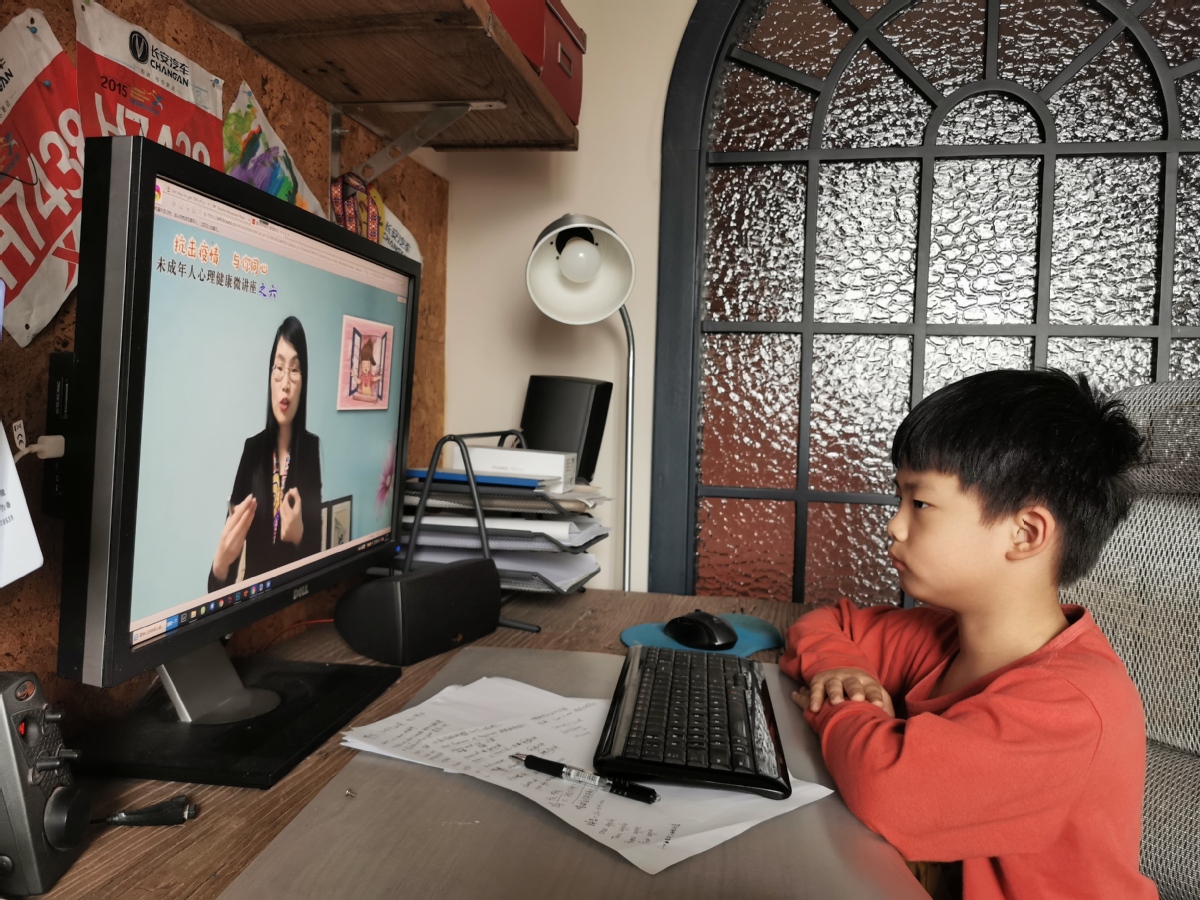
Misunderstandings and indifference are among the most common problems psychological counselor Li Yuntong and her team encounter in their public welfare work to protect minors.
Li, from Ulaanhot in the Inner Mongolia autonomous region's Hinggan League, began working as a psychological counselor in 2006.
In the course of her work she discovered that many people's problems stemmed from bad experiences in early childhood, so she began to focus on the issues of minors and decided to move back to her hometown in 2015.
With the support of the local government, Li founded the Center for Youth Social Work and Rights Protection in Ulaanhot in 2018.
"I get no pay from the center's work, so I mainly count on my family's support and long-standing counseling clients," said Li, who is the head of the center.
"It is hard work, but I am so glad to see that more social groups are appearing and more government support is being injected into protecting minors."
Apart from offering free classes to residents, Li and her colleagues also travel to local schools to give lectures on juvenile protection and sexual assault prevention each semester. About 20,000 people have attended the classes.
Some parents say people in their generation received no sex education, but still grew up properly and live well, she said.
"Such an indifferent attitude toward juvenile protection is not conducive to children's growth, and the whole of society should make every effort to eliminate misunderstandings about sex education, allowing children have a more complete awareness of themselves," Li said.
"Many children may have learned how to protect themselves, but they may be scared when encountering bad people, and the negative effects on children would be lifelong."
China has upheld the principle of putting children first and integrating efforts from the government and all sectors of society to protect children's rights and interests, which were highlighted in the National Human Rights Action Plan (2016-20) issued by the State Council Information Office in 2016.
The plan also called for improvements to the legal system for minor protection, reductions in the rates of arrest, prosecution, and imprisonment of juvenile suspects and improvements to the community-based correction of juvenile delinquents.
Data released by the Supreme People's Procuratorate last month showed that fewer juveniles who commit minor crimes are being arrested, with their non-arrest rate increasing from 31.66 percent in 2016 to 39.1 percent in 2020. The rate of non-prosecution of juvenile criminal suspects increased from 15.01 percent to 32.59 percent in the same period.
Tongliao in Inner Mongolia has actively explored different approaches to juvenile delinquency prevention and correction. Home visits carried out jointly by city government departments last year found there were 687 children of those serving prison sentences, 8,509 left-behind children whose parents were working elsewhere and 335 delinquent minors in Tongliao and offered them one-to-one assistance.
Weak awareness of the rule of law, a lack of legal education and a lack of respect for the law are the main reasons some minors get into trouble, said Du Huiliang, former head of the political and legal affairs commission of the Communist Party of China committee in Tongliao.
"One of the difficulties is to provide every child with tailored support," he said. "The protection of minors is a livelihood project and a conscience project, which requires us to take measures according to minors' needs. We need to make more detailed efforts to achieve more good results."
Tongliao has set up 196 centers to provide platforms for the education and correction, judicial protection and psychological counseling of minors involved in illegal activities.
Prosecutors will send minors who have no fixed residence, supervision or financial resources to custody centers where they can learn skills that will help them become self-supporting workers, Du said.
Li Yunlong, a professor with the Party School of the Central Committee of the Communist Party of China, said the country has attached great importance to protecting juveniles and has gradually improved a protection network that includes government agencies, schools, families and wider society.
"Minors can encounter various temptations as they grow up, and their lives may be changed if they are treated like adults after making a mistake," he said.
"In recent years, we can see that the government and all walks of life have been putting more resources and effort into their roles to help minors, especially delinquent minors, to ensure they have a bright future."






- Shanghai hosts 6th intl 3E talent fair
- Xi's special envoy attends inauguration of Bolivian president
- Countdown to 15th National Games: On-site warm-up entertains audience
- Eight missing after cargo ship collides with fishing vessel near Shandong
- Investing in people: a worthwhile investment
- Exhibition commemorating the epic relocation of universities opens in Fujian