Investing in the future, the evolution of China's education system










In December 1949, the first National Education Work Conference was held. Guidelines were adopted, requiring that the country's education system meet the needs of the newly founded People's Republic of China and its people.
At the founding of the PRC, 80 percent of the population was illiterate. In September 1950, the National Conference on Industry, Agriculture and Education decided that the first task in the education of workers and farmers was to roll out a large-scale literacy campaign.
In January 1956, the State Council-China's Cabinet-issued the Chinese Character Simplification Program, and Mandarin was promoted nationwide in February of the same year. In February 1958, the National People's Congress, the country's top legislature, adopted Chinese Pinyin, which was required to be used as a tool to guide the study of Chinese characters and to promote Mandarin.
In 1957, Chairman Mao Zedong said that China's education policy should support the moral, intellectual and physical development of students, allowing them to become educated individuals equipped with socialist values.
In November 1977, the national college entrance exam, or gaokao, was resumed after being suspended during the "cultural revolution" (1966-76). A total of 5.7 million students took part in the exam during the winter of 1977, and about 270,000 of them successfully enrolled in college.
In June 1978, Chinese leader Deng Xiaoping said support should be extended to send thousands of Chinese students to study overseas, marking the beginning of a new and large-scale chapter in foreign education exchange and cooperation.
In February 1980, the Standing Committee of the National People's Congress adopted the Regulation of the People's Republic of China on Degrees. This was New China's first education law, and marked the formal establishment of the country's degree system.
In January 1985, the Standing Committee of the National People's Congress adopted a resolution to designate Sept 10 as Teachers' Day.
In May 1985, the Central Committee of the Communist Party of China mandated that systematic measures be taken to introduce nine-year compulsory education, covering first to ninth grade.
In 1986, the Compulsory Education Law was promulgated, and was amended in 2006 to abolish tuition and miscellaneous fees for compulsory education.
In November 2004, the first Confucius Institute was established in Seoul. There were 550 Confucius Institutes and 1,172 Confucius Classrooms in 162 countries and regions by the end of 2019, serving as a cultural bridge between China and the world.
By the end of 2014, there were a total of 35.59 million students enrolled in China's higher education institutions, the largest number in the world.
In 2014, Shanghai and Zhejiang began comprehensive reform of the gaokao. In July 2017, the two regions organized the first new gaokao exam after reforms were put in place. A total of 14 provincial regions have started gaokao reform.
In 2017, China initiated a project to elevate 42 of the country's higher education institutions to a world-class level, and tasked another 95 institutions with developing world-class disciplines.
In September 2018, President Xi Jinping delivered a speech at the National Education Conference, stressing the importance of socialist education with Chinese characteristics in nurturing generations of capable young people, well-prepared to join the socialist cause. Xi said that young people should have an all-round moral, intellectual, physical, and aesthetic grounding, with a hardworking spirit.
In April 2021, Xi stressed the importance of building world-class universities as part of national rejuvenation during a visit to Tsinghua University ahead of its 110th anniversary. Xi said that China's higher education system should contribute to the prosperity of the country, the rejuvenation of the Chinese nation, and to the well-being of the people.
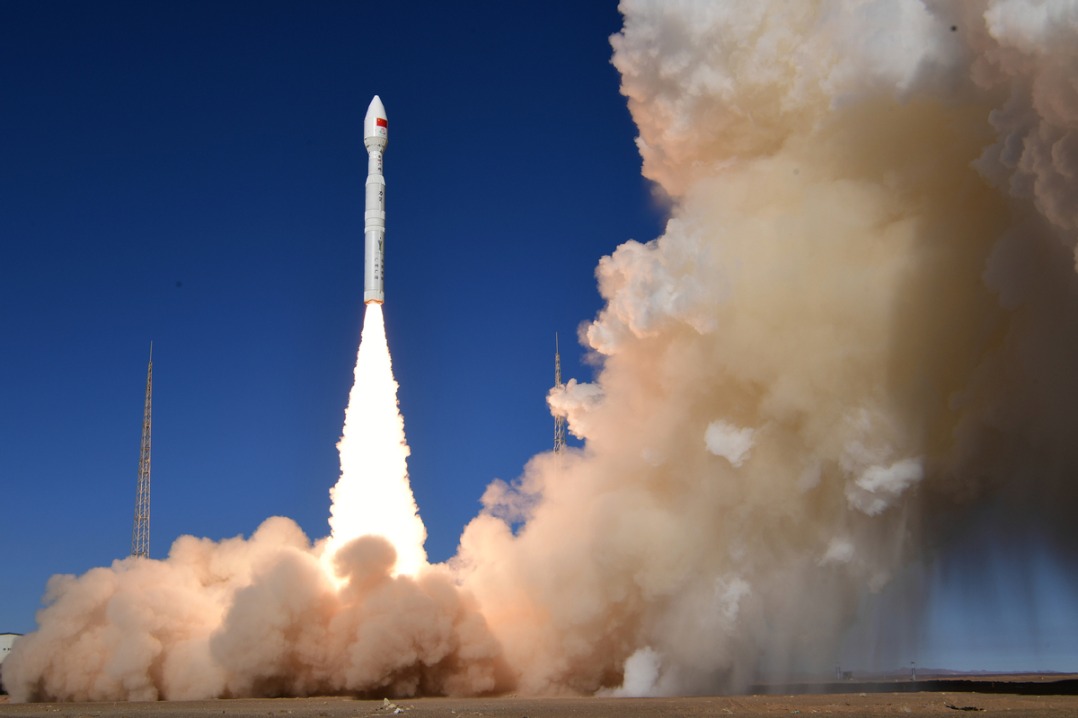

- China launches Lijian 1 Y9 carrier rocket
- First cross-border event debuts at the National Games
- China Focus: National Games enhances coordination under 'one country, two systems'
- China's Fujian aircraft carrier to make regular appearances on high seas: spokesperson
- A decade of dialogues
- HK: a stage for art and cultural dialogue