From the Three Inca Moral Precepts to the Eight Principles — A Peruvian journalist's significant contribution to the establishment of the China-Peru diplomatic relations









Editor's Note: To celebrate the 100th founding anniversary of the Communist Party of China, we are launching the "100 CPC Stories in 100 Days" series, featuring foreigners who witnessed and participated in the CPC's history and helped the world better understand the CPC. The following is the 39th story of the series.
On a chilly yet refreshing morning in 1960, a dozen excited young journalists from Latin America arrived in Beijing, setting foot on New China for the first time. Among them, a young Peruvian, with sharp eyes and a firm look, was bursting with excitement. Impressed by the gleaming Tian'anmen Square and the neat Chang'an Avenue, he was most eager to meet the great man that he had admired for long — Chairman Mao Zedong. Half a century later when he looked back on his lifelong connection with China, he recalled that he first encountered the Chinese revolutions and the Long March of Mao and other Chinese communists in books. Never had he imagined that destiny guided him to meet Mao and other Chinese communists in person and make China his second home. In his work, the rapidly changing ancient country in the East was brimming with vigor and vitality and on an epoch-making journey toward progress and prosperity.
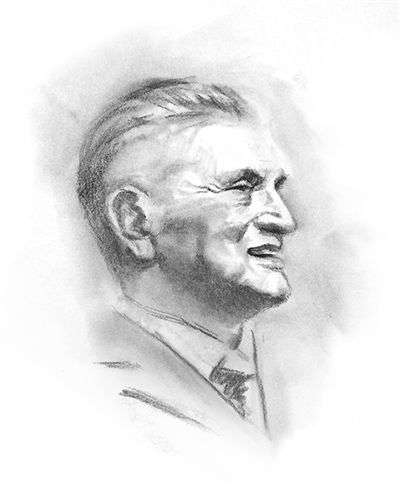
The excited young man was Antonio Fernández Arce, chief journalist of El Peruano, a most-circulated newspaper in Peru. In his twenties, because of his excellent journalistic writings and management skills, Arce became president of the Journalists' Association of Peru and established the Journalists' Association of Latin America. In October 1960 when Arce was in Vienna for the World Meeting of Journalists, he came into contact with colleagues from New China and received a sincere invitation to visit the country. That led to the opening scene of the article.
Chairman Mao Zedong received the delegation of Latin American journalists in Zhongnanhai. He regretted the lack of communication between China and Latin America due to geographical distance and recognized the delegation as the best teacher to help China get a better understanding of Latin America. Mao then talked to Arce smilingly about the Inca Empire in ancient Peru and acknowledged its splendid achievements including a well-developed agriculture, sophisticated building techniques, advanced astronomical expertise and a strict moral code. Arce added to the details of the three moral precepts by which the Incas lived, namely don't steal, don't lie and don't be lazy (Ama Sua, Ama Llulla and Ama Quella). Mao responded with a nod of appreciation and commended the moral code. The Latin American friends present were all impressed by Chairman Mao's words and admired his vast reservoir of knowledge about Latin America.
Since this trip, Arce became a good friend of China. He published a great number of articles about his experience in China on newspapers around the world. He was the leading and most prolific journalist on China in Latin America.
In 1967, Arce came to China with his wife and worked for the then Beijing Broadcasting Station. In 1970, one thing happened that forged a close bond between Arce's family and China. Arce's newborn daughter Flor de Maria Fernandez was in critical condition due to blood poisoning. Upon learning this, Premier Zhou Enlai immediately ordered the military hospitals to conduct a joint consultation and spare no effort to save the Peruvian girl. Her condition was so critical that a massive blood transfusion was urgently needed. As the hospital did not have sufficient plasma that matched her blood type, it quickly sought help from the garrison troops in Beijing. Soldiers rushed to the hospital to donate blood soon after they learned about the situation. Thanks to the careful treatment of the medical staff and the blood donated by the Chinese soldiers, Flor de Maria Fernandez was out of danger. Premier Zhou always kept the condition of the girl on his mind and asked about her several times during the treatment process. Only after the girl was discharged from the hospital, he put his mind at ease and sent a message of sympathy and congratulation to Arce. The memory of the year always evokes a wellspring of deep appreciation in Arce. He knew well how caring and loving Premier Zhou was to the Chinese people, yet never thought that his compassion would extend to a foreign girl. It was the kindness of the Chinese Premier that saved his daughter. Arce and his family said they would never forget about this.
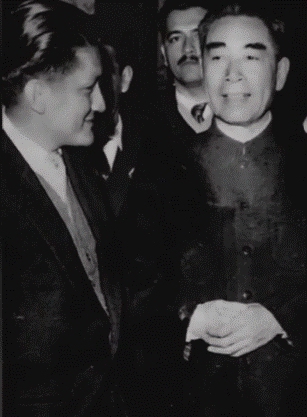
At the end of 1970, Arce returned to Peru for a family visit. Before the trip, Premier Zhou invited him to an afternoon tea. During the conversation, Premier Zhou made it clear that China was ready to increase exchanges with Peru. He proposed "eight principles" for establishing diplomatic relations between the two countries. As the only Peruvian working in China back then, Arce accepted the mission. During his layover in Hong Kong, Arce informed the Peruvian government of his identity and China's message via a Peruvian consul in Hong Kong. When his flight landed in Lima, the capital of Peru, a presidential limo was already there waiting for him. He handed the Peruvian government official the document of the "eight principles" and conveyed the views and sincerity of the Chinese Premier. In less than a week, the President's Office met with Arce again and noted that Peru was in full agreement with China on the proposal of the "eight principles" and was ready for further contact with China on establishing diplomatic relations. With Arce as a go-between, China and Peru soon established communication channels and Arce became the consultant for Peru's commercial office in China. On November 2, 1971, China and Peru formally announced the establishment of diplomatic relations. Arce, who had made a remarkable contribution to the success, was moved to tears.

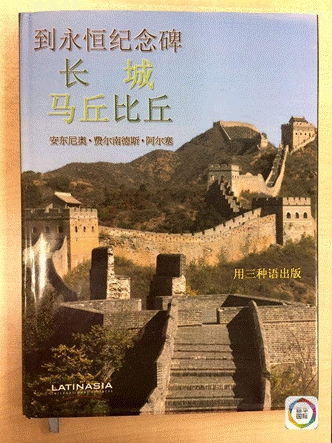
In the decades that followed, in both his motherland Peru and his second home China, Arce wrote tirelessly as a witness of China's tremendous social progress based on his personal experience. His reports were of high quality and refuted the smear campaign of the Western media against China. Besides reports, his books and albums, such as the Machu Picchu/The Great Wall: Monuments to Eternity, China, El Asombro: Crónicasy Reportajes, and China, Rostro del Tiempo, also presented China's realities and the friendship between China and Latin America.
On May 15, 2014, Arce passed away at the age of 83. The Congress of Peru observed a minute of silence to honor him as a journalist who devoted over 50 years of his life to promoting China-Peru relations and the bilateral cultural and business exchanges. China's Xinhua News Agency called him "an old friend of the Chinese people" in his obituary. This is the highest tribute the Chinese people pay to foreign friends.



- Test scores point to improved English
- Lasting bond honors Flying Tigers legacy
- China sees scattered, extreme rainfall in critical flood-control period
- Macao SAR chief executive explores tech cooperation during visit to Zhejiang
- Agritourism, sports, entertainment boosts income in rural Xinjiang
- Host city of 2025 World Games unfolds new vitality in opening wider to globe