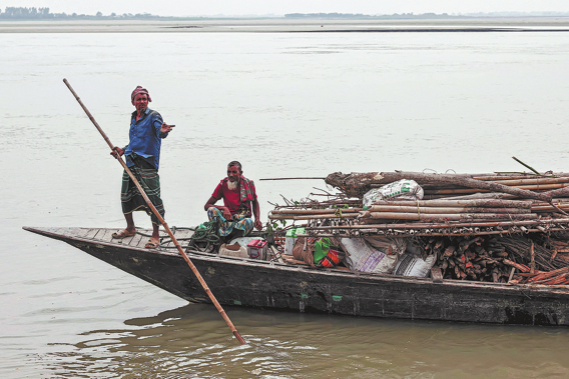
Resilience of small farmers in Africa must be improved









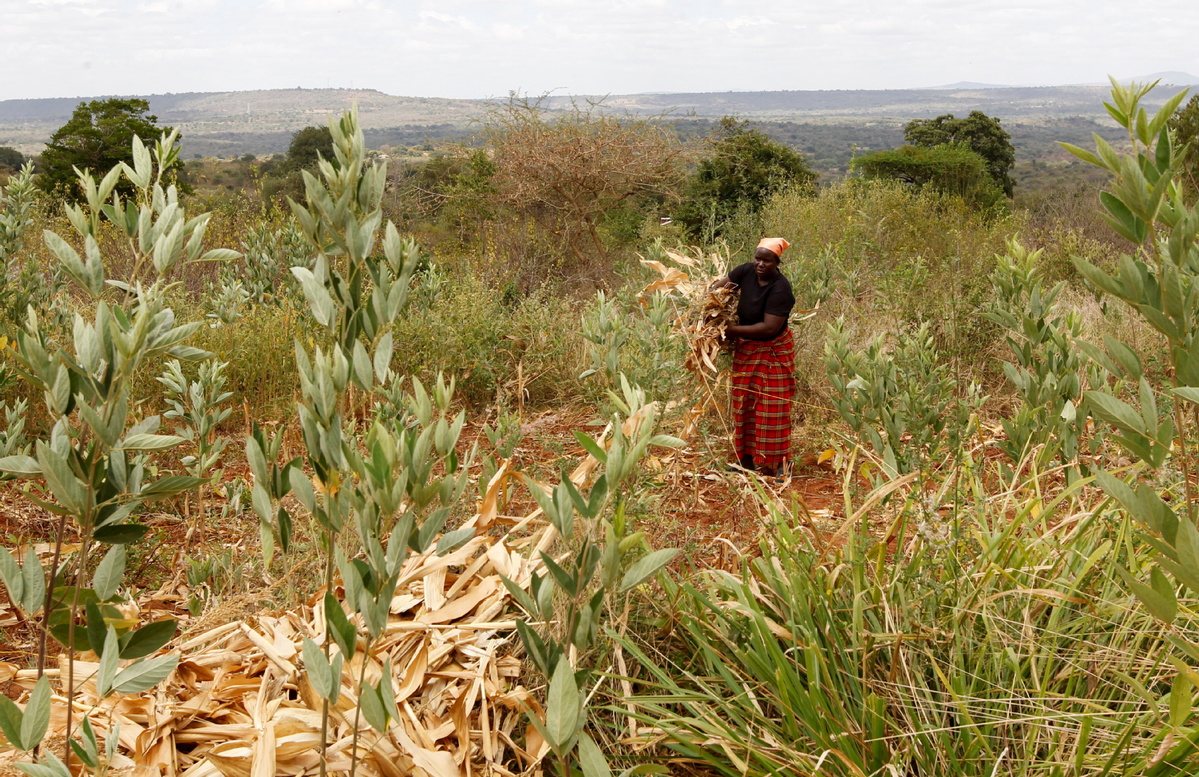
The mode of production and management of small farmers still plays a very important role in agricultural production in Africa. The land area owned or leased by African small farmers is relatively large compared with China.
According to my survey data of 10 villages in Morogoro Region, Tanzania, the farming area per rural household is around half a hectare, and this figure in Zimbabwe is 2.5 to 5 hectares.
Most of the small farmers lack the basic means of agricultural production and machinery, and even the tools of ordinary manual labor are not popularized. The farmers rely entirely on human cultivation, and the area of cultivated land that can be planted is very limited.
However, agricultural production still relies heavily on rain, and most of the farmland lacks basic infrastructure conditions such as irrigation facilities. Therefore, production is extremely vulnerable to natural disasters, pests and other impacts.
Besides these challenges, most African countries do not have the capacity for seed research and development, production or processing, so the adoption rate of improved seed varieties by small farmers is very low. In addition, the germination rate of available seeds is low. To deal with the low rate, broadcast seeding-the scattering of seed by hand or mechanically over a large area-is common in Africa.
Most African countries' economies rely on agriculture, but their governments have limited financial capacity and can hardly provide agricultural subsidies, especially to small farmers.
Due to the lack of drying and storage facilities, farmers cannot keep grain for a long time and need to take it to market immediately after harvest. At the same time, the transportation cost is fairly high due to backward transportation facilities.
In most African countries, the sale of small farmers' agricultural products relies mainly on door-to-door purchases by vendors, leading to the high cost of circulation. The regional market is easily saturated, and the seasonal fluctuation of agricultural product prices is fierce. Farmers can hardly get satisfactory income, even from a good harvest.
In addition, for fear of food shortages between harvests, farmers need to buy food at a high price.
All these factors make the livelihood of small farmers extremely vulnerable, and farmers do not have a flexible strategy to cope with the situation, which leads to poverty and high risk of hunger.
To cope with the food crisis in Africa, therefore, the key is to enhance the resilience of small farmers and improve the sustainability of their livelihood.
Several measures can help to achieve this.
First, the drying and storage capacity after harvest in Africa should be improved to enhance the grain retention capacity of small farmers.
Second, support for use by Africa's small farmers of improved seed varieties and necessary agricultural production tools should be improved. Through improved seed subsidies, small farmers should be encouraged to use high-quality varieties. When it is difficult to obtain improved varieties, training can be provided on purification and rejuvenation of available seed varieties in order to improve the germination rate. The necessary agricultural production tools can also be provided to improve the productivity of the labor force.
Third, financial support by African countries for agricultural production should be strengthened, especially for improving irrigation and boosting transportation and market construction, in order to create good conditions for agricultural development.
In the past several decades, the Chinese government has invested many development resources to promote agricultural development, especially to advance the Chinese transfer of agricultural technologies to Africa.
Under the framework of the Forum on China-Africa Cooperation, China has assisted the establishment of more than 20 agricultural technology demonstration centers and has sent a number of agricultural experts and technicians to encourage the private sector to invest in agriculture. It has also organized international training programs for Africans in the agricultural sector and has built a partnership between agricultural universities and research institutes in China and Africa.
The Chinese government is always working to enhance the resilience of African agriculture to cope with the food crisis.
The author is a professor and deputy dean at the College of International Development and Global Agriculture of China Agricultural University.