Local private firms to step up innovation









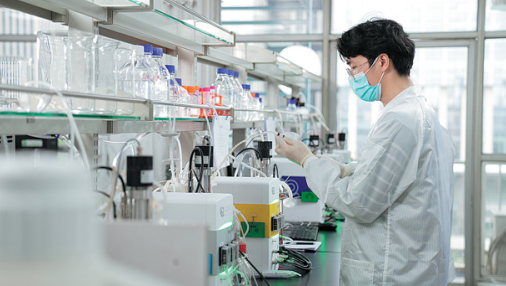
Clover received local government support to build a commercial manufacturing facility that completed construction in early 2020 in Huzhou, Zhejiang province.
"Even though the company's drugs and vaccines were only in the preclinical stage then, their support allowed us to build a large facility that ended up being very important for our COVID vaccine program," Liang said.
He also mentioned that the NMPA and its Center for Drug Evaluation have continued to expand their own capabilities, and the regulatory review timelines have been greatly shortened.
The NMPA and CDE have also had a higher willingness to work together with biotech companies, and to have scientific and strategic discussions, he added.
Shi Lichen, founder of Beijing Dingchen Consultancy, said Chinese pharmaceutical and biotech companies, among which many are non-State-owned, used to develop few self-developed original or innovative drugs. But things are changing mainly due to the improved regulatory environment, the stronger play of market mechanisms and booming venture capital/private equity investment.
"China's medicine reforms in recent years are driving Chinese companies to focus more on new drug R&D and innovation to optimize product portfolios toward medium-to-high end returns, instead of simply profiting from the production and sales of low-quality generics," Shi said.
Wei said most of the Chinese pharmaceutical enterprises focused on generics before regulatory reforms in 2015, but there are now a growing number of biotech companies developing innovative drugs.
On the policy side, China joined the International Council for Harmonization of Technical Requirements for Pharmaceuticals for Human Use, or ICH, in 2017, and is actively implementing guidelines to encourage genuine indigenous innovations.
In terms of industry practice, many Chinese pharmaceutical companies are establishing R&D centers and running clinical trials abroad. Cross-border deals have been active in the past few years, especially with a growing number of noticeable out-licensing deals, pointing to the future of "innovated in China", not just "made in China", he added.
Industry insiders also said the booming VC/PE investment in China's pharmaceuticals sector has been further propelled by the pandemic and capital market reforms-such as the Science and Technology Innovation Board accepting listings from unprofitable companies and thus providing an exit mechanism for investors.
According to global consultancy McKinsey & Co, there has been a strong rebound of healthcare VC/PE investment in 2020 after a decline in 2019. The total amount of VC/PE investment in the sector during the first half in 2020 had already exceeded that for the whole of 2019.
Li Gang, partner of private investment bank CEC Capital, said accelerating reforms in China's capital market, including a registration-based system for IPOs and lower financial listing requirements, have provided investors clear exit strategies and thus have injected new momentum into healthcare investment.
Liang said when he joined Clover in 2016, Chinese investors were still mainly looking at generics and biosimilars, while now there are many VC funds in China that want to support early-stage biotech companies, and some venture capital funds prefer to do Angel investing rounds, or even form companies from scratch.
"The changing environment in the capital markets, with more funding for innovation, continues to support and foster continued growth of innovation in private Chinese pharmaceutical and biotech companies," Liang said.
However, despite fast growth and increasing presence in the global industry arena, there is still a long way to go for China's non-State-owned pharmaceutical and biotech industry to become globally influential, experts said.
Only 13 pharmaceutical and healthcare enterprises made the list of the top 500 Chinese private enterprises last year, which was released by the All-China Federation of Industry and Commerce.