Xinjiang Population Dynamics and Data









Editor's Note: The State Council Information Office of the People's Republic of China on Sunday issued a white paper detailing the demographic development in Xinjiang Uygur autonomous region. Full text below:
Contents
Preface
I.Population Growth in Xinjiang
II.Latest Demographics of Xinjiang
III.Demographic Changes in the Uygur Population
IV.Factors Contributing to Xinjiang's Demographic Development
V. Xinjiang's Population Prospects
VI.Falsehoods Fabricated by Anti-China Forces
Conclusion
Preface
A healthy population is essential for the existence and development of human society. All economic and social activities are closely related to population. Its growth influences economic and social development, and national security and prosperity.
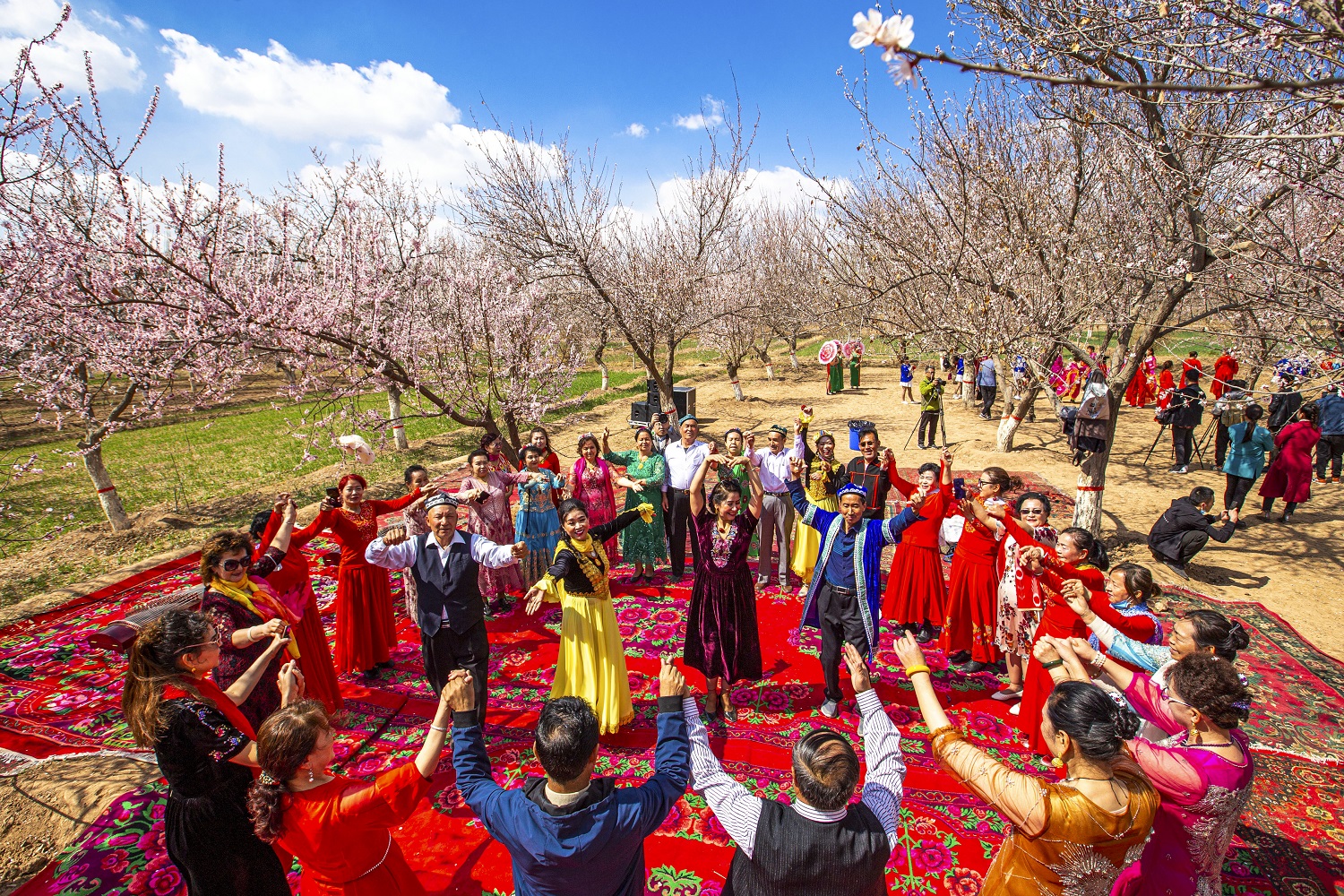
Lying in northwest China and central Eurasia, Xinjiang has been a place inhabited by multiple ethnic groups since ancient times. In 60 BC, the Western Han Dynasty established the Western Regions Frontier Command to govern the Xinjiang area, officially incorporating the area into the Chinese territory. Over the following 2,000 years and more, various ethnic groups have emerged, divided and mixed there. Today they live together in harmony and have formed a diverse unity.
Work to remedy the backward economic and social situation in Xinjiang began immediately after the founding of the People's Republic of China (PRC) in 1949. The population of Xinjiang, particularly that of its ethnic minorities, has grown fast in both size and quality, and life expectancy has seen a substantial increase. Today, the region enjoys rapid growth in all areas and a stable and secure society. The ethnic groups there live in peace and contentment, and its population is experiencing healthy and balanced development.
I. Population Growth in Xinjiang
Before the founding of the People's Republic of China, the mode of production in Xinjiang was backward and its productivity was low. Oppressed by foreign invaders, feudal exploiters, and a privileged religious hierarchy, people of all ethnic origins in the region led an extremely hard life with little security.
The population grew very slowly. Historical data show that the population in this vast region never exceeded one million during the 1,800 years from 60 BC to the mid-18th century. When the Qing government set up the post of Ili General as governor of the region in 1762, the local population was less than 300,000, mainly because of the turmoil of war. The region became a province during the Qing Dynasty in 1884. According to Records of the Xiang Army, the population in Xinjiang was 1.84 million in 1887. It had grown to 4.33 million by the time of the peaceful liberation in 1949.
Xinjiang entered a new period of rapid population growth after the founding of the PRC. On the one hand, following its economic and social development, living standards and health care improved, so that the mortality rate fell rapidly and the population growth accelerated markedly. On the other, large numbers of intellectuals and young people streamed into Xinjiang from other parts of the country in response to the government's call to support the development of border areas and areas with large ethnic minority populations. According to data from the first national census conducted in 1953, Xinjiang had a population of 4.78 million, and by the time the second national census was conducted in 1964, its population had increased to 7.27 million, a compound annual growth rate (CAGR) of 3.88 percent. The number had grown to 12.33 million by the time China launched reform and opening up in 1978, an increase of 8 million compared to 1949, with a CAGR of 3.67 percent.
Xinjiang's population continued to grow steadily after 1978. According to data from national censuses, the region had 13.08 million people in 1982, then up by 2.08 million to 15.16 million in 1990 with a CAGR of 1.86 percent, and up by a further 3.3 million to 18.46 million in 2000 with a CAGR of 1.99 percent.
The steady growth trend has continued into the 21st century. According to data from the sixth national census conducted in 2010, the population in Xinjiang was 21.82 million, an increase of 3.36 million with a CAGR of 1.68 percent over 2000. Preliminary data from the seventh national census conducted in 2020 showed that the number increased by 4.04 million to reach 25.85 million with a CAGR of 1.71 percent. From 2000 to 2020, Xinjiang's population growth slowed down, but was still 1.15 percentage points higher than the national average in CAGR.
The national censuses show that the ethnic minority population in Xinjiang has grown rapidly over the past seven decades.