Liu: New Policy Address to boost HK's legal sector










Editor's note: Hong Kong Chief Executive Carrie Lam Cheng Yuet-ngor delivered her fifth Policy Address on Wednesday. How do the people in Hong Kong respond to the new initiatives she has outlined? Here are some answers China Daily has gathered.
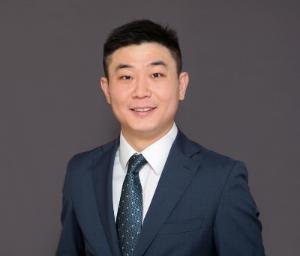
1. Which one of the just-delivered new policies do you think is the most impressive? Why?
I welcome and fully support the initiatives laid out in the new Policy Address to further consolidate and enhance Hong Kong's status as an international center for legal and dispute resolution services. As we all know, the Department of Justice, with the support from Hong Kong legal community, successfully secured a number of significant achievements – which are of vital importance for the prosperity of Hong Kong legal services – in the past few years despite unprecedented challenges.
As a lawyer specializing in international arbitration, I would say arrangements by the Chinese mainland and Hong Kong on mutual judicial assistance on civil and commercial matters are the most impressive ones. Particularly, for the Supplemental Arrangement on mutual enforcement of arbitral award, which came into effect in May 2021, together with the arrangement on interim measures in aid of arbitration in 2019, Hong Kong is now the only jurisdiction outside the mainland entitled to seek interim measures from mainland courts in aid of arbitration. This game-changing arrangement equipped Hong Kong with the unique advantage of dealing with mainland-related international arbitration.
2. The government is planning to attract international legal and dispute resolution organizations to set up arbitration centers and hold decision-making meetings in Hong Kong. What is the significance of such measures? What does it mean for the local practitioners and the business community at large in the city and the Greater Bay Area?
One of the criteria to assess whether a place is an internationally recognized legal and dispute resolution center is to see how many globally reputable organizations from the legal sector choose that place as either their regional headquarters or branches. The other aspect that demonstrates global influence is holding key meetings and conferences. The decisions, announcements or declarations to be made from such meetings and conferences will probably bring changes to the industry. Thus, it is definitely a correct approach for the SAR government to further strengthen the city's status as an international legal and dispute resolution center.
It'll bring immense benefits for Hong Kong's legal practitioners. To cite a few examples, more international organizations will mean more opportunities for local practitioners, especially the young ones, to join them and gain international experience from home; it'll be much easier for Hong Kong's legal community to timely grasp latest development trends and seize more business opportunities; Hong Kong will be able to better assist in providing the nation's wisdom to global governance on rule of law etc.
3. The Department of Justice said it will continue to help Hong Kong's legal sector meet the need for legal and dispute resolution services in the Guangdong-Hong Kong-Macao Greater Bay Area. What is your expectation? What are the biggest difficulties in your experience that need to be addressed? What practical steps should be taken next to help practitioners in this sector?
In the Qianhai Plan announced by the central authorities recently, the mechanism for wholly owned Hong Kong enterprises (WOKEs) to adopt Hong Kong law and choose for arbitration to be seated in Hong Kong has been confirmed to be further improved. I do hope that this measure can be extended to other areas of Shenzhen, the entire Guangdong-Hong Kong-Macao Greater Bay Area, or even the other free trade zones in the Chinese mainland.
4. The policy address highlighted exchange of talents. What advice do you have on attracting legal talents from the mainland for Hong Kong's legal and dispute resolution services? Will it be a three-way exchange, with talents from Hong Kong, the mainland and abroad? How will Hong Kong's role and comparative strengths evolve with the deepening of such exchanges?
Yes, it will definitely be a three-way exchange. The foremost one is to encourage more deep exchanges between the Chinese mainland and Hong Kong legal practitioners. Doing so will facilitate Hong Kong legal practitioners to better understand the mainland legal system and improvements that the mainland achieved in rule of law over the past few years and gain more business opportunities from the mainland's rapid economic development. On the other hand, mainland legal practitioners will have more international exposure through exchanges and diminish culture barriers for them to deal with cross-border transactions and dispute resolution. Mainland and Hong Kong legal practitioners can then join hands to show the strengths of China's legal talents through exchanges with international practitioners and ultimately assist Chinese enterprises from legal perspective.
5. Could you share with us a memorable antidote that you find meaningful and illustrative of the vast opportunities that lie ahead for Hong Kong's legal sector practitioners?
Various arrangements on mutual judicial assistance that I mentioned earlier do give me more opportunities to better assist my clients in dealing with international arbitration and protecting their interests. For example, I was the first lawyer who successfully obtained an interim measure order from a mainland court eight days after the arrangement on the interim measures in aid of arbitration came into effect, which facilitated my clients in swiftly resolving the dispute in their favor.
In addition, together with the government's efforts in establishing Hong Kong's maritime hub by attracting more commercial principals to Hong Kong, I have every belief that Hong Kong's maritime arbitration will thrive by making the best use of our maritime "software" such as maritime legal services, shipping finance and marine insurance.





- Rocket developed by private Chinese firm fails, loses three satellites
- Cross-talk performance at Great Wall in Tianjin attracts over 1,500 spectators
- China sees rise in influenza, rhinovirus, and other respiratory infectious diseases
- Zhang Chaoyang emphasized active thinking in AI era
- CIIE concludes with record-high intended deals
- Lhasa's GDP grows 7.1 percent in first three quarters of 2025