


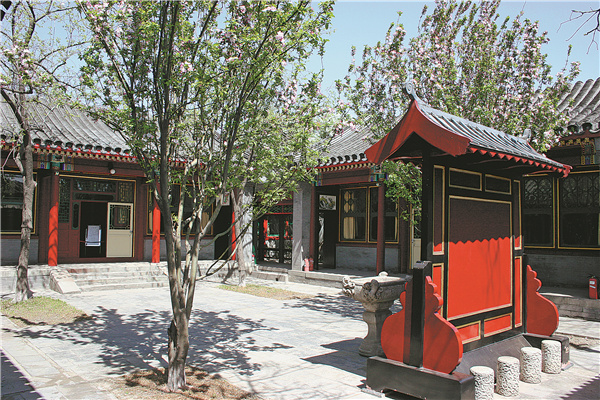
Master's house









"He became famous at a young age and gained high social status, which can easily make a young man feel too proud to make further progress. But he was strict with himself and kept working on the stage until the end of his life," says Liu Zhen.
Mei also used his popularity to promote Kunqu Opera, another old art form.
When he was 18, Mei started to pay attention to Kunqu Opera which was dying then. He found that many of its features could be inherited by Peking Opera, so he tried to make people notice it.
"Kunqu nurtured Mei, and Mei saved Kunqu," says Liu Qingqing, citing Zhu Hengfu, a professor at the Film-Television and Communication College of Shanghai Normal University.
Mei refused invading Japanese troops' demands to stage shows during the War of Resistance Against Japanese Aggression (1931-45).
He grew a mustache to avoid doing female roles, gave up performing temporarily and made a living by selling paintings.
But he was friendly toward ordinary people in Japan, where he visited in 1919, 1924 and 1956. His trips to other countries, such as the United States and the Soviet Union, in the 1930s also made a stir among the foreign audiences.
Liu Zhen praises Mei's role in promoting Chinese culture abroad.
"Performers at that time struggled to make a living. Mei's trips to foreign countries were not organized by the government, but were commercial performances. … He could have focused only on making money but he cherished a sense of responsibility and tried to spread Chinese culture," says Liu Zhen.
In his diary on the US visit, Mei wrote that "if through artistic communication, the visit enhanced emotions between China and the US", it was his way of repaying his country and the people.
Learning from Mei is important today, says Mao Zhong, a researcher at the museum.
Although Mei lived in a different time, many of his thoughts and virtues are still inspiring for artists today, he explains.
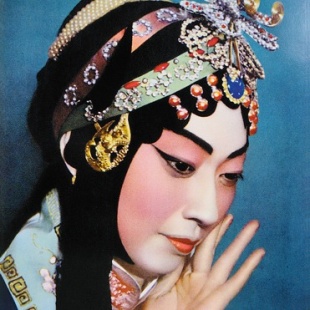
This year marks the 100th anniversary of the creation of Farewell My Concubine, a Peking Opera classic in which Mei performed.
Created in 1921, the play premiered in 1922 and has been staged more than 1,000 times since then.
An ongoing exhibition at the museum shows cultural items and literature related to the piece. Exhibits include costumes, props and scripts Mei used in the play.