


Tibet uses sci-tech mechanism for cultural relics protection









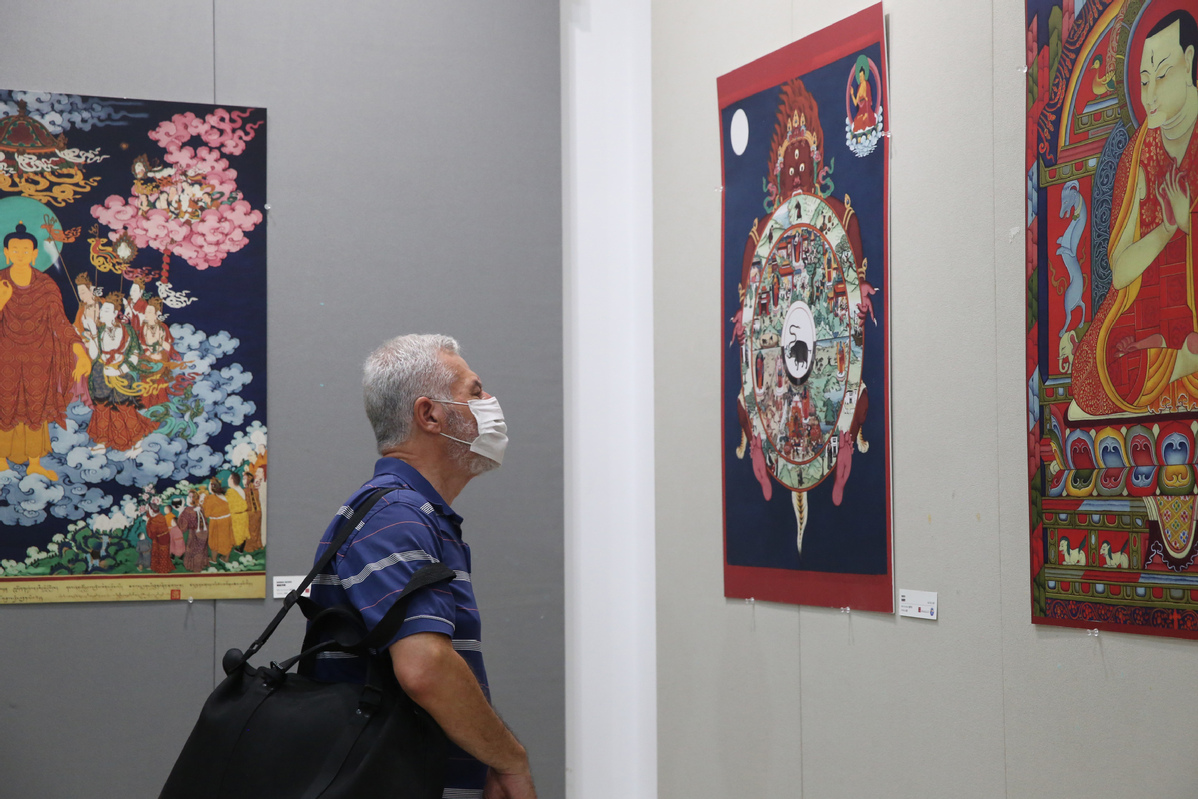
As a treasure trove of cultural relics with unique styles and great history, Southwest China's Tibet autonomous region has made steady progress in the science-based protection of cultural relics over the past few years.
Since 2012, Tibet has introduced science and technology into cultural relics protection, laying a foundation for bettering such conservation works in the future, the regional cultural heritage bureau said in a statement.
There was only one sci-tech protection laboratory and one relics repair room in all cultural relics protection institutions in the region before 2013. No single piece of equipment for relics protection and research was valued at more than 100,000 yuan (about $15,630).
From 2013 to 2015, the region started with the preventive protection of movable cultural relics using advanced science and technology. A joint relics protection laboratory was set up by Tibet Museum and several institutions from other provincial-level regions.
Science-based protection was further expanded to movable treasures in lower-level museums, temples and monasteries between 2016 and 2018, and the awareness of cultural relics protection was notably heightened.
During a 2018 visit to the Potala Palace, a UNESCO World Heritage Site, Premier Li Keqiang inquired about cultural relics protection, saying the country will offer more support for research on precious documents and advance cultural inheritance and exchanges.
Following Li's inspection, local authorities paid even more importance to cultural relics protection and pushed the protection efforts for movable articles to a new height.
Since 2019, the region has actively sought collaboration with other provincial-level regions. The Potala Palace's management forged cooperation with universities and research institutions for a national-level research project on cultural relics protection against major natural disasters a year later.
"Science-based protection of cultural relics in Tibet has reached a new level since the turn of 2016," said Liu Shizhong, director of the bureau, adding that 230 million yuan from central finance was handed out to the region for 30 protection projects from 2016 to 2020.
"Tibet has seen an increasingly heavy use of science and technology for the protection of cultural relics," Liu said in an interview with a newspaper under the National Cultural Heritage Administration.
Over the past decade, the Potala Palace has tapped state-of-the-art technologies for mural digitization, building structure monitoring, monitoring and early warning system, online ticketing, as well as a smart security system.
World heritage site Norbulingka, meaning "treasure garden" in the Tibetan language, has also carried out dynamic monitoring, structural detection, relics information collection and the interpretation of their values.
Noting that science-based protection is a long-term task, the bureau said it will build on existing sci-tech protection practices and further use modern technology in repair and protection, archaeological excavation, security work, as well as monitoring and early warning from now to 2025.
The region will also combine traditional methods with new technology, protect important ancient documents and move relics museums online, according to the bureau.
The region currently has 4,277 cultural relics sites of all kinds, of which 1,985 sites are under government protection at different levels, stated a white paper released earlier this year.
Over the past decades, China has earmarked huge funds for the maintenance and protection of the Potala Palace, Norbulingka, Jokhang Temple and other cultural relics and historic sites.