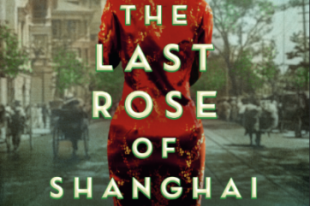



'The Last Rose of Shanghai': Q&A with author Weina Dai Randel









Ernest, a gifted Jewish pianist fleeing Europe and other protagonist of the novel, provides readers with a perspective into the world of Jewish refugees in Shanghai. Could you share how you conceived of the character and some of the research you did to ensure his experiences fit the historical reality of refugees in the city?
Ernest’s character came to me slowly, reluctantly, and then in bursts of passions and waves of wrenching wisdom, which I’m sure could only come from someone who truly existed. It sounds crazy, I know, but while writing him, he was so vivid to me, and every thought of his became a fiber of mine. I had the idea that Ernest needed to be a musician because Aiyi ran a nightclub. I also happen to love the piano and classical music, so Ernest became a pianist. In order to understand the mindset of a Jew fleeing Europe, I read extensively the memoirs written by Jewish refugees; for instance, Ten Green Bottles by Vivian Jeanette Kaplan, Voices from Shanghai, edited by Irene Eber, and Shanghai Refuge, by Ernest Heppner, whose book I read and reread a dozen times, and for a mysterious reason, his books kept getting lost in my house, so I bought five copies as a result. (To honor him, I named my main character Ernest.) His journey was also shaped by my research of Racing Against Time in Shanghai by Laura Margolis, a true heroine who helped Jews survive before the Japanese sent them to the ghetto, which the JDC archives.
The vibrant Shanghai jazz scene takes to the stage in the story, from Aiyi’s club to Ernest and his jazz piano performances. Why did you choose to spotlight jazz in Shanghai during that time?
I would say jazz demanded me to spotlight it. Before the Japanese blasted open the fortresses in Shanghai, jazz was played in bars, nightclubs, and dance halls. People were enthralled by the vibrant, exhilarating, exotic jazz. When Li Jinhui, the Chinese composer who had collaborated with the American jazz player Buck Clayton, infused Chinese folk music with jazz, new popular music, Shidaiqu, the Music of the Times, was born. During the dark times, music offered people solace and escape; music also evoked memories and hopes.
Jazz was, and still is, part of the Shanghai cultural fabric. You’ll hear Shanghai jazz in the movies such as Wong Kar-wai’s In the Mood for Love and even Kevin Kwan’s Crazy Rich Asians. Today, when you walk in a quiet alley in Shanghai, you might still be able to hear the pulsating beats of jazz drifting from bars.