China to fulfill green Winter Games promise









For the first time in decades of these Olympiads, all venues to run on clean energy
The Shougang Ski Jumping Platform, a venue of the Beijing Winter Olympics, is expected to use a great deal of electric power during the competitions next year.
Its carbon emissions, however, are designed to be zero-all of the electricity will come from clean and renewable energy.
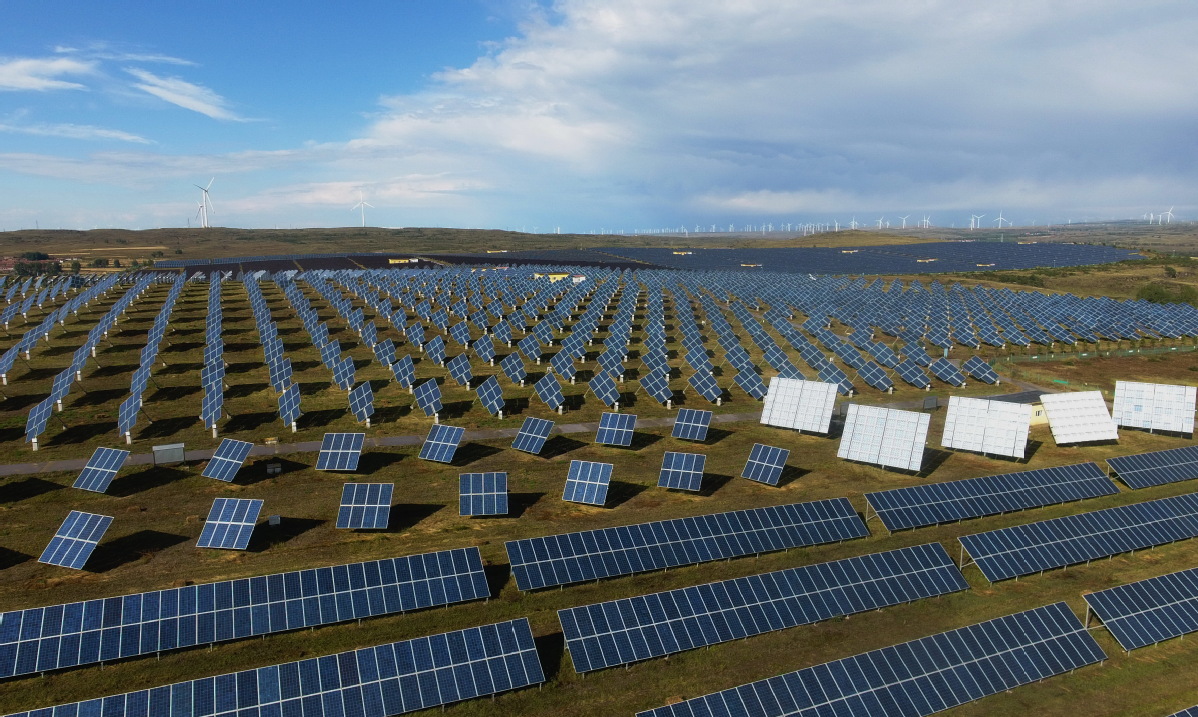
It is set to be the first time that all venues in any Olympic Games will be wholly powered by green energy. The feat is made possible by a flexible, direct-current power grid transmitting electricity produced by the plentiful wind and solar power generation capacity in Zhangjiakou, the 2022 Games' co-host city, located 240 kilometers northwest of the Chinese capital.
To further facilitate the Green Olympics initiative, State-owned enterprises are preparing environmentally friendly fuel supplies and facilities, stepping up their efforts to support a low-carbon Winter Olympic Games.
State Grid Corporation of China, the county's largest power provider, vows to run all 2022 Winter Olympic venues on renewable energy, providing a model for large-scale events in the future.
The company's Zhangbei direct-current power grid project is designed to meet all power demands of the Winter Olympic venues using clean energy. After the Games, it will send 22.5 billion kilowatt-hours of electricity to Beijing each year, around one-tenth of the city's total power consumption. That will help save 7.8 million metric tons of standard coal and reduce carbon dioxide emissions by 2,040 tons each year, said Yang Zhidong, an official responsible for the Winter Games with the State Grid Beijing Electric Power Co.
"The flexible direct-current grid line, which will serve both cities of the upcoming Winter Olympics, will combine renewable energy inputs and storage capacity from pumped hydroelectric, so that the grid frequency and stability can be ensured," said Wei Hanyang, a power market analyst at research firm BloombergNEF. Pumped hydroelectric is produced with water stored for when it's needed.
"The green power trading mechanism, running since three years ago in Zhangjiakou, will also help lower the cost for the Olympics stadium and accommodate this part of clean energy in a wider zone of the grid network in northern areas of China," he said. The mechanism allows power consumers to buy electricity like wind and solar directly from generators in the open market.
State Grid Corporation of China said it is also promoting clean heating and green travel between the venues and along the transportation lines as well.
Areas surrounding the Beijing Winter Olympics have become fully coal free, with 64,000 households in 163 nearby villages converted from burning coal to using electricity for purposes including heating and cooking.
Xin Baoan, chairman of State Grid, said the corporation will speed up the development of an intelligent power supply network using the internet of things to support the Winter Olympics. IoT refers to devices with software or sensors allowing them to connect and exchange data.
To further help the Beijing Winter Olympic Games achieve full carbon neutrality, four venues have introduced a special ice-making technology using eco-friendly carbon dioxide refrigerants to further reduce energy consumption by the refrigeration system, saving more than 30 percent of the system's power consumption.
Olympic speed skating venues once used refrigerants that damaged the Earth's ozone layer for making ice, according to Gui Lin, an official with the Planning and Construction Department of the Beijing Organizing Committee for the 2022 Olympic and Paralympic Winter Games. But the 2022 Winter Games will use new refrigerants made of natural carbon dioxide, which help reduce carbon emissions to nearly zero.
The new technology can help improve refrigeration efficiency by 20 percent and save electricity use by 2 million kWh a year for the National Speed Skating Oval, he said.
Pan Jiahua, director of the Institute for Urban and Environmental Studies at the Chinese Academy of Social Sciences, said achieving carbon neutrality for such a big event is no easy job. All six venues will be powered by renewable energy, cutting carbon dioxide emissions by 320,000 tons and coal consumption by 128,000 tons, he said.
The country's major oil and gas companies, including China National Petroleum Corp, China Petroleum and Chemical Corp and China National Offshore Oil Corp, are all readying natural gas supplies and hydrogen refueling facilities to ensure sufficient clean energy supplies.
The country's largest oil and gas company, China National Petroleum, will have four hydrogen refueling stations to supply 816 hydrogen-powered vehicles for the Games, it said.
The company already has two hydrogen stations in operation. Its first, located in Zhangjiakou's Chongli district, opened in March, followed by one in Beijing that opened in August.
The CNPC Futian Hydrogenating Station in Beijing, with an average daily filling capacity of 600 kilograms, capable of powering 50 to 60 hydrogen-powered buses, will supply energy for hydrogen fuel cell buses and trucks for the Winter Games, it said.
China is boosting hydrogen use in transportation and in industries where carbon usage is hard to lower, said Wei, who called that a "key viable technology if China wishes to go toward a net-zero target".
"By building more hydrogen-inclusive infrastructure, the country is likely to see a greater chance of adopting hydrogen and achieving an economy of scale."
According to Wei, China has already built a large production capacity for new energy, especially solar and wind, during the past five to 10 years, while it is also one of the main powers installing electrolyzers for making hydrogen, a key clean source for future energy.
"By combining these comparative advantages and promoting them during the Winter Olympics, the country is in good shape heading toward leadership in low-carbon industries," he said.
CNPC said it has also been maximizing production at domestic gas fields while ensuring adequate gas imports to guarantee sufficient supplies for the Winter Olympic Games. It will come up with an additional 6.4 billion cubic meters of gas, over the previous year's level, while stepping up construction of gas pipelines to ensure a sufficient gas supply.
- ISU Figure Skating Grand Prix Final canceled
- Beijing Winter Olympics plays pivotal role in bringing world together, says expert
- Beijing gears up for green, sustainable Winter Games
- Beijing celebrates 100-day countdown to the 2022 Paralympic Winter Games
- Beijing 2022 Paralympic torch relay plan unveiled with 100 days to the Winter Paralympics