


Local flavors










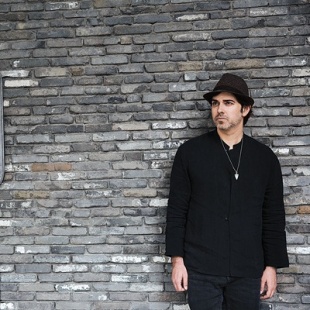
"I try to be true to my own feelings and perspective," he says.
In the song about Hubei province, a Chinese musician plays guqin (Chinese zither), together with Segev's piano playing.
The use of guqin is inspired by a legend in Hubei about the friendship between musician Yu Boya and woodcutter Zhong Ziqi, during the Spring and Autumn (770-476 BC) and Warring States (475-221 BC) periods. Zhong understood Yu's music exactly as Yu wanted to express himself. Later, when Yu learned about Zhong's death, he broke his guqin and never played the instrument again.
Segev is amazed by Fuqi Shuangshuang Bajiahuan ("husband and wife come back home together"), a classic aria of Huangmei Opera, originating in Anhui province. It connects him to the times when he has to leave home for trips. Appreciating the beauty of Chinese language via the art form, he decided to sing the song about Anhui in Mandarin.
Most of his songs in the project are in English because he wants to present them to a larger audience.
"My impression of China only gets better the more I travel there. The reason is that I enjoy China's variety of beauty, but still see its identity as a whole country. It shows that people all over the world can keep their diversity and still feel as one."
He says he sees commonalities between Jewish and Chinese people. Both have thousands of years of heritage and attach great importance to family values and education. Many Chinese social media users comment on his posts that they are moved by the songs and want to visit these places themselves.
He says that he finds audiences in China, and other countries, have discovered a side of the nation that they didn't know before.
"I hope the project will inspire people from outside China to love it like I do, and for people in China to get to know it better. Most of all, by connecting each part of China to the world using folk music as a bridge, I hope it will inspire people to enjoy the beauty."
He says people learn about other countries via news, which is mostly political.
"No one talks about the beauty of Sichuan province, the futuristic scenery of Shanghai, or the oasis in the Ningxia Hui autonomous region," he says. "Therefore, Project 34 is a big surprise to many people.… China's beauty creates the best impression for all to see."
One of his Chinese fans once translated a Hebrew song of his into Chinese and posted it online. He contacted her and filmed her singing in Chengdu, Sichuan province. He puts her video on a big screen while he sings the song onstage.
"I am so happy that such amazing, talented people can use my platform to let their voices be heard. When all of our voices are heard together, true harmony can happen," Segev says.