Report: With steady FMCG momentum, consumption seen on healthy track in 2022









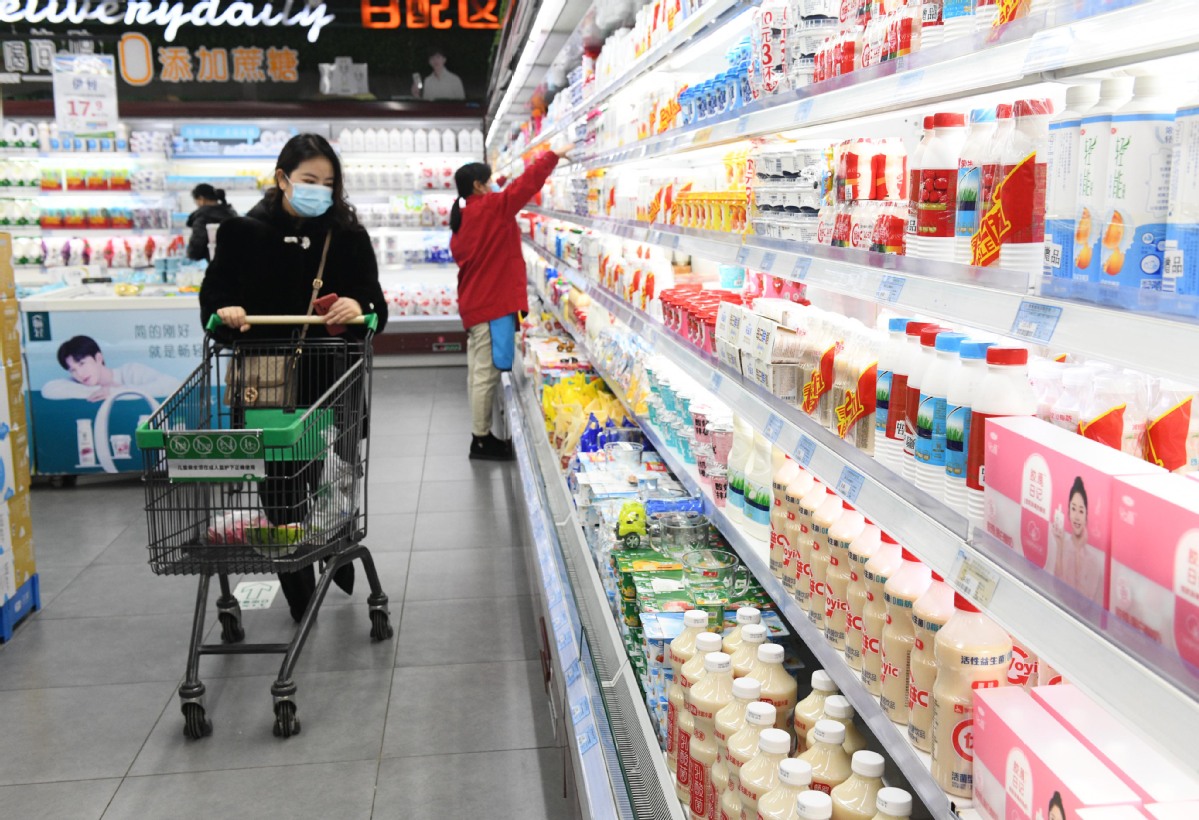
Strong fundamentals in China's consumption sector are likely to extend into 2022, with fast-moving consumer goods sales set to stabilize at a 3-4 percent growth next year, forecasts by seasoned retail experts said.
FMCG volume gained 3.3 percent and its value rose 3.6 percent in the first nine months for a modest recovery amid the COVID-19 pandemic, even if average selling prices, which remained depressed, have gained only 0.3 percent, said the China Shopper Report by Bain&Co and Kantar Worldpanel. The report is now in its 10th year of publication.
For the upcoming year, growth is forecast to be fueled by a growing variety of digital channels and items that promote health benefits and pamper shoppers' psychological well-being, said Jason Yu, managing director at Kantar Worldpanel China.
"Stabilization is here to stay, since a fair share of consumption will occur within the Chinese borders due to uncertain external environments," said Yu. "But we need to closely watch the effects of the changing pandemic situation and policies regarding personnel movement during the upcoming Spring Festival on consumption."
For the first three quarters, personal care categories reported a 3.8 percent volume growth and 2.1 percent gain in average selling prices. This in turn led to 5.9 percent value growth, which was a substantial improvement from 1.1 percent value growth for the same period last year.
Behind the performance there was a return to out-of-home activities that resulted in higher sales of cosmetics, shampoo and conditioner, among other categories.
"In general, categories associated with improved quality of life, such as cheese, air fresheners and ready-to-drink coffee, grew fast while categories popular during the lockdown months, such as instant noodles, biscuits and hand wash, experienced negative growth," said Derek Deng, a Bain partner in Shanghai.
During the first three quarters, e-commerce value grew 24 percent-below last year's 32 percent-while all offline channels except convenience stores lost value (the grocery channel by 13 percent). For its part, the performance of convenience stores remained flat.
The online sphere also shifted from one dominated by two players to one including a host of new players. For instance, Alibaba, which contributed nearly half of overall e-commerce channel growth in 2020, saw its market share drop to 35 percent. Other players including Pinduoduo, Douyin, Xiaohongshu and WeChat ate away at its dominant market share.
"Digitalization remains to be the way ahead, but it's posing mounting challenges to brands in terms of the choice of channels," Yu said. "Long gone are the days when a 'one-fits-all' or 'all-in' e-commerce approach was a guaranteed victory."
Experts also pointed to a changing dynamic between brands, online hosts and internet platforms with livestreaming capabilities. The livestreaming practice has essentially become a necessity for surviving China's ultra-competitive retail landscape.
For example, goods promoted by key opinion leaders are usually sold at deep discounts and require commissions as high as 30 percent as well as listing fees to advertise, the report said. Moreover, by selling on a KOL's livestream, brands lack full access to the consumer data that have become critical for retargeting and retention.
"The conflict between top-notch KOLs and brands is becoming inevitable, given that the cult following developed by these influencers is equipping them with pricing power that is cutting into margins for brands," Deng said.
Such drawbacks led brands to aggressively start their own livestreaming, Deng said. Self-livestreaming positions the brand to retain consumers for repurchase, and it enables timely consumer interaction and support that can improve loyalty and the possibility of lowering the rate of refunds.
- Consumers continue to support health, wellbeing products
- Fast-moving consumer goods showing steady improvement
- Resilient food sector rebounds in Q1, sets sights on markets abroad
- Stay-at-home economy drives surge in sales of certain foods across China
- E-commerce rise presents opportunities for brands, study says