Heritage crafts thrive in digital era










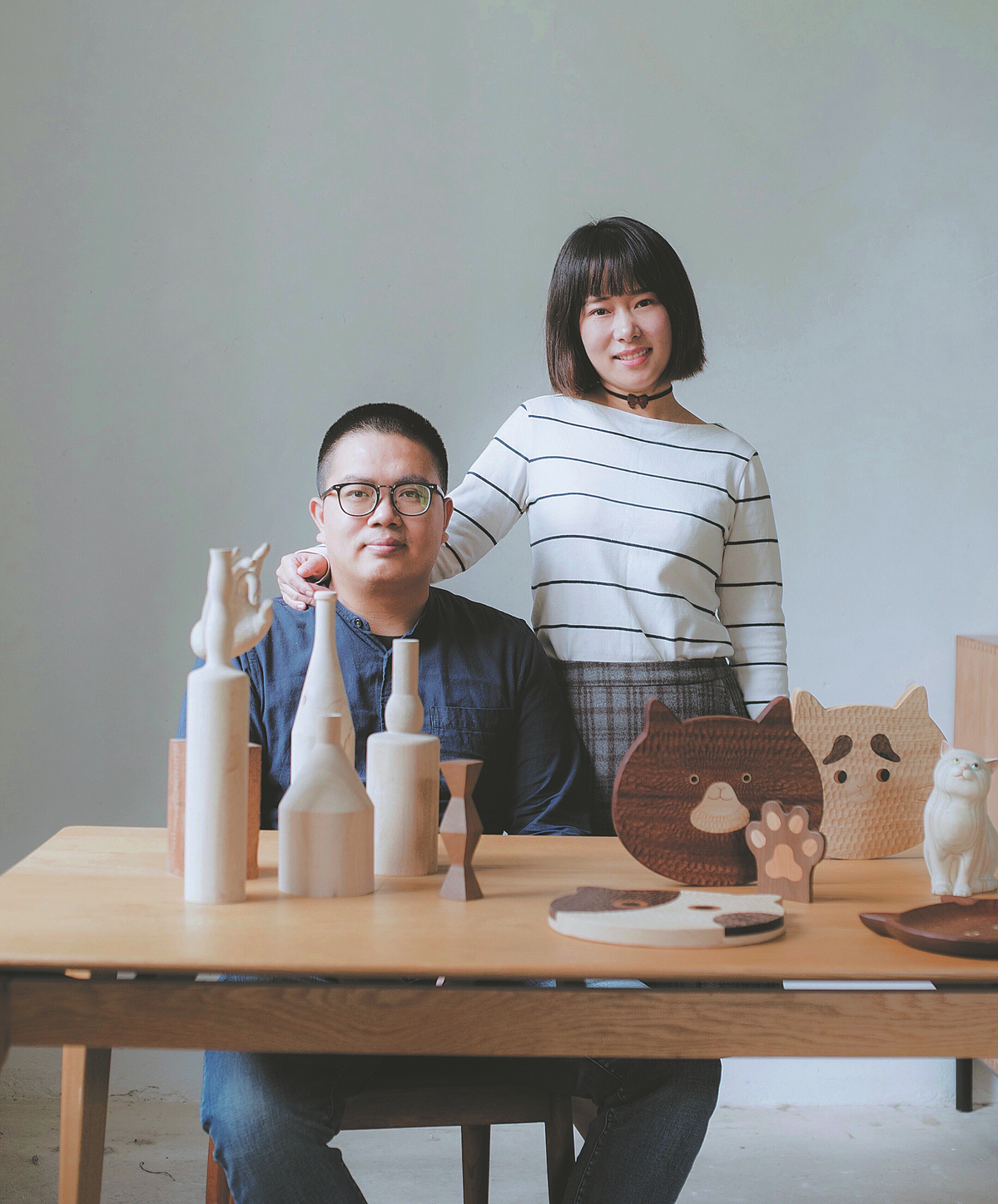
Wu Yongkun, 35, an inheritor of wood carving in Huangshi, Hubei province, regards himself as something of a rebel in his family of carpenters. He learned this trade from his seniors, but chose instead to create products that "conform to the preferences of modern people, and which consumers accept and are willing to pay for".
He and his wife, Shi Dandan, 35, opened a store on Taobao in 2019, selling handmade wooden tableware with designs featuring cats. Their breadboards, chopsticks, spoons, forks and plates were shown on stage at the gala in Hangzhou.
Shi said:"Many people associate wood carving with temples, ancient buildings or even towns... We want to turn cultural relics into cultural resources that are commonly seen in daily life."
She added that using cats as a design element for traditional wood carving is aimed at spreading positive energy, and this has proved popular with consumers.
The store's sales rose by 113 percent year-on-year during last month's shopping festival. Most of its clients are women aged 18 to 35, who love cats and favor personalized products.
Shi said that in addition to driving the couple's business, e-commerce helps more people familiarize themselves with wood carving through videos and photographs. She and her husband expect to design more competitive products by analyzing trading data to better meet market demand.
Wu said many intangible cultural heritage techniques are vanishing because related products "are being left behind".
"I want to show the various possibilities for traditional wood carving and inspire more young people to embrace it, in order to change the situation in which no one is inheriting such techniques," he said.
For young people such as Meng Xiangjun, 29, returning to such traditions may offer a faster route to success.
Meng, a lighting designer, worked for a company in Beijing for 18 months before deciding to escape the pressures of life and replan his future. He thought that returning home to Yinan county, Shandong province, to launch his own e-commerce store, featuring low costs, quick marketing and broad access to consumers, was a good idea.
His mother, Yin Huiju, an inheritor of the Yangdu straw-plaiting technique, which is used to make products such as hats, bags and shoes, was one of the first people in the county to commercialize this cultural heritage. She learned the handicraft when she was 14, opened factories in the 1990s and now sells straw-plaited products to overseas customers.
Her success paved the way for her son's entrepreneurial venture. Meng quit his job in 2018 to open an online store selling straw-plaited bags featuring his own designs. The bags are made by elderly female workers at his mother's factories.
"Many locals plant corn. We recycle corn leaves, dye and dry them, before plaiting them into fashionable bags, which sell for more than 100 yuan on Taobao," he said.
This technique was inscribed on the national intangible cultural heritage list in 2008. Meng displayed his two most popular products on stage during the Nov 10 gala.
"Previously, we received orders from foreign companies and produced items based on their designs, but there was no way of knowing who bought them or if customers liked the products. But now, thanks to e-commerce, we can contact consumers directly, which helps us improve our products and service," said Meng, whose store makes a monthly profit of about 50,000 yuan to 60,000 yuan.
In the new media era, the way in which information is spread offers a new avenue for inheritance and innovation of intangible cultural heritage, whose development is becoming more diverse and open, he said. The rising sense of awareness about ethnic culture, and the nation's emphasis on it, also offer good opportunities.
"As demand for cultural consumption increases, customers are favoring products related to intangible cultural heritage that feature a long history and fine quality," Meng said.
He is now applying to become an inheritor. Yin, his mother, said she never expected her son to be willing to return home to join the business, but she is proud of his achievements in breaking away from traditional selling methods and building his own brand.
"He has made great progress in the past two years, and I am glad to see more people beginning to appreciate this handicraft," she said.