Chip plants push in US built on shaky ground









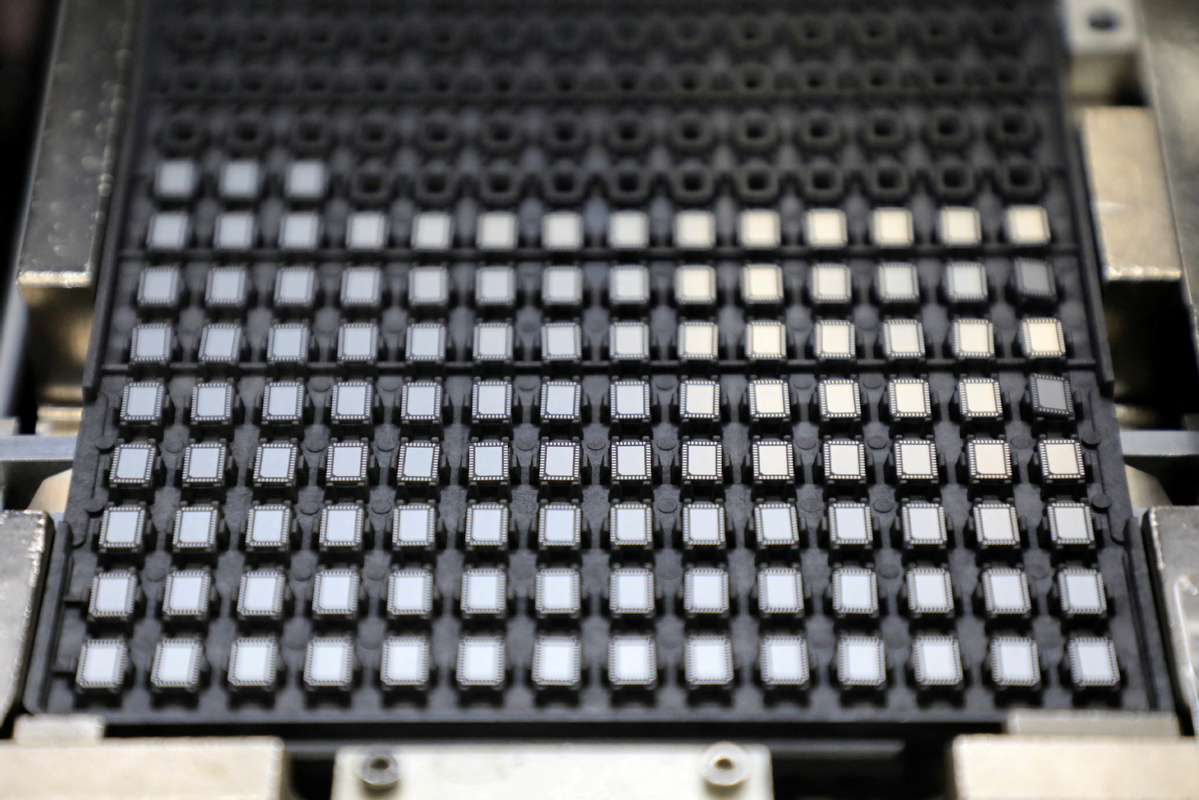
Semiconductor firms may face hurdles despite global shortages, experts say
Intel's plans to spend billions of dollars building more semiconductor plants in the United States may face headwinds despite the global chip shortage driving demand, experts say.
Intel, a pioneer in the technology industry, is among a number of manufacturers investing in US production capability, encouraged by favorable government policies in response to concerns over China's rapid gains in technology.
Construction of Intel's new plant near Columbus, Ohio, is expected to begin late this year with production to start by 2025. It would directly employ 3,000 people. Intel's Chief Executive Patrick Gelsinger said the company planned to invest as much as $100 billion over a decade to build up to eight factories on the site.
Intel has factories in Oregon, New Mexico and Arizona. Last year, the company chose an existing complex near Phoenix, Arizona, for a $20 billion expansion.
About 80 kilometers from Intel's site near Phoenix, Taiwan Semiconductor Manufacturing Company, or TSMC, the world's largest chip foundry, began building a $12 billion complex last year. Samsung Electronics is expected to start building a $17 billion factory in Taylor, Texas, this year.
While the US dominates the global semiconductor market share by revenue, more than 70 percent of global semiconductors are produced in Asia, with many of the most advanced chips coming from TSMC and Samsung.
"Most industry experts say Intel has fallen behind leading-edge semiconductor fabrication by two to possibly three generations from leading-edge technology," George Koo, a retired international business adviser in Silicon Valley, told China Daily.
"That being the case, it will not be possible for Intel to leapfrog to the leading edge in one jump. Advances can only be on a step-by-step basis and will take time."
Experts said the challenges that companies face to own a chip factory in the US include the high costs and a lack of skilled workers. The costs of owning a new chip factory are roughly 30 percent to 50 percent higher than in Asia, according to a Semiconductor Industry Association report.
Finding skilled workers
"Finding the skilled workers and technologists to build and then to operate the semiconductor plant will be a challenge," Koo said of Intel's Ohio plans.
Don Rosenberg, former general counsel and executive vice-president of Qualcomm, told a recent webinar: "TSMC has probably a few hundred more very skilled, sometimes PhD-level engineers, who are critical to that very difficult, technical process of producing the end product. We need more of those here in the US."
Morris Chang, the founder of TSMC, said last year that manufacturing chips in the US was more costly and posed supply-chain challenges. "Even after you spend hundreds of billions of dollars, you will still find the supply chain to be incomplete and costs to be higher than what you currently have," he said.
The US has become concerned with the risk of future supply-chain disruptions on their domestic industries, after years in which manufacturing has gravitated to lower-cost countries in Asia.
Last year, the US Senate approved $52 billion in funding to support semiconductor research and production.
US President Joe Biden argues that the legislation and US investments by Intel and other chipmakers are crucial for the economy, national security and economic competition.
In a recent speech, Biden said: "China is doing everything it can to take over the global market. So they can try to outcompete the rest of us and have a lot of applications."
Koo said: "China has heretofore relied on independent foundries such as TSMC to make the leading-edge chips that they need. It was the US unilateral move to cut off supply of the services of third-party foundries and even advanced fabrication equipment to China, which has forced companies in China to accelerate the domestic development of semiconductor fabrication capabilities and wean from dependence on American technology."