BRI helps fill development gap left by West









Initiative 'definitely providing very much needed infrastructure in many places'
The Belt and Road Initiative is meeting "tremendous needs" for infrastructure in Africa and other places in the world, while the United States and European countries have been unwilling to do so, said US-based experts, calling on the West to boost investments.
Critics of the BRI have raised concerns about the potential impact on host countries, but Jennifer Hillman, a senior fellow at the Council on Foreign Relations, said people should understand the context that China is "filling a tremendous need out there in the world, a need that we and others had not been willing or able to fill".
"Part of the reason why the Belt and Road Initiative got as far as it did is because China was filling a vacuum that the United States and others had created," said Hillman, also a law professor at the Georgetown University Law Center, during a recent webinar evaluating the BRI.
"The multilateral development banks and others had largely walked away from funding a lot of this hard infrastructure," she said, "It (the BRI) is definitely providing very much needed infrastructure in many places."
W. Gyude Moore, a senior policy fellow at the Center for Global Development, agreed, saying it's important to establish the context of understanding Chinese investment in Africa.
"Africa lags behind every other region in the world when it comes to the availability and functionality of infrastructure. Almost 600 million people lack access to electricity in Africa, and 300 million people are more than 50 kilometers away from any installation of cables for the internet. So because of that, there's a huge absence of infrastructure there," he said during the same webinar.
In the 1970s, the US began to step away from building hard infrastructure and focused on health and education, Moore said. "And because the US exerts such significant influence, whether it's at the World Bank, the Asian Development Bank or elsewhere, that change in US policy began to be reflected in multilateral development lending," he added.
"So by the time China comes on the scene, there is a huge infrastructure gap," said Moore, who estimates the gap at between $68 billion to $180 billion a year.
According to a new study from the Center for Global Development, China's development banks lent more than twice as much for public-private infrastructure projects in sub-Saharan Africa as US, German, Japanese and French development finance institutions combined.
Researchers at the think tank examined 535 infrastructure deals and found that China's investments dwarfed those from other governments and multilateral development banks. Between 2007 and 2020, China Exim Bank and China Development Bank provided $23 billion in financing, while all other major development finance institutions combined provided $9.1 billion.
The principal US government development finance institution, the US Overseas Private Investment Corporation, now the US International Development Finance Corp, lent $1.9 billion for infrastructure between 2007 and 2020, less than a 10th of what China provided, according to the study released last week.
Multilateral development banks like the World Bank have also not significantly stepped up their efforts, and these institutions provided an average of just $1.4 billion per year for public-private infrastructure deals in sub-Saharan Africa from 2016 to 2020.
"There is a lot of criticism of China. But if Western governments want to boost productive and sustainable investments to meaningful levels, they need to deploy their own development banks and press the multilateral development banks to make these investments a priority," said Nancy Lee, the lead author of the paper.
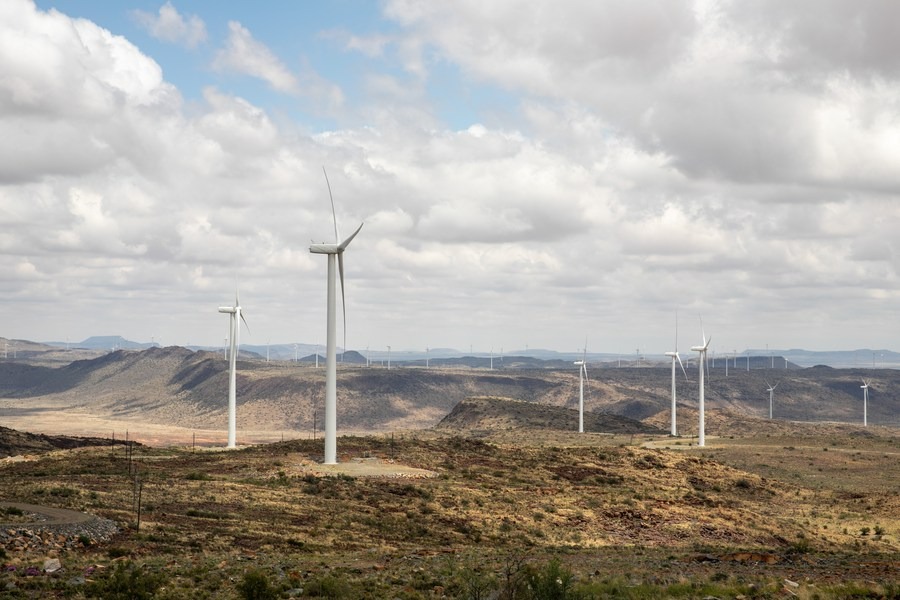
When asked if the BRI projects "make sense" from a financial and business perspective, Hillman said, "Many of the projects are building roads and bridges that are much needed. … In the power sector, you have a lot of cities that now have power in a way that they didn't before."
She added that the infrastructure deficit is huge and it's going to get larger as a result of climate change. "We simply are going to need more and different kinds of infrastructure, which is going to require more and more investments," she said.
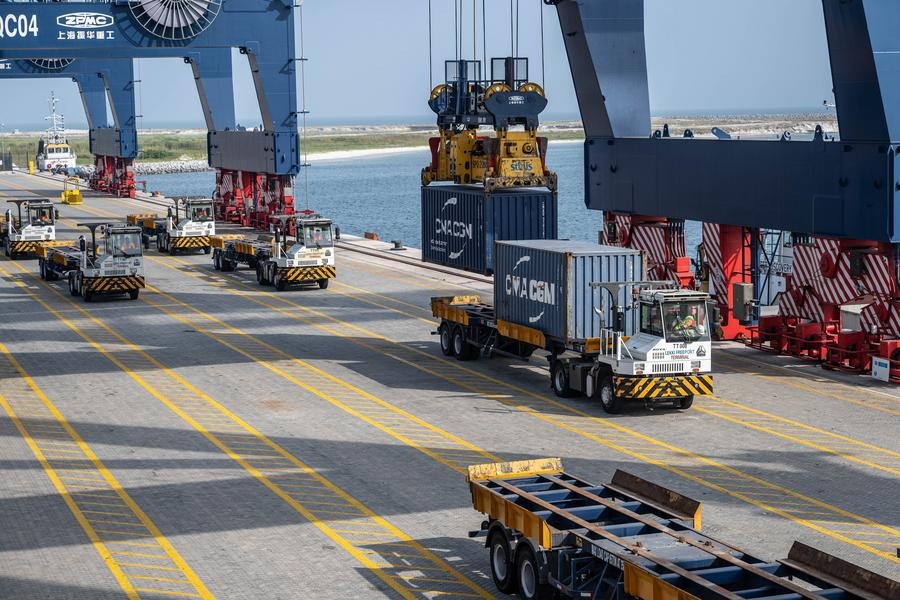
In Africa, 100,000 kilometers of road, more than 6,000 kilometers of rail, more than 80 ports, huge hospitals and water treatment facilities have been built, which "probably would not have been built in Africa if it weren't for the presence of the Chinese", said Moore.
"So I think it's important that if the US is going to challenge China in this great power competition, then there has to be some sort of substantive output, especially as far as Africa is concerned," he said.