Complementary global initiatives can benefit all









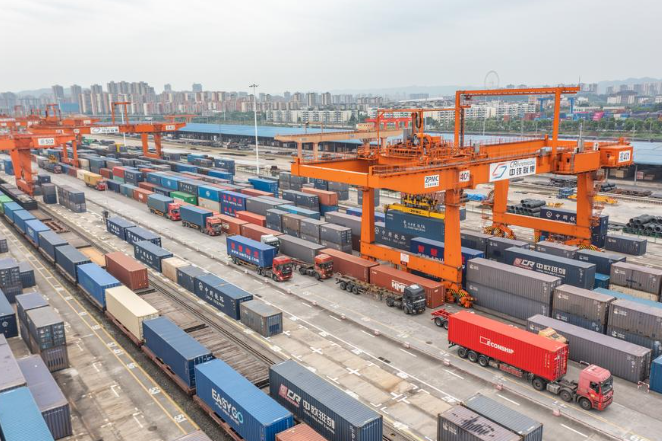
In the fall of 2013, President Xi Jinping announced his vision of building a strategic framework in support of the 21st Century Maritime Silk Road and the Silk Road Economic Belt, now collectively known as the Belt and Road Initiative. This was clearly a very ambitious and truly global plan.
So far, China has signed Belt and Road cooperation agreements with 140 countries and 32 international organizations, proving its value and confounding the skeptics. The BRI is undeniably fulfilling a real need as emerging markets continue to grow.
Existing projects are also reviewed regularly and adjusted when necessary. This is especially the case when financing structures become outdated due to changes to the borrower's financial situation, notably due to the economic impact of the COVID-19 pandemic.
Sometimes new lenders will step in and provide refinancing, such as happened recently in Montenegro. A consortium of European and United States banks refinanced a $1 billion Export-Import Bank of China loan for a highway infrastructure project. These developments are positive, as Montenegro will benefit from the new infrastructure when it is completed.
Recently, Argentina and China, celebrating 50 years of bilateral relations, signed a memorandum of understanding regarding BRI cooperation. Argentina is a very important exporter of wheat, soy and other commodities to China, so the focus on improving Argentine maritime infrastructure is both logical and mutually beneficial. When all is completed, Argentina will be able to export commodities much more easily and faster.
As the great playwright and political activist George Bernard Shaw once observed, "Imitation is not just the sincerest form of flattery-it's the sincerest form of learning," and so several leading economies are pursuing the BRI model. For example, the European Union recently announced its own international infrastructure drive known as the Global Gateway.
The EU plan envisages raising up to 300 billion euros ($340.6 billion), which sounds like a lot of money but is a small drop in the cost of emerging markets' infrastructure needs. To put it in perspective, it is estimated by some analysts that the total sum of BRI investments to date has already exceeded $4 trillion. The 300 billion euros will be raised from various public funds that have given their green light, combined with private sector funding. This total amount would also be a mixture of loans, grants and guarantees.
According to Ursula von der Leyen, president of the European Commission, the new EU plan offers "a true alternative" to the BRI. The EU's Global Gateway will focus on Africa, Central Asia and Latin America, all geographies where to date European infrastructure assistance has been very minimal, to say the least. If the EU Gateway is truly focused on helping those regions where the infrastructure needs are the greatest, then this is extremely positive and would complement the BRI's commitments. If, however, the real agenda is to focus on countries that have expressed an interest in BRI funding, so as to entice them away from China, then everyone loses. The entire planet benefits from global connectivity, from increased trade, travel and face-to-face human interaction, leading in turn to a higher level of mutual understanding and benefit.
The US has also come up with an initiative, along with other G7 countries including Japan and the United Kingdom, that is called the Build Back Better World plan, or B3W. This plan was unveiled by US President Joe Biden in Glasgow during the 26th UN Climate Change Conference of the Parties, or COP 26, in November. Its objective is to finance a green, collaborative global infrastructure initiative that Biden said would create a "sustainable path to net-zero emissions by 2050".
The more global financing that is made available for serious, sustainable projects to combat climate change around the world, the better. Everyone benefits, including China, which cannot be expected to carry the global burden alone.
If the various global initiatives do manage to work in a coordinated, complementary manner, enabling more countries to realize their infrastructure dreams and enhancing global connectivity, then the BRI might well be hailed as one of the greatest government initiatives of the 21st century-not only in its own right but as the catalyst prompting others to follow in its footsteps, thereby jointly benefiting mankind and the planet.
The late British prime minister Margaret Thatcher hit the nail on the head while highlighting the role of infrastructure in triggering economic development when she remarked, "You and I come by road or rail, but economists travel on infrastructure."
The author is a former lawyer and investment banker, and is the founding partner of a Hong Kong based strategic advisory firm.