Two sessions a showcase for tomorrow's tech










As a tech reporter, I am always ready to explore cutting-edge technologies. The two sessions, China's most important annual political event, is known for its spirited discussions about policy, but I never expected it would become such a good platform for showcasing the latest technological developments.
From virtual anchors to piloting the metaverse for interviews, news outlets are scrambling to make use of digital technologies to provide more innovative coverage and empower reporters. This year's event is also offering a peek into the latest breakthroughs in fields including artificial intelligence, virtual reality and augmented reality that media companies are busy exploring.
Take Xinhua News Agency's robotic news anchor, for example.
Such an anchor is nothing new for Chinese viewers, as Xinhua used one for its coverage of the two sessions in 2019. But this year, a new virtual video anchor named Xiao Chuang impressed many with how naturally it interacted with the human female anchor. It gestured, smiled and spoke pleasantly as it mimicked facial expressions and body movements.
The two hosts occupied immersive virtual settings created by AR and VR technologies, including in a virtual Great Hall of the People almost identical to the real thing, breaking the boundaries between the virtual and real worlds.
I've been quite impressed by the technological advances of the past few years. Thanks to machine learning, big data and other state-of-the-art technologies, robot news anchors are becoming smarter and more capable. National Business Daily, a Chinese financial news outlet, has also used virtual anchors in their videos. The overall appearance of their two virtual anchors has improved to such a level that they are almost indistinguishable from humans, apart from sounding a little machine-like.
What impresses me the most, though, is that the program is produced entirely by AI, from writing the scripts using financial data to the editing and broadcasting.
That is significant, for it means that AI can now take on "churnalism"-the churning out of routine, dry financial news based on news releases, financial data and official statements-and create videos on its own.
For now, this is only true of hard financial news, which centers on data and does not touch on more sophisticated issues involving people. But it is a really big step forward, one that will enable human reporters like me to focus more on producing in-depth interviews, research-based analyses, 360-degree features about trends and developments and, of course, insightful columns.
On top of optimizing their AI anchors, I've noticed that some Chinese media outlets are also making bold moves to pilot the use of the metaverse, a hot tech topic that has hogged the global spotlight this past year. With many people still unable to wrap their heads around the concept, the Fujian Media Group partnered with Chinese tech company NetDragonWebsoft Holdings to create a metaverse interview platform to present reports from the two sessions.
The platform enables reporters to interview NPC deputies and members of the CPPCC National Committee remotely, and in an immersive manner. The interviews take place in 360-degree virtual settings-for instance, there's one in which the digital avatars float on the sea surrounded by magnificent ships. Netizens can also use the platform to sit virtually beside the NPC deputies, an ability that has more relevance amid the COVID-19 pandemic. Though the metaverse is still at a nascent stage, and the video by the Fujian Media Group is far from tapping its full potential, the effort showcases the Chinese media industry's willingness to try new things.
This year's Government Work Report highlighted the need for China to step up and pursue an innovation-driven development strategy. To me, "innovation-driven development" is not just some empty phrase. Instead, it shows the commitment of Chinese tech companies to come up with the next big thing and the willingness of traditional Chinese enterprises to try new technologies despite risks and uncertainties.
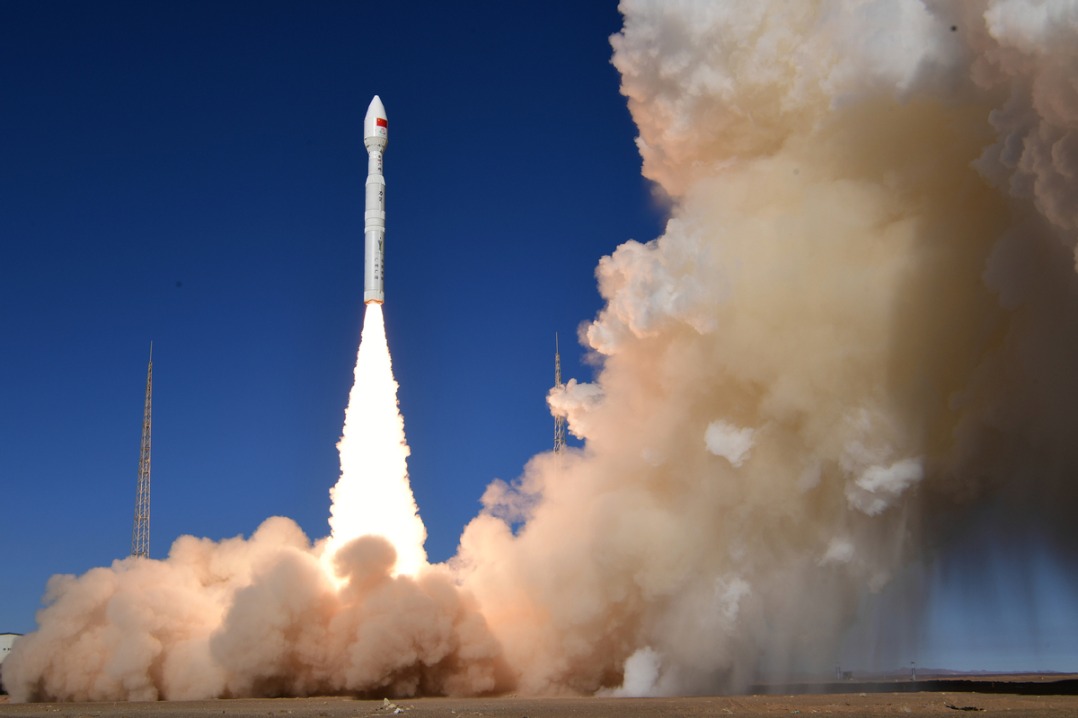

- China's commercial rocket maker puts two satellites into orbit
- People in Taiwan commemorate victims of White Terror period
- China successfully launches new test satellites
- China launches Lijian 1 Y9 carrier rocket
- First cross-border event debuts at the National Games
- China Focus: National Games enhances coordination under 'one country, two systems'