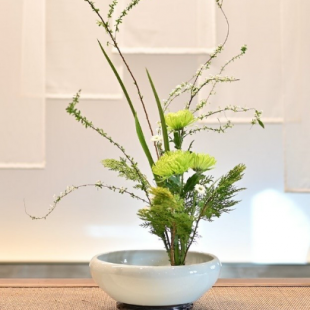



Art that blooms from history









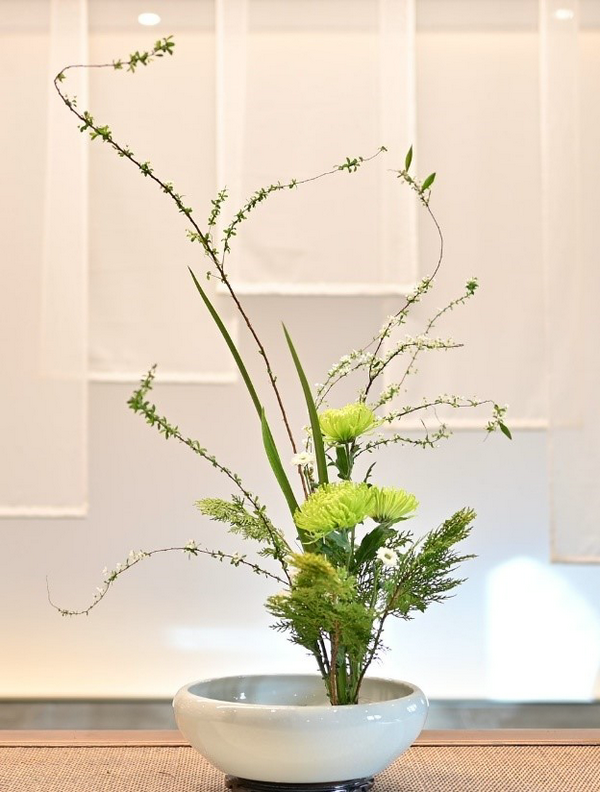
What is this? Japanese ikebana? No, it's Chinese traditional flower arrangement. They seem similar, but actually differ.
Recalling experiences in flower arrangement competitions abroad, Zhang Yan said her works were often mistaken for ikebana. "Some were quite astonished when I told them I'm from China," Zhang sighed. "We need more publicity on Chinese traditional flower arrangement."
Zhang Yan first encountered Chinese traditional flower arrangement in college from an optional course she took. Back then, she never imagined that a single course could be the starting point of her life-long career.
Her interest grew as she read several titles on flower arrangement and began to arrange flowers herself. Later on, she learned from Wang Lianying, a prominent figure in Chinese traditional flower arrangement, and took part in many competitions at home and abroad and raking numeral awards under her belt.
The seed of interest bloomed. Now, Zhang is a master and an inheritor of Chinese traditional flower arrangement, and she hopes to do her part to introduce the art form to the world.
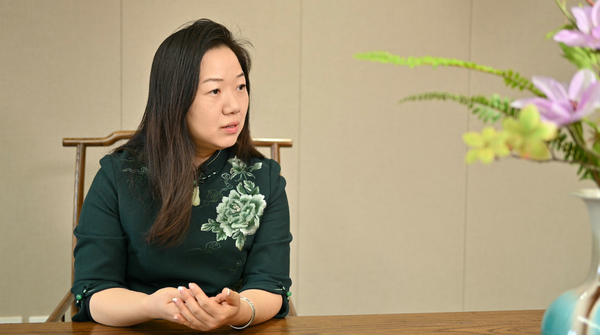
Inheritance from history
The art of Chinese traditional flower arrangement has been handed down since 1046 BC. Historical records show it has served as offerings at temples, decorations in the palace and art at homes.
"Despite a history of more than 3,000 years, the image of flower arrangement oftentimes is still confined to the bouquets they see in flower shops," Zhang said. To break that stereotype, Zhang began to study historical records on flower arrangement in China. "If people are familiar with the history of Chinese traditional flower arrangement, they would definitely take pride in its centuries-old history, reflect why it's not as well-known as ikebana, and seek ways to revitalize it."
In 2008, Chinese traditional flower arrangement was included in the second batch of National Intangible Cultural Heritage. To Zhang, it is the art form's rich historical connotation that makes it heritage, and this national recognition would lead to more public awareness.
Today, more and more people are learning Chinese traditional flower arrangement, not just professional florists but also amateurs, even little kids. Zhang's own daughter has also grown an interest in flower arrangement. "Whether she makes it her career or not, I hope she can continue to hold an ability to appreciate the beauty around her," Zhang added.
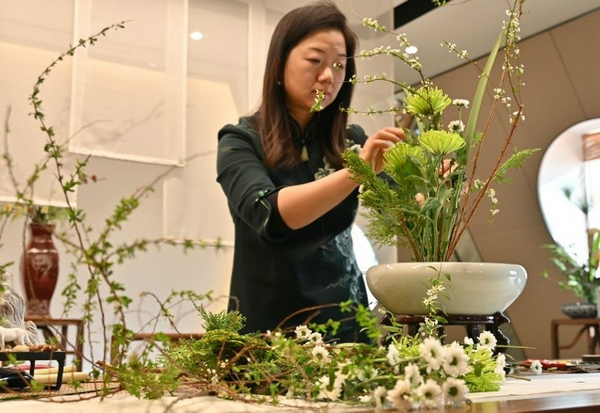
The future
Chinese traditional flower arrangement is not only a decoration, but can also serve as a form of therapy for modern busy bees.
"Unlike its Western counterpart, Chinese traditional flower arrangement emphasizes simplicity," Zhang said. The arranger must decide on what is truly necessary in his or her work and remove the rest. Sometimes learners are moved to tears because they began to reflect on what is truly necessary in their lives.
"Today's people often ignore the really important things in life," said Zhang. The healing effect of Chinese traditional flower arrangement is realized when the arranger come to terms with what they truly want.
In Zhang's view, there are more potential to Chinese traditional flower arrangement aside from its therapeutic effects, and the key lies in the exploration of traditional Chinese culture.
"It came from traditional Chinese culture, and it is part of it," Zhang argued. "Only when it absorbs an abundance of nutrition from traditional Chinese culture can it bloom and be world-known."
"Our mission is to develop and inherit traditional Chinese culture," Zhang added.
The author is an international journalism major at Communication University of China.