Bases in Hunan and Jiangxi provinces played key role in CPC history









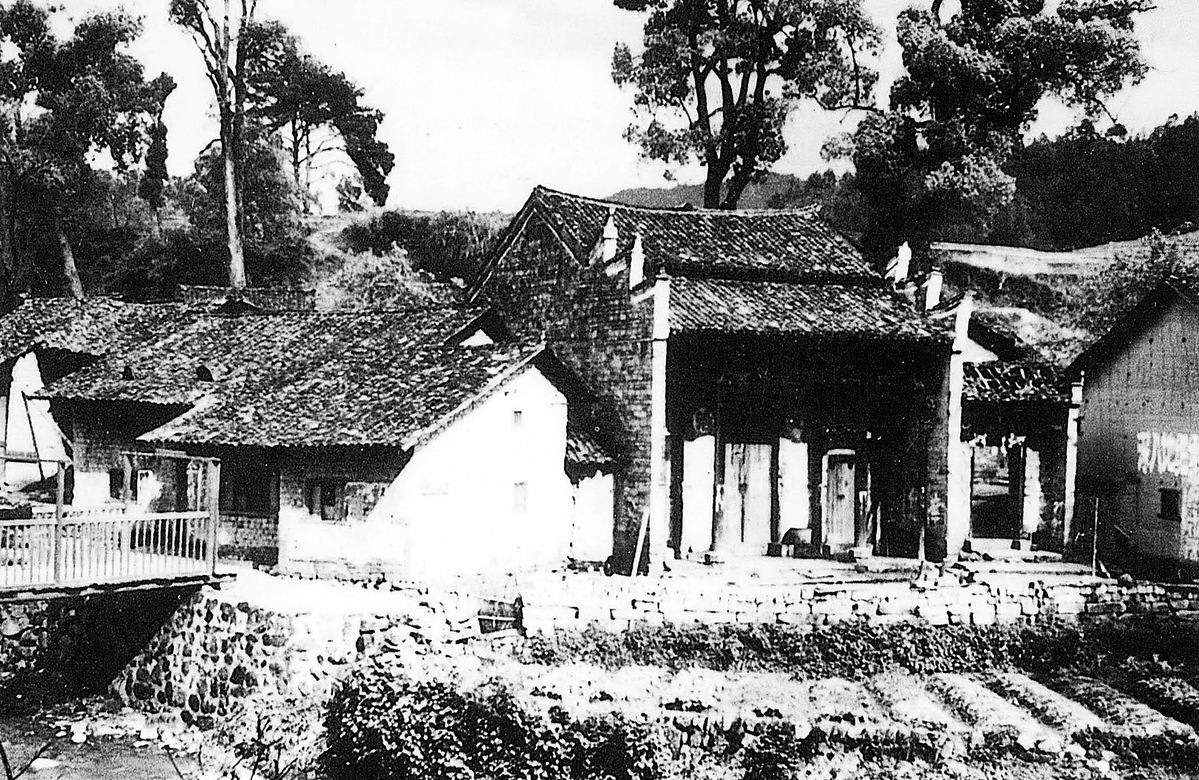
The Jiangxi-Hunan Junction Revolutionary Area mostly covers the present-day border area between mountainous eastern Hunan and western Jiangxi provinces. Around 90 years ago, this was the core of the Hunan-Jiangxi and Hunan-Hubei-Jiangxi revolutionary bases.
The revolutionary history of the area dates to Mao Zedong (1893-1976), who led rural militias and workers in the tri-provincial area during the Autumn Harvest Uprising in September 1927. Forces gathered in Wenjiashi town in Hunan's Liuyang, and under Mao they created the Jinggangshan Revolutionary Base that October. It was the first rural revolutionary base established by the Communist Party of China.
The Jinggangshan base lasted for just over a year, when Mao and Zhu De (1886-1976), who would become the commander-in-chief of the People's Liberation Army, led the Fourth Red Army-the CPC's core military force-to southern Jiangxi to break the military encirclement and economic isolation of the region by the Kuomintang, or the Chinese Nationalist Party, in mid-January 1929. The base was overwhelmed by KMT troops and the remaining CPC forces were forced to go underground.
The CPC seized the opportunity presented by internal conflict between KMT-affiliated warlords, which led to some KMT troops being reassigned, to rebuild the CPC network. In May 1929, the Fifth Red Army returned to Ninggang, a key town that was part of the former Jinggangshan base.
It was decided at a meeting that a revolutionary base would be built with Yongxin, which had been part of the Jinggangshan base at its center. The era of the Hunan-Jiangxi Revolutionary Base began.
From mid-1929 to mid-1931, the CPC-led Red Army gradually linked revolutionary areas in eastern Hunan and western Jiangxi. In July 1931, the Hunan-Jiangxi (Xianggan) province was declared, and a provisional provincial CPC committee and government were established. Covering about 20 counties in total, the base extended across 1,000 square kilometers and counted a population of about 1 million.
At about the same time, the Hunan-Hubei-Jiangxi Revolutionary Base also established a provincial (Xiang'egan) Soviet government. The base, which gradually took shape through a series of uprisings that began in 1928, eventually extended across 40 counties.
As at other revolutionary bases, the Soviet governments placed a great deal of focus on land redistribution. A campaign to redistribute land was launched in October 1931, with class a key criterion.
They also introduced new policies on commerce, education and industry.
Militarily, the bases became an important arm of the Central Revolutionary Base, which lay to their southeast. By adopting flexible strategies, the Hunan-Jiangxi and Hunan-Hubei-Jiangxi bases were able to cooperate with the Central Red Army, pin down KMT troops and repel multiple offensives.
However, they also made mistakes when redistributing land and identifying class enemies. For example, two local militia leaders who joined Mao during the Jinggangshan Revolutionary Base period were wrongfully killed for suspected betrayal.
In the summer of 1933, the KMT prepared a new offensive against the Central Revolutionary Area. Adjusting its strategy, it attempted to first besiege the base and take it step-by-step, instead of trying to capture the core area in one go.
Under the guidance of "Leftist" leaders who misjudged the situation, the CPC adopted an offensive strategy. The Sixth Red Army Corps-a key force of the Hunan-Jiangxi Base-launched several attacks but achieved limited results.
As the fighting continued, the bases were gradually encircled. The Hunan-Hubei-Jiangxi Base fragmented into guerrilla warfare in July 1934. Around the same time, the Sixth Corps and the Hunan-Jiangxi Base were also facing the imminent threat of annihilation. On July 23, the CPC Central Committee decided that the corps should make a strategic shift to central Hunan to pin down enemies attacking the Central Revolutionary Base, and create a new Soviet area there.
The corps successfully escaped encirclement in August. After fighting for two months, they were able to join forces with the Third Red Army in Yinjiang, Guizhou province, in October. This played a key role in an overall shift for the Central Red Army.



- First cross-border event debuts at the National Games
- China Focus: National Games enhances coordination under 'one country, two systems'
- China's Fujian aircraft carrier to make regular appearances on high seas: spokesperson
- A decade of dialogues
- HK: a stage for art and cultural dialogue
- Tapping truly unknown wonders