


Artist in her natural element










In 2012, Wu started her own art studio in Beijing and became a full-time artist.
In the early stages of her venture, Wu explored Chinese ink painting, with dragons as the main theme.
As an artist who has been watching dragon-related TV and movies, as well as admiring graffiti, since childhood, she is strongly attracted by dragon iconography.
In her early 20s, Wu drew dozens of dragons in one year, each with its own name, and her fans online called her "the youngest dragon-themed artist".
One of her creations named Long Si won her the Special Jury Prize at the 13th Barcelona International Comic Festival in 2012. The series was published as a picture book in the same year.
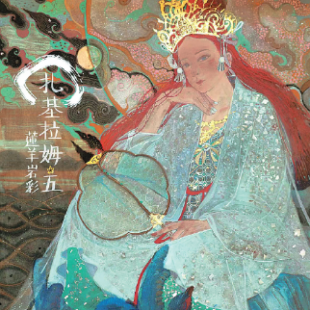
Out of the blue, Wu switched focus to mineral color painting, which seemed to be a move that ditched the accumulation of the past. But, in fact, she has always been pursuing an artistic expression that keeps up with the times and suits herself, as well as not being limited to just painting.
Wu visited Jingdezhen, a city in Jiangxi province, known as "the capital of porcelain", famous for its blue and white ceramics. However, she always felt unsatisfied artistically, until she saw the Dunhuang frescoes.
The artist first approached mineral color painting in 2013, when there were no related majors in China. She studied the Dunhuang frescoes and ancient architecture instead. While most of her early research came from text and pictures, much of the information was incomplete, so she felt driven to look for professional education.
In China, mineral color painting flourished during the Tang Dynasty and Five Dynasties and Ten Kingdoms (907-960) and was used extensively in art forms such as murals, screens and statues. In the late Yuan Dynasty (1271-1368), as literati ink painting caught people's attention, the popularity of mineral color painting gradually waned in the central regions of China. However, after it spread to Japan, it was passed on and developed, according to Wu.