


Saving a tradition of creativity









Revealing a romantic age
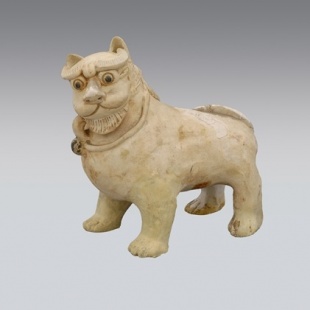
Changsha wares have many stories to tell. Saturday is China's annual Cultural and Natural Heritage Day, and this provides a perfect opportunity to trace the origin of this ceramic.
According to museum director Wang Lihua, porcelain production first began in the late period of the Eastern Han Dynasty (25-220), but only in the middle of the 8th century did the golden age of Changsha wares emerge.
At that time, the chaotic An-Shi Rebellion severely hit North China, and many porcelain artisans fled southward, introducing their techniques and skills to today's Hunan region.
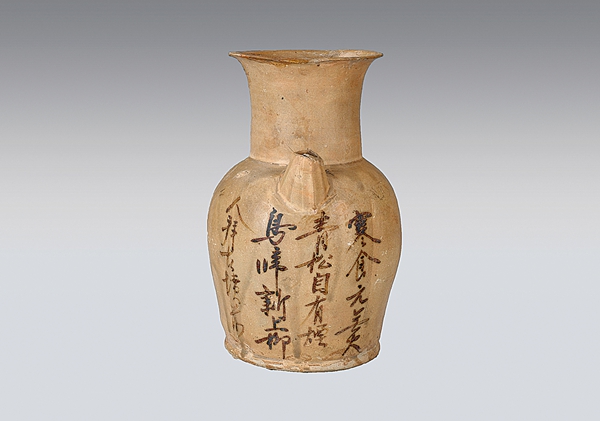
"Changsha's local flavor was then mixed in, and a new type of porcelain was born," Wang says. "The colorful wares in Changsha thus became a milestone of innovation in Chinese ceramic history."
At that time, white was the dominant color of porcelain production in North China, while celadons, or green pottery, was a signature product of East China, like present-day Zhejiang province.

"The rise of colorful Changsha wares was like adding the third leg of a tripod," Wang says.
But the products became famous for another reason. The romantic Changsha people added paintings or poems to the porcelain as decoration.
"There were even some advertisements, like for fine wines," Wang says. "These decorations, mixing painting and calligraphy, greatly enriched our understanding of ceramic cultures, and they also vividly reflect urban life at that time."
These ceramic artifacts, mainly daily-use items rather than art pieces merely for aristocrats to appreciate, can still radiate warmth and emotion.
"When you were born, I wasn't. When I was born, you were old. You resent I was born too late. But I regret you were born too early." This love poem would not be out of place on a messaging app. The words were actually written on a piece of Changsha porcelain that was unearthed in a 1983 archaeological excavation. It is now in Changsha Museum.

"Some stanzas on the wares are documented in history as famed poets' works, but most weren't," Wang says. "They were probably written by the artisans themselves.
"The Tang Dynasty was experiencing a cultural boom," he continues. "When the artistic and literary taste of society became more refined, many ordinary people could write poems. Changsha wares therefore recorded examples of folk literature."
More work is being done to seek physical clues indicating the prosperity of ceramic kilns in Changsha. Historical documents show that their production reached a peak in the early 9th century and declined after the 10th century.
According to Zhang Haijun, a researcher at Changsha Museum, archaeological discoveries of Changsha wares have occurred randomly over the decades, and key findings of kiln ruins have been made, particularly since 2010.
"The discovery of workshops, pits to bury broken ceramic, and other relevant industry heritage, has drawn a more complete picture of Changsha wares," he says. "We can better see how they were produced, distributed and marketed."