Preferential policies inject vitality into struggling SMEs









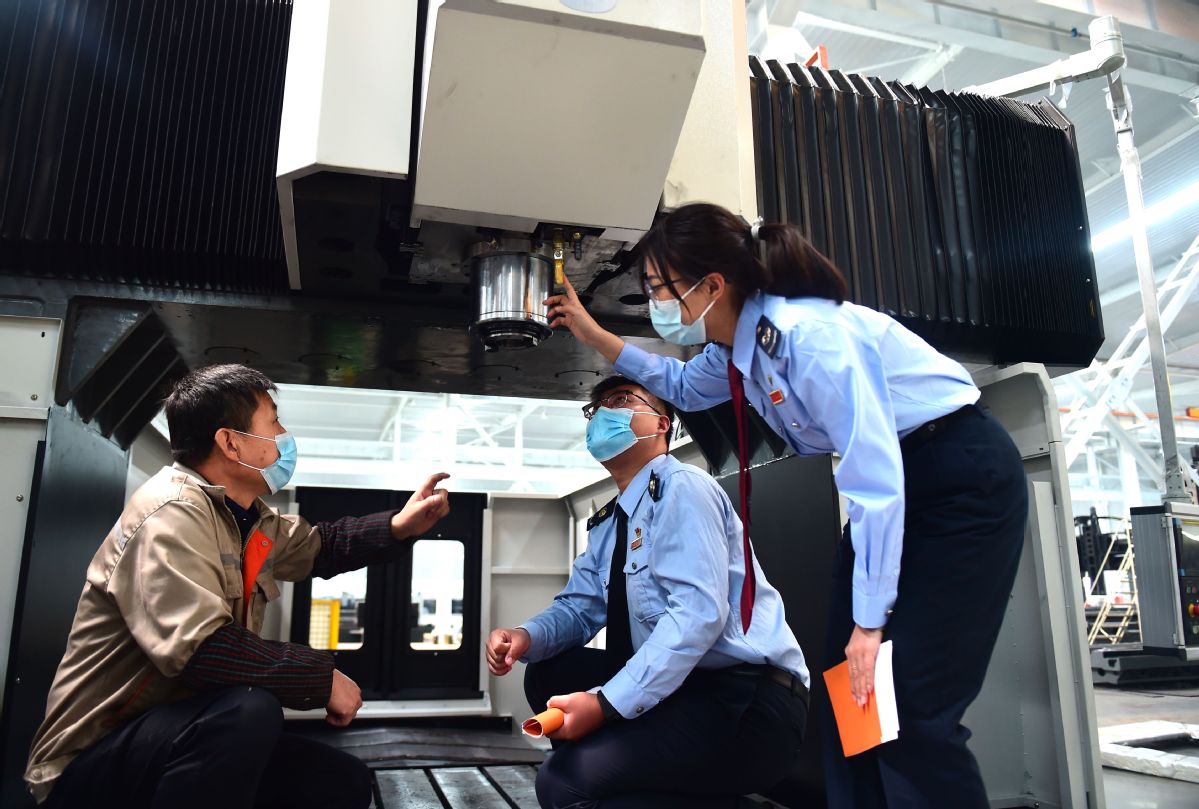
I didn't expect Tim, a friend of mine who owns a small new materials company in Hefei, Anhui province, to double down on his investment recently. But he did, defying the trend among most small and medium-sized enterprises, which have been having a tough time because of the COVID-19 pandemic.
"For an SME, things like rising operational costs and supply chain uncertainties could bring some pressure but they are all periodical. I'd rather look at how the ecosystem is changing as that's what will decide my company's future," Tim said.
By ecosystem, Tim meant that China, unlike most other countries, has rolled out numerous preferential policies for SMEs in order to sustain them. He should know because Tim has been living abroad since finishing high school. "China's 'big-picture' policies give me a sense of long-term stability," he said.
One of the latest policies is the country's vision to build a unified domestic market that, according to him, will greatly benefit SMEs for decades to come.
"From my perspective, a unified domestic market will greatly break down both administrative monopolies and big corporate monopolies, which will level the playing field for SMEs, especially during the pandemic," he said.
In China, SMEs are responsible for nearly 50 percent of the nation's tax revenue and 60 percent of GDP. They also contribute 70 percent of technology innovation and 80 percent of urban employment in the country, according to the Ministry of Industry and Information Technology.
"The construction of a unified domestic market is actually not a dividend for one enterprise but all participants in the Chinese market," said Guo Bin, a professor at the School of Management at Zhejiang University, in a note.
"But during this process, two types of companies will benefit the most. They are innovative enterprises, especially SMEs, and companies with a certain differentiated advantage."
Guo said that due to the geographical segmentation of the market, it is sometimes difficult for companies to expand their advantages to other areas and regions, because those areas are riddled with some low-efficiency manufacturers under local protection.
"When a unified domestic market is fully established, those inefficient manufacturers and companies that ignore innovation will find it difficult to survive in the end," he said.
A newly released guideline to establish a unified domestic market mentioned intellectual property rights at least seven times and clearly stated that China will strengthen the protection of IPR for innovative SMEs.
"Strengthening intellectual property protection is the foundation of scientific and technological innovation, while scientific and technological innovation and property rights protection are the preconditions for sustainable economic development," said Bo Wenxi, chief economist at marketing firm Interpublic Group China.
"To accelerate the construction of a unified domestic market and to deepen market-oriented reforms, strengthening the protection of intellectual property rights is of significance as it can stimulate economic vitality for all market players," Bo said.
It is indeed a hard time for all companies in China and around the world but the country is one of the few to carry out a series of reforms to inject vitality into the market.
My friend Tim said the Chinese government appears determined to stimulate innovation and vitality, and he believes it will benefit more SMEs like his in the years to come.