China drives surge in online payments









At least 100 million Chinese adults joined the ranks of people making digital payments in 2021, leading the global surge in the use of online transactions amid the COVID-19 pandemic, which has spurred financial inclusion and narrowed the gender gap in account ownership, the World Bank said on Wednesday.
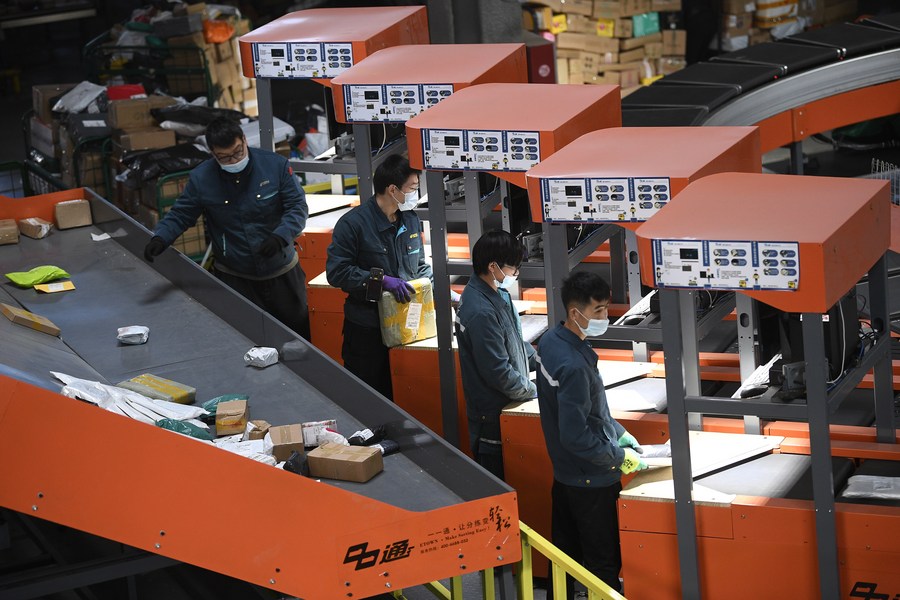
In China, 89 percent of adults have an account, and eight out of 10 adults used it to make digital payments with merchants in 2021, including over 100 million adults, or 11 percent, who did so for the first time after the start of the pandemic, the World Bank said in releasing the Global Findex 2021 database.
The Global Findex database, which surveyed how people in 123 economies use financial services throughout 2021, is produced by the World Bank every three years in collaboration with polling company Gallup.
The 2021 survey, conducted during the pandemic, found that the crisis had further mobilized financial inclusion efforts across the world through several mechanisms, including the emergency relief payments that governments sent to accounts.
It found that two-thirds of adults worldwide now make or receive a digital payment, with the share in developing economies growing from 35 percent in 2014 to 57 percent in 2021.
While account ownership is nearly universal in high-income economies, the survey found that in developing economies, 71 percent have an account at a bank, other financial institutions, or with a mobile-money provider, up from 63 percent in 2017.
The share of adults making digital payments increased in developing economies after the coronavirus outbreak, according to the survey.
In developing economies, excluding China, 8 percent of adults, on average, made their first digital merchant payment after the start of the pandemic, accounting for about 40 percent of those who made a digital payment to a merchant.
In 2021, for the first time, the Global Findex survey included an expanded module on digital merchant payments in developing economies, where 37 percent of adults made such payments.
That average is heavily skewed by the "pervasive" use of digital payments in China. Excluding China, the average share of adults in developing economies making digital merchant payments is 20 percent, according to the database.
It showed that not everyone who buys something online also pays for it online.
Leading figures
For example, in China, 80 percent of adults bought something online last year; virtually all of them also paid for their purchases online (94 percent, including 9 percent who used both online and cash options).
In developing economies, excluding China, 15 percent reported having bought something online, and about two-thirds of those buyers also paid for their purchase online.
For the first time since the database was started in 2011, the survey found that the gender gap in account ownership has narrowed, helping women have more privacy, security and control over their money.
In China, the gender gap in account ownership further shrank. In 2017, the gap between men and women was 8 percentage points, while last year, 87 percent of Chinese women had an account, 2 percentage points lower than the country's adult average.
The number of unbanked adults in China declined from 225 million in 2017 to 130 million last year. Still, that accounts for about 11 percent of the country's adult population, according to the survey.
Acknowledging that the pandemic has spurred financial inclusion by driving a large increase in digital payments amid the global expansion of formal financial services, the World Bank called for efforts to further develop digital infrastructure.
"The digital revolution has catalyzed increases in the access and use of financial services across the world, transforming ways in which people make and receive payments, borrow and save," said World Bank Group President David Malpass.
"Creating an enabling policy environment, promoting the digitalization of payments, and further broadening access to formal accounts and financial services among women and the poor are some of the policy priorities to mitigate the reversals in development from the ongoing overlapping crises," he said in a statement.