HK's unique status and advantages conducive to China's development









Xia Baolong, director of the Hong Kong and Macao Affairs Office of the State Council, gave an address on July 18 at a seminar hosted by the Chinese Association of Hong Kong and Macao Studies to elucidate on the keynote speech that President Xi Jinping gave on the 25th anniversary of Hong Kong's return to the motherland.
Xia explained that Xi's emphasis on maintaining Hong Kong's unique status and advantages as one of the principles guiding the practice of "one country, two systems" indicates the importance the president attaches to the city.
"One country, two systems" is a strategic policy to ensure Hong Kong's unique role and competitive edge. Therefore, without a shadow of a doubt, it has proved to be a fit-for-purpose, visionary governance policy that secures the city's stability and prosperity in the long run.
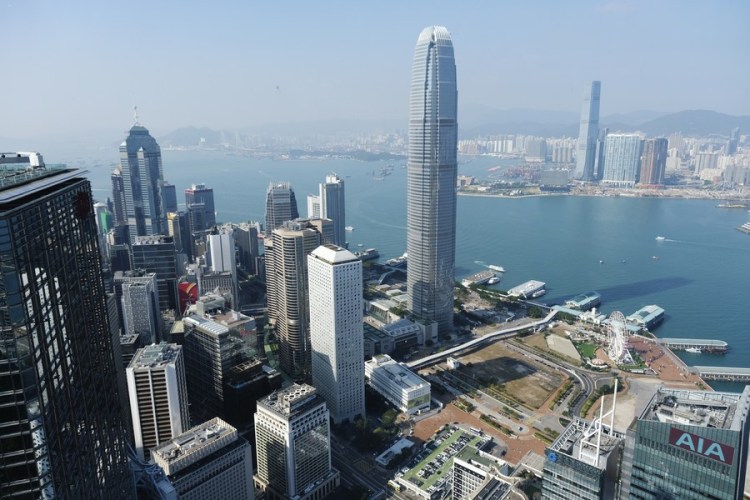
Xia dismissed the concern that Hong Kong would become another mainland city. Thanks to the city's unparalleled distinctiveness and global stature, Hong Kong's role in the country's overall development strategy is irreplaceable by any mainland city. Hong Kong is broadly recognized for its four core advantages-a world-class business environment, simple and low taxation, a judicial system aligning with that of the West, and the free flow of capital.
While mainland cities might be able to replicate the first two qualities, the latter two are impossible to emulate, let alone copy. Let's first dive into Hong Kong's judicial system, the only common law jurisdiction in China. Article 85 of the Basic Law guarantees that the courts of the Hong Kong Special Administrative Region will exercise judicial power independently. That constitutes the city's internationally acclaimed judicial independence and highly regarded rule of law.
That judicial cases in Hong Kong are often cited elsewhere speaks volumes about the international esteem for and confidence in Hong Kong's judiciary and legal system, which is a powerful pull factor for overseas investors. Meanwhile, the city's outstanding capability in conducting international arbitration, which is at the forefront of global standards, is also recognized by more than 140 countries and regions worldwide.
Moving on to the free flow of capital, Hong Kong is the world's third-largest international financial center, after New York and London. With the staunch backing of the Chinese mainland, Hong Kong is well positioned to develop a robust financial industry unmatched by other financial centers such as Singapore. Apart from being a free market with an unrestricted capital flow, Hong Kong also boasts an efficient financial supervisory framework that ensures the safety of funds. These unparalleled advantages can hardly be replicated by any city on the mainland.
Xia specifically quoted President Xi's assertion that "the central government fully supports Hong Kong in its effort to maintain its distinctive status and edges, to improve its presence as an international, shipping and trading center, to keep its business environment free, open and regulated, and to maintain the common law, so as to expand and facilitate its exchanges with the world", in order to demonstrate the importance the central government attaches to Hong Kong.
By reiterating the notion that Xi has Hong Kong residents' interests at heart, Xia was suggesting that the central government has always analyzed and handled Hong Kong affairs from a strategic and holistic perspective of modernizing the country and realizing the rejuvenation of the Chinese nation. If we look through the prism of this strategic perspective, we will see that retaining the city's distinctive status and advantages is conducive to national socioeconomic development.
Since the introduction of the "dual circulation" strategy, which takes the domestic market as the mainstay while letting internal and external markets boost each other, the world is convinced that China's accomplished industrial chain has constructed a robust economy most suitable for promoting "internal circulation". However, it still needs external support to lend a hand, and that is where "external circulation" comes in. Take the financial industry as an example: Hong Kong can offer pivotal support for the "dual circulation" policy.
The city is not only an ideal springboard for foreign capital to access the mainland market, but also a channel for mainland enterprises to obtain financing in the international market. Hong Kong plays a crucial role in internationalization of the renminbi. The city also boasts the world's seventh-largest securities market and fourth-largest foreign exchange market. The local insurance industry, funds and gold markets, and the private equity investment sector are recognized for their global standing and influence. More than 70 of the world's top 100 banks, along with around 70 of the world's top 100 asset management companies, have established footholds in Hong Kong.
"Dual circulation" cannot be accomplished without the safe and fluid flow of factors of production. Hong Kong plays a key part in this domain with a free flow of people, goods and capital. There are 168 countries and regions that are visa-free or visa-on-arrival for Hong Kong SAR passport holders, allowing a relatively free flow of people. No tariffs are levied on goods entering and leaving Hong Kong, and its sea, land and air logistics are exceptionally efficient. In terms of capital flow, there is no foreign exchange control in Hong Kong, so any amount of foreign currencies can be exchanged and dispatched elsewhere at any time. These advantages are precisely what the country needs for the "dual circulation "strategy. In Beijing's eyes, preserving Hong Kong's unique status and advantages is in many ways propitious for the country.
Citing President Xi's words-"Hong Kong's close connection with the world market and strong support from the motherland are its distinctive advantages. Such favorable conditions are cherished by the people of Hong Kong and by the central government as well"-Xia indicated that there are three levels of recognition for Hong Kong's stature. The first is acknowledging the irreplaceable quality of the city's unique strengths; the second is acknowledging that the city's advantages are fit for the country's purposes; and the third is acknowledging the potential to augment those advantages.
As the world evolves, so will the Chinese mainland and Hong Kong. There is no need to worry about the diminution of the city's unique role and advantages. As President Xi said, "The fundamental interests of Hong Kong are in line with those of the country, and the central government and Hong Kong compatriots share the same aspirations."
The author is a Hong Kong member of the National Committee of the Chinese People's Political Consultative Conference and chairman of the Hong Kong New Era Development Thinktank.



- SISU launches neurocognitive image laboratory
- Mainland to invite Taiwan compatriots to commemorate 80th anniversary of Taiwan's restoration
- China renews yellow alert for typhoon Fengshen
- Taiwan youths recite family letters, evoking emotional response
- Taiwan youth share stories at commemorative event
- Scenery of populus euphratica forests in Xinjiang