Path of history










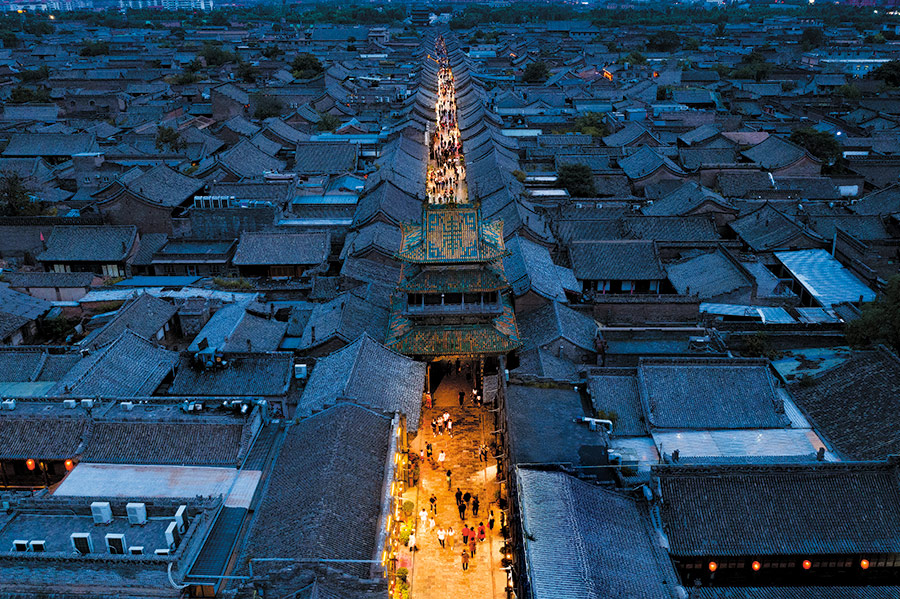
Ancient temples, along with old-fashioned streets, shops and houses, grant a fascinating insight into the architectural style of cities built by the Han people in central China from the 14th to the 20th centuries. The nearly 4,000 quaint shops and homes are not just visually pleasing, but also bear testimony to the town's economic prosperity throughout the 19th century until the early 20th century, when it was the financial nerve center of the country.
Founded in the 14th century, Pingyao reached the peak of its prosperity with the rise of the Shanxi merchants. "It became the country's economic lifeline under Emperor Xianfeng (1831-61)," says Lei Yaxian, head of Pingyao's cultural relics bureau.
Unfortunately, the town didn't have what was required to develop lasting industries. An acute shortage of water was its biggest hurdle. Its regional trade advantage was also undermined by the development of modern transportation.
By the 1970s, Pingyao had been reduced to ruins, with only three of its original 72 watchtowers standing. Run-down dwellings, vehicle boneyards and a thick layer of charcoal covering everything didn't help in painting a pretty picture either.
By the early 1980s, the ancient town was on the verge of disappearing from the map when the authorities decided to raze everything to the ground. However, the plan was called to a halt by experts, including Tongji University professor Ruan Yisan, who believed it would be a terrible injustice to bulldoze such a colossal amount of history.
In 1986, the State Council labeled Pingyao "a Chinese historical and cultural city" and a comprehensive preservation plan was drawn up. Subsequently, the local administration divided historical buildings into four categories, says Cao Changzhi, deputy director of the historical and cultural city committee of the Chinese Society for Urban Studies.
According to Cao, some buildings were preserved to become visitor attractions, while others were adjudged to have practical uses. Traditional residences were turned into hotels, tea rooms and wine houses to offer tourists a taste of the distinctive local lifestyle, while homes of historical figures, such as that of financial legend Lei Lyutai, became memorials or museums.
In December 1997, Pingyao was named a UNESCO World Cultural Heritage Site. A string of international events followed, such as the Pingyao International Photography Festival, which debuted in 2001. The inaugural event drew 40,000 visitors. The annual festival has since evolved to become a cultural bond between the ancient town and the rest of the world.