Tibet prospers from a decade of economic and social development









Dawa Gyaltsen struggled to hide his excitement when recalling details of his face-to-face meeting with President Xi Jinping, even though it was more than a year since the encounter took place.
The resident of Galai, a village in Nyingchi, Tibet autonomous region, welcomed the president to his home on July 21 last year during Xi's landmark visit to the region, which was celebrating the 70th anniversary of its peaceful liberation.
"Xi asked detailed questions about our living conditions. He wanted to know how we drained sewage from our toilets and how we heated water for the shower. He also felt the grain in our barn with his hands, asking about yield and storage," the villager said.
Sitting with the family members in their living room, Xi also inquired about their income and how they earned it.
"He encouraged me to give my two children a good upbringing, asking each of them about their dreams for the future," Dawa Gyaltsen said.
"My family found the president easygoing, kind and concerned about their lives, which really warmed all our hearts."
Galai, which boasts more than 1,200 wild peach trees, is said to be the first village in Tibet where such trees blossom each spring.
In 2002, the village held its first Peach Blossom Festival. In addition to flower appreciation events, residents performed traditional dances-launching a new tourist attraction in the process.
Dawa Gyaltsen, 38, who was born and raised in the village, said his family members could barely make ends meet in his childhood, when they relied on growing highland barley and selling yaks.
Now, thanks to the money made from selling yaks and butter, and other forms of income, he earns more than 10 times as much as his parents did.
Xi described Galai as a place where "the flower of national unity and progress" blooms, and where life epitomizes Tibet's economic and social development over the past decade.
Tibet used to be China's only impoverished provincial region. It had the nation's highest incidence of per capita poverty and the greatest difficulty in alleviating poverty.
In 2015 and 2020, Xi spoke at high-level symposiums about work related to Tibet, outlining policy directions for the region's growth in the new era.
In recent years, Tibet's economy has shifted from high-speed growth to high-quality growth, with its GDP reaching 208 billion yuan ($30.3 billion) in 2020, up from 70.1 billion yuan in 2012. Per capita disposable income among the region's rural residents in 2020 was 16,935 yuan, up from 5,645 yuan in 2012.
By the end of 2019, all 74 impoverished counties in Tibet had been removed from the list of poverty-stricken areas, with more than 620,000 people lifted out of penury.
In 2020, average life expectancy in the region was 71.1 years, compared with an average of 35.5 years before its liberation, and families were offered a 15-year free education program.
Over the past decade, the average life expectancy in Tibet has risen by four years.
Kelsang Drolma, who researches the Tibetan economy and society at the China Tibetology Research Center, said the central government aims to ensure that the region pursues sustainable development, as it is essential to protect the environment on the Qinghai-Tibet Plateau for the development of the entire nation.
"By focusing on the green and inclusive development of Tibet, the central government has highlighted the region's key role in national development," she said.
Kelsang Drolma added that by becoming stronger, boosting its economy, and upgrading its industrial structure, Tibet is set to play a bigger role in national development and security, and in protecting the environment and energy reserves.
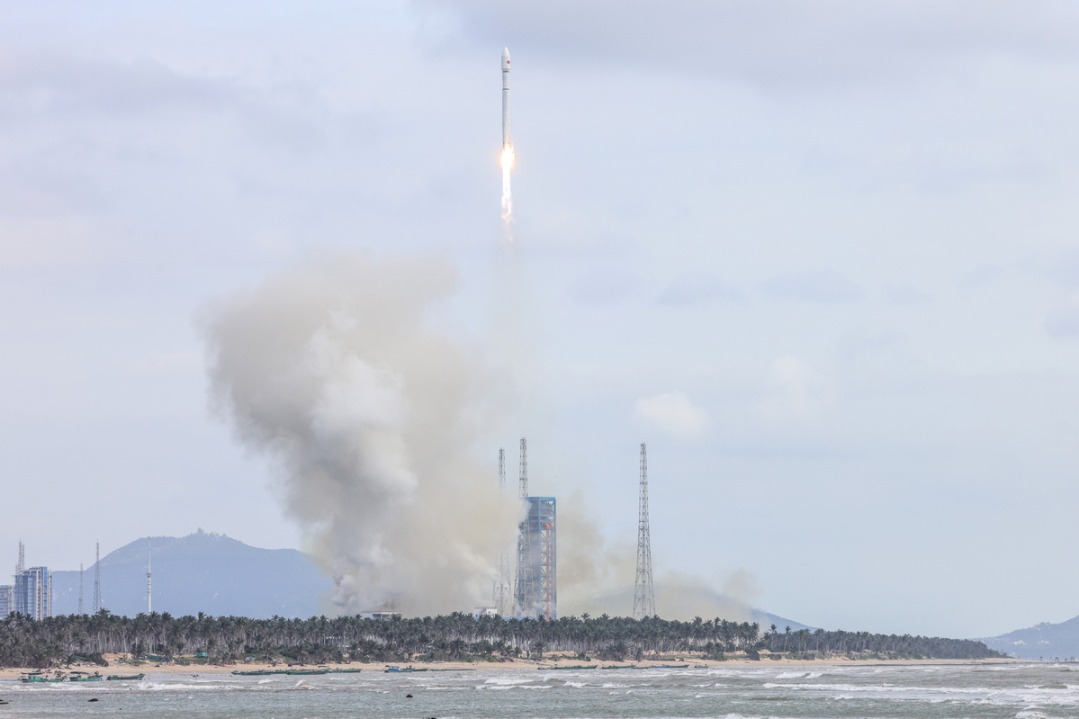


- China launches group of internet satellites into orbit
- Former senior official expelled from CPC for serious violations
- Senior political adviser Yang Xiaowei expelled from Party, public office
- Former senior political adviser expelled, dismissed for legal violations
- Guiyang deputy mayor under investigation for discipline violations
- Chinese medical team sets up health education column in PNG newspaper